Join WhatsApp Channel

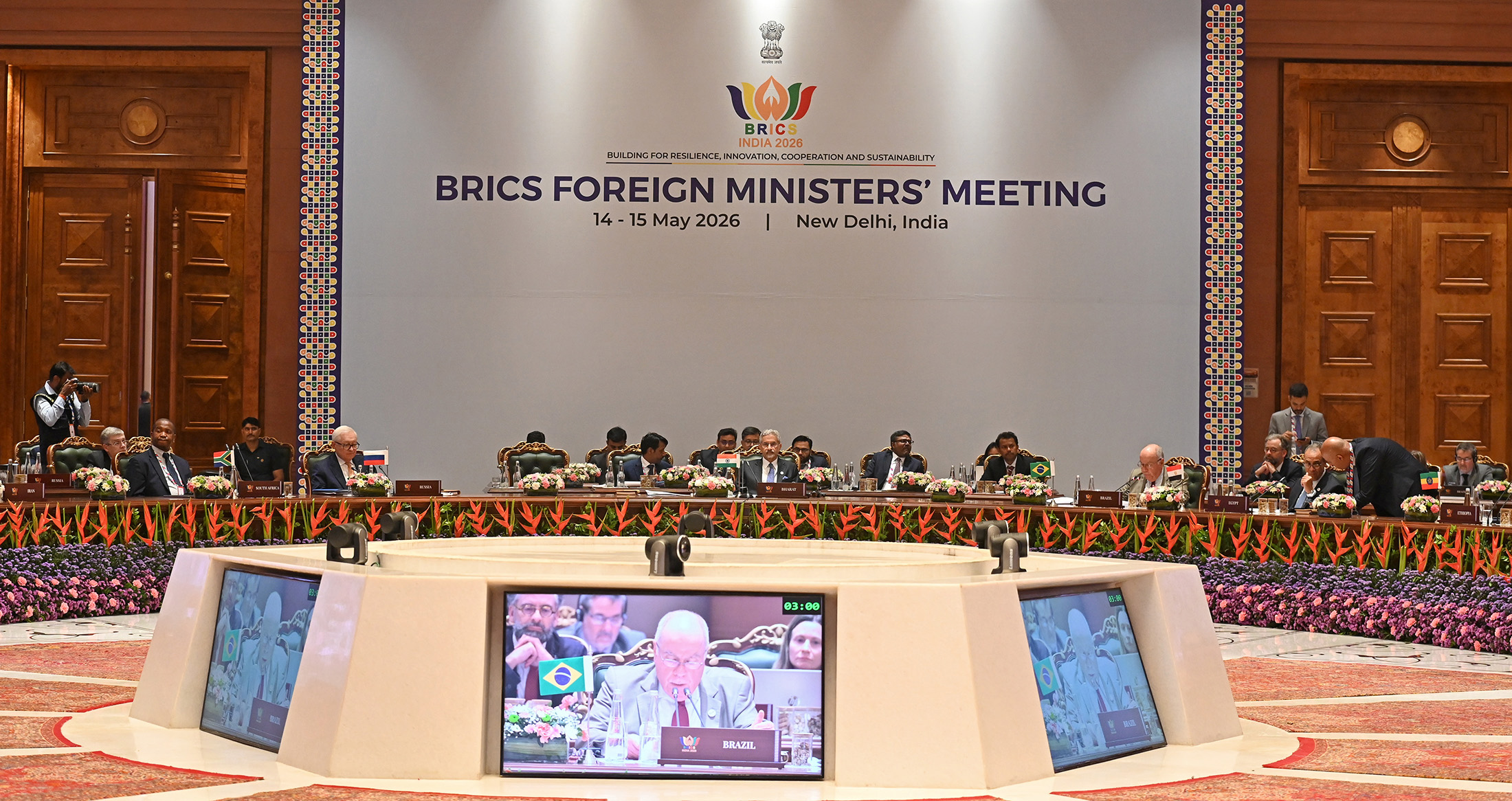
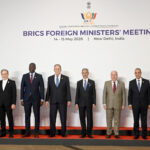
Deepening divisions within the expanded BRICS bloc over the US-Israeli war on Iran overshadowed the grouping’s foreign ministers’ meeting in New Delhi, forcing India to abandon hopes of a unified joint declaration and instead issue a carefully negotiated chair’s statement that laid bare the widening geopolitical contradictions inside the Global South coalition.
What was intended to showcase India’s leadership of an increasingly influential multipolar platform instead exposed how the expansion of BRICS — now including regional rivals Iran and the United Arab Emirates — is making consensus-building significantly more difficult at a moment of escalating instability in West Asia, maritime disruption and global economic fragmentation.
The two-day meeting concluded with India acknowledging “differing views among some members” over the Middle East crisis, diplomatic language that masked sharp disagreements between Tehran and Abu Dhabi over the ongoing conflict involving the United States, Israel and Iran.
Iran had pressed the grouping to explicitly condemn what it called “US-Israeli aggression” and sought stronger language against military operations targeting Iranian territory. The UAE, however, resisted attempts to frame the conflict in terms favorable to Tehran, particularly after repeated Iranian missile and drone strikes on Emirati territory and infrastructure since the war began on February 28.
The diplomatic rupture became unusually public.
Without directly naming the UAE, Iranian Foreign Minister Abbas Araghchi accused one BRICS member of blocking parts of the proposed declaration because of its alignment with Washington and Israel. Tehran also alleged that Emirati territory and facilities had been used in military operations against Iran — accusations Abu Dhabi has not accepted.
“We only hit American military bases and installations unfortunately located on their soil,” Araghchi said during a press interaction in New Delhi, while simultaneously attempting to avoid a complete collapse in ties with the Gulf monarchy by stressing that Iran and the UAE “have to live with each other for centuries to come.”
The unusually blunt exchanges revealed the strategic strain now running through BRICS after its rapid expansion beyond its original five-member framework. The bloc, which once functioned primarily as a loose economic coalition seeking greater representation for emerging economies, is increasingly being drawn into hard geopolitical crises where members possess directly conflicting security interests.
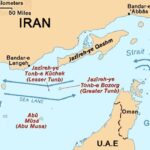
India’s statement attempted to bridge the divide through broad references to dialogue, diplomacy, sovereignty, territorial integrity and the protection of civilian infrastructure while avoiding direct attribution of blame. The document also emphasized the importance of “safe and unimpeded maritime commerce through international waterways,” a phrase carrying major significance for India as tensions around the Strait of Hormuz intensify.
For New Delhi, the crisis is not merely diplomatic but deeply strategic and economic.
As the world’s third-largest oil importer, India faces severe vulnerability from the disruption of Gulf shipping routes. Iranian actions in and around the Strait of Hormuz — through which nearly a fifth of global oil and liquefied natural gas supplies normally transit — have heightened concerns over energy security, shipping costs and inflationary pressures. Iranian-linked attacks have reportedly affected Indian maritime personnel, while the sinking of an India-flagged vessel during the conflict further underscored the risks confronting Indian trade flows.
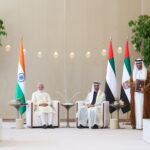
Against that backdrop, Prime Minister Narendra Modi used his visit to the United Arab Emirates immediately after the BRICS meeting to publicly condemn attacks on the Gulf nation, describing the targeting of the UAE as “unacceptable in any form.” The remarks highlighted India’s difficult balancing act between preserving strategic ties with Iran — particularly around connectivity projects such as Chabahar — and deepening economic and security partnerships with Gulf monarchies increasingly central to India’s energy and investment calculations.
At the same time, India sought to ensure that the meeting was not consumed entirely by West Asian divisions. The chair’s statement strongly condemned terrorism and specifically denounced the April 2025 terrorist attack in Jammu and Kashmir in which 26 people were killed. The ministers rejected “double standards” in counter-terrorism and reaffirmed commitments against terror financing, cross-border terrorism and safe havens.
For India, inclusion of explicit language on the Jammu and Kashmir attack represented a diplomatic achievement, particularly within a grouping that includes countries often reluctant to endorse India’s framing of regional security concerns.
The ministers also jointly called for an “immediate, permanent and unconditional ceasefire” in Gaza, the withdrawal of Israeli forces from occupied Palestinian territories and unhindered humanitarian access. However, even here the fractures within BRICS were visible. The statement carried formal reservations from at least one unnamed member regarding parts of the Gaza and Red Sea sections, underscoring how difficult consensus has become within the enlarged grouping.
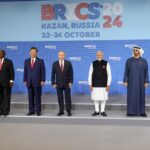
Despite the divisions, the broader declaration attempted to preserve BRICS’ central political narrative: that the developing world must unite to reshape global governance structures increasingly viewed as ineffective, unequal and dominated by Western interests.
The ministers reiterated demands for reform of the United Nations Security Council, the Bretton Woods institutions and the World Trade Organization while criticizing unilateral sanctions, tariff barriers and protectionist economic policies. The document repeatedly emphasized “multipolarity” and the need for greater representation of developing economies in global decision-making.
Yet the New Delhi meeting also demonstrated the paradox confronting BRICS as it expands.
The bloc’s growing geopolitical relevance stems precisely from its widening membership and representation of the Global South. But expansion is simultaneously importing regional rivalries and conflicting strategic alignments directly into the organization. Iran and the UAE now sit inside the same grouping despite being on opposite sides of an active military confrontation. India and China remain geopolitical competitors despite cooperation within BRICS frameworks. Russia’s confrontation with the West continues to shape many of the bloc’s internal calculations.
As a result, BRICS increasingly resembles a coalition united less by common strategic objectives than by shared dissatisfaction with the existing international order.
Still, the inability to produce a joint declaration does not necessarily diminish the bloc’s long-term significance. In many ways, the disagreements themselves reflect the reality that BRICS has evolved into a far more politically consequential forum than it once was. Unlike earlier years when declarations often remained largely symbolic, the current fractures emerge because the grouping is now grappling with real wars, sanctions regimes, energy disruptions and competing visions of regional order.
India’s role as chair has therefore become considerably more complex. New Delhi is attempting simultaneously to preserve BRICS unity, strengthen its leadership credentials in the Global South, maintain relations with rival Gulf powers, manage its own energy vulnerabilities and prevent the grouping from becoming hostage to conflicts that could paralyze its institutional agenda.
The outcome document’s emphasis on resilience, supply chains, energy security, digital infrastructure, artificial intelligence governance and alternative financial systems showed India’s determination to keep BRICS focused on long-term developmental and institutional goals despite geopolitical turbulence.
But the New Delhi meeting also made clear that as BRICS expands in size and ambition, its greatest challenge may no longer be confronting the West — but managing the contradictions within its own increasingly fragmented coalition.