Join WhatsApp Channel

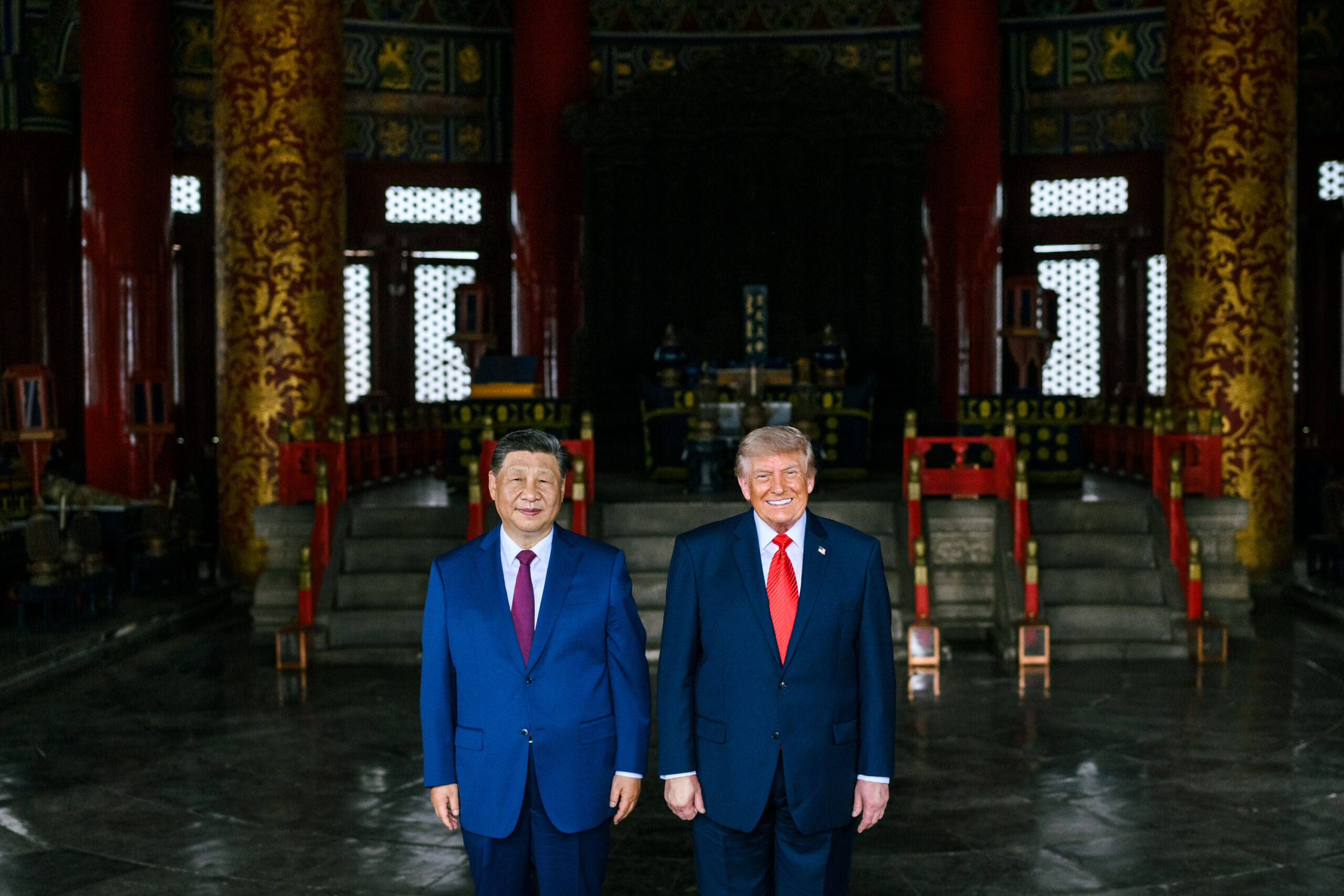
Any major summit has its expectations, especially so for one taking place after nearly nine years. And for all those expecting “big, fat hugs” or a host playing up to the flattery of the visitor, that did not happen. Instead from what can be made out of discussions in Beijing over the last two days, the meetings between Presidents Donald Trump and Xi Jinping were civil and professional, each man not wasting time to getting down to business but careful not to say in public what had been discussed in private.
To look at the Trump-Xi summit in terms of only optics, atmospherics or pageantry would be as wrong as naïve. Substantively, it was down to business from the word go: President Xi did not dig deep into Chinese or American philosophers to drive home the central theme. He looked up to the conflict in 431 BC between Athens and Sparta. “Can China and the United States transcend the so-called ‘Thucydides Trap’ and forge a new paradigm for major power relations.” The Greek Historian in his book on the History of the Peloponnesian War argued “It was the rise of Athens and the fear that this instilled in Sparta that made war inevitable.”
According to a Chinese official readout cited in the media, President Xi warned his visitor that any missteps on Taiwan could push the two nations into conflict. “The Taiwan question is the most important issue in China-US relations. If mishandled, the two nations could collide or even come into conflict, pushing the entire China-US relationship into a highly perilous situation,” the Chinese leader is said to have remarked, a reference conspicuously absent in a White House readout.
Talking to reporters on Air Force One, President Trump said, “On Taiwan, he (President Xi) feels very strongly. I made no commitment either way.” The fact that President Xi made Taiwan a key plank in the summit was enough to get even the hardcore supporters in the Make America Great Again (MAGA). “I am shocked, given how much people wanted to make this into a positive spirit, he (President Xi) started with a threat. It was so brazen and so blatant, that they made this at the very top,” said Steve Bannon, former strategist of the President has been quoted in Politico.
The United States maintains strong unofficial relations with Taiwan under a “One China Policy” that does not formally recognize Beijing’s sovereignty over that island nation with the Taiwan Relations Act requiring Washington to provide defensive weapons. But what has bothered Taiwan in the recent past is the hesitancy of Washington to firmly say if it would go to the assistance of Taiwan should it come under attack from China. President Trump has further ignited a debate by saying in an interview to Fox News at the end of his China visit that while longstanding support for Taiwan remains, the United States was “not looking to travel 9500 miles to fight a war” with China.
“When you look at the odds, China is a very, very powerful, big country. That’s a very small island. Think of it; it’s 59 miles away. We’re 9,500 miles away. That’s a little bit of a difficult problem. I do say this: Taiwan would be very smart to cool it a little bit. China would be very smart to cool it a little bit. They ought to both cool it,” he said. “I’m not looking for somebody to go independent (meaning Taiwan) and we’re supposed to travel 9,500 miles to fight a war. I’m not looking for that,” he said. Taiwan will once again become a hot foreign policy issue on Capitol Hill with law makers on both sides of the aisle pushing the White House to greenlight the pending US$ 14 billions weapons sale that will obviously attract hostility from Beijing. Obviously Taiwan had been a hot-button topic during the summit even if very little had been said publicly by the White House; and China’s state media only offering what the outside world needs to know.
On Iran too there has been little confirmation on what the two leaders discussed except for formal statements by the two sides, the White House saying “President Xi also made clear China’s opposition to the militarisation of the Strait and any effort to charge a toll for its use, and he expressed interest in purchasing more American oil to reduce China’s dependence on the Strait in the future.”
The Chinese Foreign Ministry maintained that “the conflict has put a heavy strain on global economic growth, supply chains, international trade order and the stability of global energy supply, which hurts the common interests of the international community.” But Beijing’s bottom line has been “ There is no point in continuing this conflict, which should not have happened in the first place.”
With President Trump now saying that he could agree to a twenty year freeze on Iran’s nuclear program with “real” guarantees, the focus now moves away from the Hormuz. Still critics will maintain that President Trump is shifting to a lower threshold from zero tolerance; and once again brings in the stance of Israel and Prime Minister Benjamin Netanyahu who is vehemently opposed to Tehran having any wherewithal to make nuclear weapons and insisting that any remaining uranium must be shipped out including perhaps the so-called “nuclear dust” left behind after the attack on the sites.
The progress on the economic front at the summit is also yet to be clarified even as there have been broad talk of China and the United States having made substantial progress, including a desire to access oil from America. But for an administration that had seen China as an “rip off” with its runaway trade surpluses and stealing technology, soon found that tariffs and sanctions are not the way to go about.
What started with 10 percent in February 2025 soon hit 145 percent by April with Beijing responding with 125 percent. Worse, China put a chokehold on the export of rare earths. But the high profile business delegation from agriculture, aviation and artificial intelligence chips is said to have made “remarkable” progress. China will apparently buy some 250 Boeing planes and “billions of dollars of soybeans.”
In the absence of finer details of the much-awaited meeting of two powerful leaders, the consensus is that what has been shared has not been remarkable enough to light up the Yangtze or the Potomac. But the focus now shifts to the visit of President Xi to the White House on September 24. The major sticking point will be the pending arms sale to Taiwan which will undoubtedly be a red rag to China and could even throw a big question on whether President Xi will make that trip at all.
Disclaimer: The opinions and views expressed in this article/column are those of the author(s) and do not necessarily reflect the views or positions of South Asian Herald.