Join WhatsApp Channel

On the morning of May 15, fuel station attendants across India flipped price boards for the first time in 49 months. In Delhi, petrol jumped to ₹97.77 a liter. Diesel moved to ₹90.67. In Mumbai, petrol crossed ₹106. The numbers drew long queues, angry social media posts, and a swift salvo from the opposition Congress party, which called the hike a “betrayal of the common man.”
The ruling Bharatiya Janata Party knew exactly what was coming. It had known for months. And it had waited anyway — surviving a five-state election cycle by refusing to budge on pump prices even as the global energy system went into freefall around it.
That calculation may have won the BJP the elections. It may yet cost the party the next one.
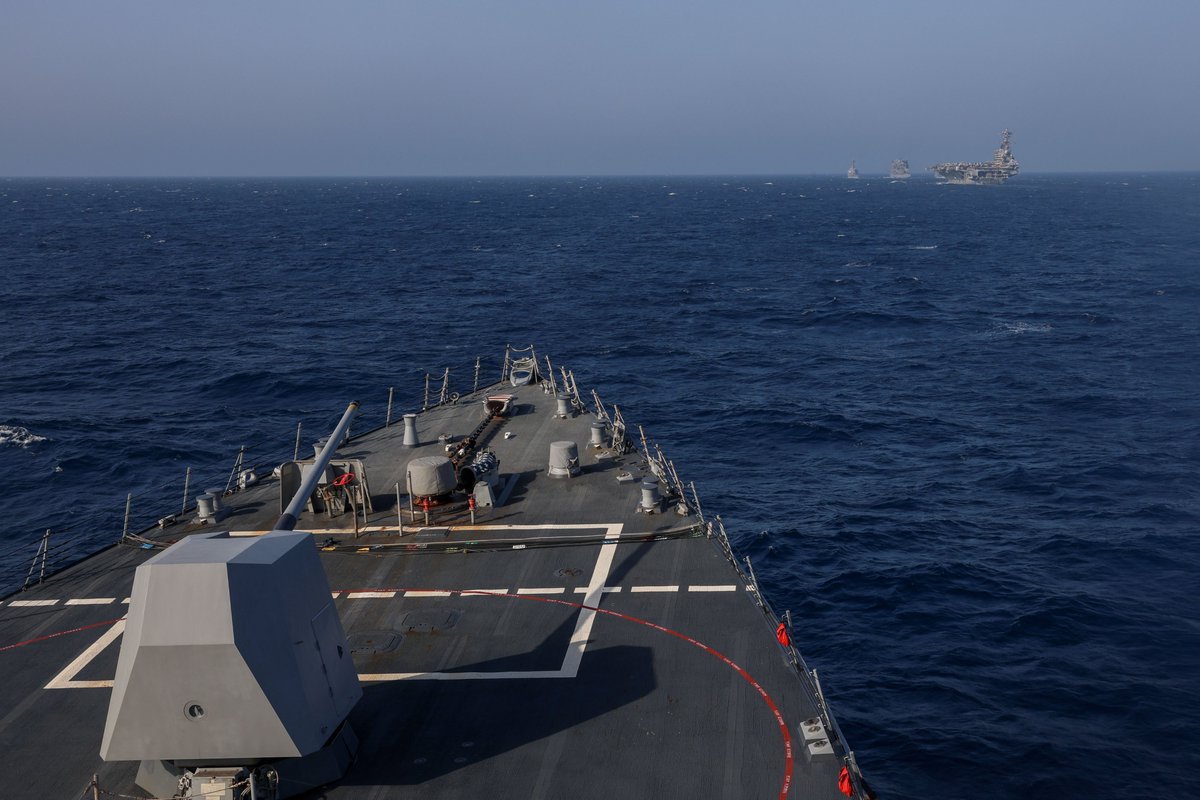
It is the world supply shock in history: The proximate cause of India’s crisis is a war that no one in New Delhi could control — but whose consequences were entirely predictable. When U.S. and Israeli forces launched strikes against Iran on February 28, 2026, Tehran responded by declaring the Strait of Hormuz closed. It was not a bluff.
The International Energy Agency, which rarely reaches for superlatives, called what followed “the largest supply disruption in the history of the global oil market.” Its executive director went further, describing the combined impact as “the greatest global energy security challenge in history.”
The numbers justify that language: crude and oil product flows through the Strait plunged from roughly 20 million barrels per day before the conflict to just over 2 million barrels per day by March — barely 10% of pre-war volumes. Global oil supply fell by 10.1 million barrels per day in a single month, with Brent crude surging more than 55% above pre-conflict levels and physical crude prices touching $150 per barrel at their peak.
For India, a nation that imports approximately 85–89% of its crude requirements and sources nearly half of that from the Middle East, the arithmetic was brutal. Before the war, India’s crude import basket averaged $69 per barrel. Within weeks of the conflict’s outbreak, that figure had surged past $113–114 per barrel. India consumes around 242–243 million tons of crude oil annually, making every dollar of price movement a billion-dollar problem at national scale.
Sixty percent of India’s LPG imports transit the Strait of Hormuz. So do the region’s LNG exports, with Qatar’s Ras Laffan facility — the world’s largest liquefaction plant — knocked offline by Iranian strikes in March, cutting global LNG supply by roughly 20%.
Shipping insurers priced war risk into every tanker movement; some vessels went dark entirely, switching off transponders as they slipped through the Gulf. India’s rupee weakened more than 6% year-to-date. Foreign exchange reserves fell by $7.79 billion in a single week at the start of May, landing at $690.69 billion. The country’s Navy launched “Operation Urja Suraksha” — energy security — to protect cargo routes in the Arabian Sea.
The Political Freeze and its price: None of this moved India’s retail fuel prices. Not for eleven weeks.
The reason was political arithmetic, not economic logic. India had entered a critical state election cycle spanning Assam, Kerala, Tamil Nadu and West Bengal. The BJP — still governing with a mandate from the 2024 Lok Sabha elections — understood from painful historical experience that fuel inflation can reshape electoral sentiment faster than almost any other economic variable.
Petrol and diesel prices are not abstractions in India; they cascade through every layer of the economy — auto-rickshaw fares, freight rates, vegetable prices, airline tickets, and manufacturing input costs. A visible pump-price hike during active campaigning would have handed the opposition a visceral, emotionally resonant issue.
So the government absorbed the pain elsewhere — onto the balance sheets of its state-owned oil marketing companies. According to oil ministry estimates cited in April, retailers were losing approximately ₹100 per liter on diesel and ₹20 per liter on petrol at prevailing international prices. The three state-run giants — Indian Oil Corporation, Bharat Petroleum Corporation Limited and Hindustan Petroleum Corporation Limited — together control over 90% of India’s fuel retail network, comprising more than 100,000 stations. They were reportedly hemorrhaging ₹1,600–1,700 crore every single day by selling fuel below cost.
The cumulative arithmetic is staggering. Industry analysts estimate that under-recoveries since crude crossed the psychologically dangerous $110-per-barrel threshold have already exceeded ₹75,000 crore to ₹1 lakh crore, depending on how currency losses are accounted for.
The Confederation of Indian Industry noted separately that the government’s ₹10-per-litre excise duty cut on petrol and diesel — announced in late March to cushion consumers — has cost the exchequer approximately ₹14,000 crore a month, compounding the fiscal damage.
The ₹3-per-litre hike announced last Friday barely dents that hole. Industry sources describe it as roughly one-tenth of the correction actually needed to offset the full surge in global crude since the war began. The Monetary Policy Committee member Ram Singh had forecast exactly this post-election price adjustment even before the polls ended.
Private refiner Nayara Energy had already moved its own prices weeks earlier. The state oil companies, and through them the taxpayer, were subsidizing every liter sold at every government pump in the country while the BJP waited for the right political moment.
That moment arrived exactly 16 days after the last state election concluded.
India’s inflation trap is snapping shut: The economic consequences of that delay are now arriving with compounding force.
India’s wholesale price index surged to 8.3% in April — a 42-month high. Fuel inflation within WPI exploded to 24.71%, with petrol at 32.40%, diesel at 25.19%, and LPG at 10.92%. Primary articles inflation climbed to 9.17%. Manufactured products rose 4.62%, signaling broad-based cost pressure spreading through the industrial economy.
Experts at Business Standard and ICRA warn that the WPI-to-CPI transmission typically lands within one to three months: transport, logistics, packaged foods and fast-moving consumer goods absorb it first, followed by apparel, durables and household goods.
The ₹3-per-litre retail hike adds its own pressure on top of this wholesale pipeline. Fuels constitute 4.81% of India’s Consumer Price Index. ICRA forecasts May CPI at 4.1%, with the hike contributing a direct 8 basis points and an indirect 10 basis points through supply chains.
In aggregate, Business Standard analysts project the combined effect could push FY27 CPI inflation toward 5% — well above the RBI’s current projection of 4.6% for the fiscal year. Kotak Mahindra Bank’s chief economist has flagged “early rate hikes probably from October” as an emerging risk. Muthoot Fincorp’s chief economist put it more bluntly: “A materially higher inflation trajectory that will likely necessitate monetary policy tightening.”
For an economy where the RBI has been attempting to support growth with rate cuts, this represents a severe reversal. GDP growth for FY2027 is now forecast to slow to between 6.2% and 6.5%, down from an earlier projection of 6.9%.
ICRA has already revised gasoline demand growth downward from 5–6% to 3–4%, while diesel demand growth — the lifeblood of India’s trucking economy, agricultural machinery, and construction sector — risks flattening entirely. The current account deficit, which stood at a manageable 0.9% of GDP in FY26, could double to 2.0% or more in FY27 as the oil import bill expands by an estimated 35–40% if crude averages $85–90 for the full year.
India’s fiscal situation compounds the dilemma. The energy subsidy bill had already grown to ₹4.38 lakh crore in FY25. LPG subsidies alone could exceed ₹60,000 crore in FY27 if oil prices remain elevated. The fiscal deficit for FY27 is projected at 4.3% of GDP, with meaningful risk of overshooting. The country is simultaneously managing its oil pain and a broader global trade slowdown, with capital flows becoming less predictable and the rupee more vulnerable.
Prime Minister Modi has appealed to citizens to carpool, work from home, use public transport, defer gold purchases and avoid non-essential foreign travel — extraordinary language from a leader who understands that such requests come with political cost. The comparison he drew, to the sacrifices of the COVID-19 era, was not accidental. It was preparation.
More Hikes to Come: The ₹3 hike is widely understood within the energy industry as the first move in a phased correction — not the correction itself.
With crude still above $100 per barrel and the ceasefire announced on April 7 producing no lasting normalization of Hormuz flows, under-recoveries continue to accumulate. The oil ministry’s original deliberations reportedly centered on a ₹4–5 per-liter increase.
A statement by Sujata Sharma, Joint Secretary in the Ministry of Petroleum and Natural Gas, acknowledged that the government “cannot compensate OMCs indefinitely” and that financial impact on the state refiners “would become” a decisive factor. The CII has separately urged the government to progressively roll back the ₹10-per-litre excise cut over six to nine months as crude prices stabilize — which would add another layer of cost for consumers.
More hikes are coming. The only questions are their size and timing :That timing problem sits directly on top of what may be the BJP’s most dangerous political exposure: the 2027 Uttar Pradesh assembly elections. UP is not merely another state contest. It is the political heartland that anchors national power in India, the largest state by population, and the seat from which the BJP has drawn the core of its parliamentary majority.
Diesel powers UP’s rural transport networks, its agricultural machinery, its fertilizer delivery chains, its irrigation infrastructure. Food prices in the Hindi belt move with diesel prices. Rising energy costs that embed themselves into the cost of living across 2026 and into 2027 create precisely the kind of slow-burn economic grievance that opposition parties are best positioned to weaponize.
Congress has already begun that work. Party spokesman Jairam Ramesh pointed pointedly to the government’s years of refusing to pass on the benefits of lower global crude to consumers — and now passing on the costs. The Indian National Developmental Inclusive Alliance, INDIA bloc, the opposition grouping, is sharpening a narrative that the government protects oil company balance sheets and geopolitical ambitions while ordinary households carry the burden.
The BJP’s calculation appears to be that staggered, calibrated hikes — rather than sudden shocks — can contain that anger, and that Prime Minister Modi’s personal credibility on national security grounds gives the government political cover that no other leader could claim. But energy shocks have long political fuses. Voters tolerate wartime sacrifice in the short term. They react differently when sacrifice becomes the permanent condition of everyday life.
India’s balancing act is under severe stress test: Beneath the political calendar lies a structural vulnerability India has long managed to obscure. The country imports nearly 85–89% of its crude oil, making it one of the most import-dependent major economies on earth. It has survived previous oil shocks through a combination of strategic hedging, political price management and the fortunate availability of discounted Russian crude following the 2022 Ukraine war — a lifeline that has grown more complicated under Washington’s evolving sanctions posture.
Russian imports have surged to record highs exceeding 2.3 million barrels per day this month, as New Delhi scrambles to replace disrupted Middle Eastern flows. Washington’s temporary sanctions waiver on Russian oil purchases has become quietly critical to India’s energy arithmetic.
Without it, the country’s exposure would be dramatically worse. Modi’s diplomatic outreach to the UAE — officially framed as a strategic partnership visit — is fundamentally about locking in guaranteed long-term crude allocations, deferred payment mechanisms, and emergency LNG access from one of the Gulf’s most stable remaining suppliers.
The paradox is stark. India has spent years cultivating relationships simultaneously with Washington, Jerusalem, Riyadh, Abu Dhabi and Moscow — a diplomatic high-wire act that has generally served its energy interests. The Iran war has exposed how fragile the foundations of that balancing act truly are. When the Strait closes, India’s carefully assembled supply diversity collapses into a single, unresolvable problem.
There is also the El Niño risk that few policymakers are discussing publicly: a 61% probability of a significant weather event between May and July 2026, which could disrupt the monsoon, compress the kharif harvest, and push food inflation sharply higher at precisely the moment when fuel-driven cost pressures are transmitting through the supply chain. If both risks materialize simultaneously, the inflationary outlook deteriorates well beyond current forecasts.
An Illusion Ends: For years, India’s fuel pricing model — officially market-linked, in practice politically managed — functioned as long as global crude remained within tolerable ranges. The Iran war has demolished that assumption permanently.
The queues at petrol stations in Bhubaneswar and the newly updated price boards in Malvan are visible symptoms of something deeper: the end of an era in which a nation of 1.4 billion people could insulate itself from geopolitical energy wars through administrative controls and state-company balance sheets. Those balance sheets have hit their limits. The losses are real. The transfer to consumers has begun. And, with under-recoveries still accumulating and global crude still elevated, another round of hikes is not a question of if but when.
The BJP won the five-state election cycle by postponing that reckoning. The next reckoning — before the crucial UP elections of 2027 — will not be so easily deferred.
In India’s energy economy, as in its politics, the bills eventually come due.
Disclaimer: The opinions and views expressed in this article/column are those of the author(s) and do not necessarily reflect the views or positions of South Asian Herald.