Join WhatsApp Channel

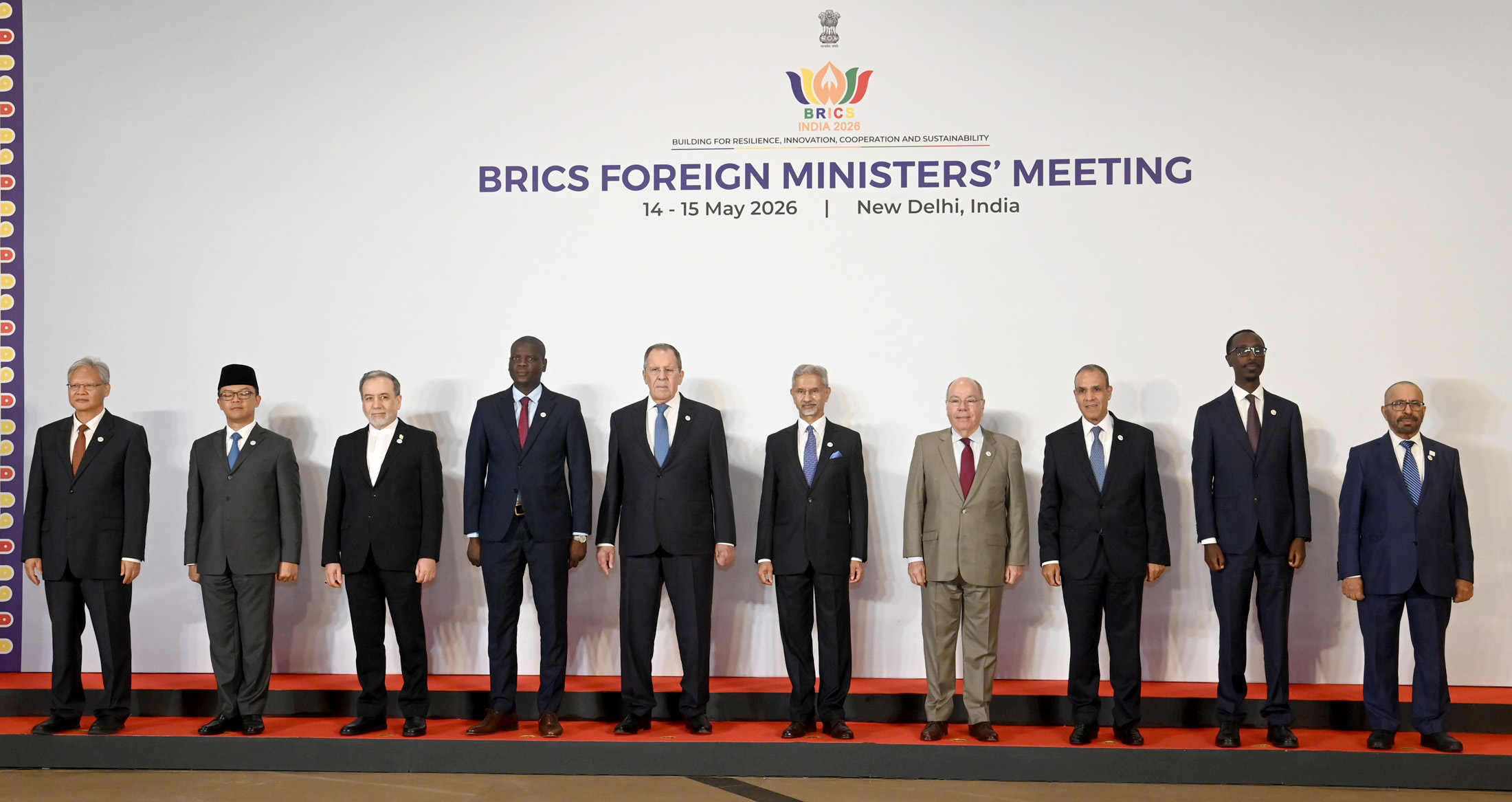
India’s stewardship of the 2026 BRICS Foreign Ministers’ Meeting in New Delhi is emerging not merely as a routine diplomatic exercise before the September Leaders’ Summit, but as an early stress test of whether the expanded BRICS grouping can evolve from a symbolic coalition of emerging economies into a functioning geopolitical platform capable of managing conflict, economic fragmentation and competing strategic interests in an increasingly unstable global order.
Held under the theme “Building for Resilience, Innovation, Cooperation and Sustainability,” the May 14–15 meeting comes at a moment when the global economy is being reshaped simultaneously by the Iran conflict, disruptions in energy supply chains, renewed trade nationalism, technology rivalries and intensifying debates over the future of multilateral institutions. For India, which is chairing BRICS for the fourth time, the gathering is also a diplomatic balancing exercise aimed at preserving the bloc’s cohesion without allowing it to drift into an overtly anti-Western formation.
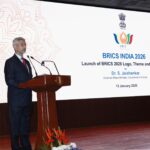
In his opening remarks, External Affairs Minister S. Jaishankar framed the challenge bluntly, warning that the world was becoming “increasingly complicated and uncertain,” with the heaviest consequences falling on emerging markets and developing countries. His emphasis on uninterrupted maritime flows, diversified supply chains, food and fertilizer security, climate equity, digital trust and terrorism cooperation reflected how BRICS discussions are increasingly shifting from ideological rhetoric toward crisis management and economic resilience.
The reference to “safe and unimpeded maritime flows” carried particular significance as the continuing Iran conflict and instability around the Strait of Hormuz threaten a major artery of global energy trade. Nearly a fifth of global oil and liquefied natural gas supplies traditionally transit through the Hormuz corridor, making the crisis a direct economic concern for large BRICS energy importers such as India and China, while simultaneously affecting Gulf producers linked to the bloc, including the United Arab Emirates and Iran.
That strategic tension is now beginning to define the expanded BRICS itself.
The inclusion of newer members such as Iran, the UAE, Egypt, Ethiopia and Indonesia has undeniably enhanced the bloc’s geopolitical weight, energy leverage and demographic reach. Yet the same expansion has also imported regional rivalries directly into BRICS deliberations, complicating consensus-building on major security questions. Iranian Foreign Minister Abbas Araghchi reportedly pushed for stronger condemnation of US and Israeli actions, while Gulf sensitivities continue to constrain the language acceptable to all members.
For New Delhi, this fragmentation may paradoxically offer strategic space. India has long supported a multipolar order and reforms in global governance, including expansion of the United Nations Security Council, but it has simultaneously resisted attempts to transform BRICS into a rigid anti-Western alliance led by the China-Russia axis. A looser, consensus-driven BRICS allows India to preserve its own strategic autonomy while continuing deeper engagements with the United States, Europe, the Gulf and Indo-Pacific partners.
That explains why India’s chairship narrative has focused less on de-dollarization rhetoric and more on practical themes such as healthcare cooperation, supply-chain resilience, digital governance, climate finance and developmental equity. Officials involved in the preparatory process point to more than 80 BRICS-related meetings already conducted under India’s presidency, suggesting New Delhi is attempting to institutionalize the grouping beyond summit diplomacy.
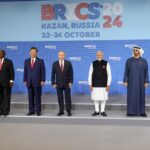
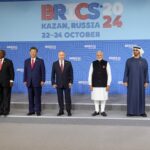
Prime Minister Narendra Modi’s meetings with visiting ministers — including Russian Foreign Minister Sergey Lavrov, Brazil’s Mauro Vieira and South Africa’s Ronald Lamola — also indicate India’s intention to project itself as a convening power for the Global South at a time when Western-led institutions are increasingly viewed by many developing economies as either gridlocked or selectively interventionist.
Yet the broader question confronting BRICS is whether it can translate dissatisfaction with the existing international order into coherent collective action.
The bloc today represents a substantial share of the world’s population, energy reserves and economic output, but its internal contradictions remain formidable. India and China continue to carry unresolved border tensions. Iran and the UAE remain divided over regional security issues. Brazil’s priorities often differ sharply from Russia’s geopolitical agenda. China’s decision to send Ambassador Xu Feihong instead of Foreign Minister Wang Yi, owing partly to simultaneous high-level engagements with US President Donald Trump, also reinforced perceptions that BRICS still operates with varying levels of political commitment among members.
Analysts expect the New Delhi meeting to produce a carefully negotiated communiqué heavy on broad formulations around sovereignty, multilateralism, sustainable development and economic cooperation, while avoiding language that could expose irreconcilable divisions over West Asia. But even a limited consensus may hold significance in the current geopolitical climate.
As global institutions struggle to respond to wars, sanctions, inflationary shocks and fractured supply chains, BRICS is increasingly positioning itself not necessarily as a replacement for the Western-led order, but as a parallel negotiating arena for emerging powers seeking greater bargaining space. India’s success during its 2026 chairship may therefore ultimately be judged less by ideological declarations and more by whether it can keep the enlarged grouping functional, economically relevant and politically manageable ahead of the September summit.
In that sense, the New Delhi foreign ministers’ meeting is less about immediate breakthroughs and more about defining whether BRICS at 20 can mature from a coalition of discontent into a durable architecture of coordinated influence for the Global South.