Join WhatsApp Channel

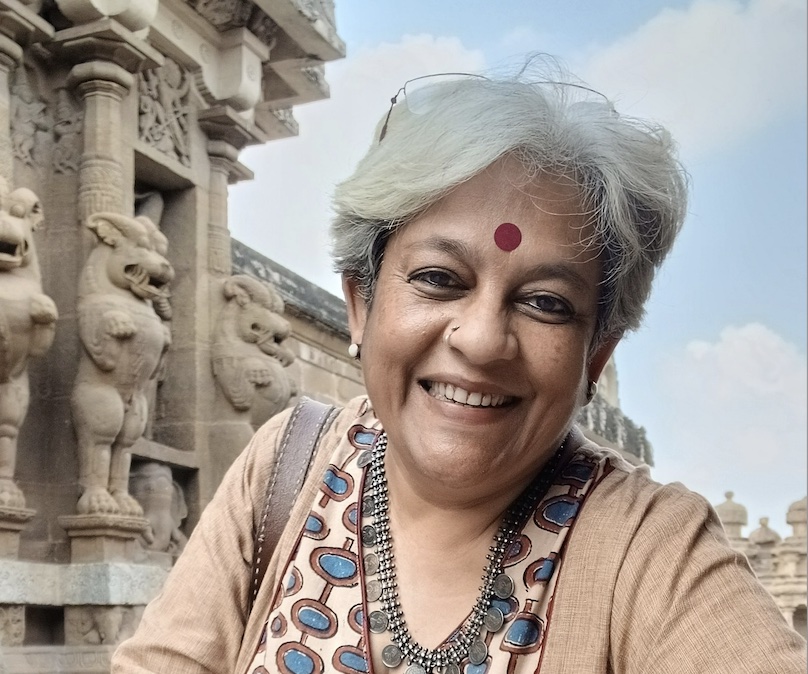
A Q&A interview with the founder of Magic Tours of India.
Anytime I’m traveling in India (or virtually any other country), I book a guided tour. I get to draw on a local’s knowledge, and I don’t have to rely on unreliable guidebooks.
The tour company I’ve used in India more than any other is Magic Tours of India, which was founded by Deepa Krishnan, a native of Mumbai. She has a large network of guides throughout the country and I have found all of them to be very well informed. (In December, I explored Bangalore and Chennai with Magic Tours guides.) The guides can also accommodate unorthodox requests, like the one I made in 2023 to visit Maratha Mandir, a Mumbai movie theater that has been showing the iconic Bollywood film DDLJ uninterrupted since the movie’s release in 1995. (It turns out I was the first – and so far the only! – customer to make such as request.)
What follows is my recent interview with Krishnan.
Can you provide a quick overview of Magic Tours of India?
It is a social enterprise which upskills and employs students from slums in Mumbai and Delhi. What started on a small scale in 2006 has now evolved into a successful pan-Indian company with 200+ people working across 27 cities in India. We provide more than 300 experiences to overseas visitors, ranging from heritage walks, cook with locals, food trails, village visits, arts and crafts trails, cycling, trekking and many more. Many of these experiences are co-created in partnership with local communities to bring incomes to locals, particularly women, artisans and craftspersons. Our tours have been featured extensively in Conde Nast Traveler, Nat Geo Magazine, Forbes, Outlook Traveler, The Guardian, and Singapore Airlines to name a few.
What made you decide to launch Magic Tours?
Mid-life crisis! One day I thought to myself, there’s got to be more to life than this corporate career.
What were you doing before starting Magic Tours?
Prior to these ventures, I worked in the corporate sector, primarily in financial services technology, handling consulting and implementation projects across the globe for clients such as Citigroup, Morgan Stanley, and Barclays Bank.
How did you choose the name?
Scribbled lots of names on a piece of paper, Mumbai Magic stood out, I thought it fit well with what I wanted – to share the magic of this country! Then came Delhi Magic, Agra Magic, and eventually Magic Tours of India.
What is your most popular tour?
Mumbai is our flagship city, and Mumbai Local is our most popular tour.
Are there one or two cities that tend to get overlooked by tourists that you think they should prioritize trying to see?
Tourism in India is very skewed, with people focusing on just a handful of states. There is a LOT more that gets missed. Madhya Pradesh, for instance, is fascinating. So is Odisha.
Do you have a sense of how most of your customers learn about Magic Tours?
We’ve been in business for 20 years now, so a lot of it is referral and repeat business, the old-fashioned way. I very much like it this way! It means we have been doing it right, over the years, building credibility and trust. Of course, we do get a lot of new enquiries from online reviews, travel guidebooks, and television shows that I have been on.
Which nationality is best represented among the people taking your tours?
Among foreign visitors, it is the English-speaking countries mostly. The USA, including the Indian diaspora, are a big part of it. Also, the UK, Australia, Europe.
What languages do your guides speak beyond English, Hindi, Tamil, and Telegu?
Our tours run in English. When people do multi-city trips, we assign local guides to tourists in each city. That’s because I think locals know their city best and can showcase it best.
What’s the most unexpected tour request you’ve received?
We get lots of lovely requests. I recently had a message from a couple who want a spiritual and philosophical tour of Chennai, including understanding Yogananda’s Kriya Yoga, Ramakrishna Paramahamsa’s mysticism, and the Theosophical movement in Chennai. Another visitor from Mauritius wanted to trace an ancestor who sailed from Mumbai as indentured labor. A British visitor’s quest led us to Bangalore, to sandalwood forests, Kheddah elephant hunts and a lost grave in a forest. Another yoga practitioner sent me a bunch of old photos of Krishnamacharya and wanted to search for those specific spots in the Mysore region. That tour ended at Alwar Tirunagari, where Krishnamacharya reportedly entered a trance and received the lost Yoga Rahasya text. Then we have people looking for antique textiles, specific types of regional foods, retracing the places in a favorite book, or scenes from a movie.. the list is endless.
How do you find your guides? And what do you look for from them?
Through networks of contacts. Mainly for knowledge combined with storytelling skills.
How many guides do you have in your network?
Across India more than 200 people, with different skillsets, who can do our specialized tours – ranging from licensed guides, to cooking hosts, to cyclists, naturalists, academicians, urban planners, performing artistes, and craftspersons.
What is the profile of your guides?
We prefer to hire women, because tourism provides flexi-time work, and women really need the flexibility. Men have wives at home to cook and care for them! Women usually don’t have that kind of support from spouses and end up carrying the load of the whole family. So wherever possible, we strongly prefer female guides. But we also have many male guides, mainly because there are very few trained women guides in India. In smaller cities, where things can be quite patriarchal, it is sometimes impossible to find women guides, because of social restrictions.
What is the busy season for tours? And the low season?
Winter (October to March) is busy, and low season is Apr-Sep. But June-July-August are when a lot of Europeans and NRIs come to India. In April-May we get fewer foreign visitors, but Indian schools are closed so local people travel in this period. September is quite slow.
In an average year, how many total tours are led by your guides?
We count our business in number of services provided. A service could be a walking tour, a cooking experience, an art workshop, an inter-city drive with stops along the way, a houseboat cruise, a spice plantation visit, and so on. Group sizes for these services range from solo travelers to couples, families, friends, cruise passenger groups, school and college groups, etc. Last year, we provided 3,000+ such services.
Do you have any books you recommend for the first-time visitor to India?
Pavan Varma’s Being Indian. [Author’s note: I read this after receiving Deepa’s recommendation. I thought it was fabulous.]
Do you lead tours?
I lead some craft tours, usually groups of 12-15 people, traveling to textile, craft, and embroidery locations.
How was Magic Tours impacted by Covid?
The business shut down completely. I sold an apartment we had in Chennai and launched a new textile business so that I didn’t have to fire staff. We were already doing textile and craft tours, and I had the artisan connects already. They too were struggling during Covid.
Now we have two arms, tourism and textiles, and they intersect beautifully. We have a whole calendar of craft tours each year. This year we are doing tours to explore the Awadhi culture and crafts of Lucknow, the lanes and ghats of Banaras, the wonderful embroidery of Kutch, the beauty of Odisha and Bengal, and much more! Through these tours, we not only showcase India’s textiles, crafts and culture, but also bring incomes to artisans.
What are some of your other interests?
I am also the founder of The Magic Room, a social enterprise which supports handmade Indian textiles and crafts, and provides tailoring livelihood to women in Mumbai. I have served on the National Taskforce for Handlooms for NABARD and the Ministry of Textiles, and as a jury member for Somaiya Kala Vidya in Kutch. I have also served as mentor to Creative and Cultural businesses for IIM Ahmedabad’s entrepreneurship course.
I have deep interest in rural self-sufficiency and have been working on rainwater harvesting and micro-enterprise projects in 20+ Warli tribal villages in Jawhar, near Mumbai. I am interested in the education sector and for eight years, I was the head of Abhyudaya, a non-profit that works in the education of school children from slums in Mumbai’s K-West Ward. Abhyudaya is an initiative of Bhavans SPJIMR, where I taught an experiential learning course in mentoring and leadership to MBA students. My academic research interests are in the area of urban slums.
How does Magic Tours intersect with the Magic Room?
The two ventures – Tourism and Textiles – form a unique ecosystem where craft tours connect urban audiences to artisans whose work The Magic Room showcases. This synergy underlines my belief that abundance creates more abundance – each venture strengthening the other while serving distinct social purposes.
What’s the most rewarding part of Magic Tours for you?
Being my own boss! That means being able to run the business using my own set of standards and values, doing things which appeal to me, and which I believe in.
Related posts:
 Why I’m Passionate About India’s Crafts
 India’s Vice President Inaugurates USISPF Tourism Leadership Summit 2026 in New Delhi, Highlights U.S.–India Travel Ties
 India Bets on $5.4 Billion Cruise Boom to Anchor Its Blue Economy
 USISPF-Led Roundtable Highlights Double-Digit Growth in India’s Tourism Industry