 Join WhatsApp Channel

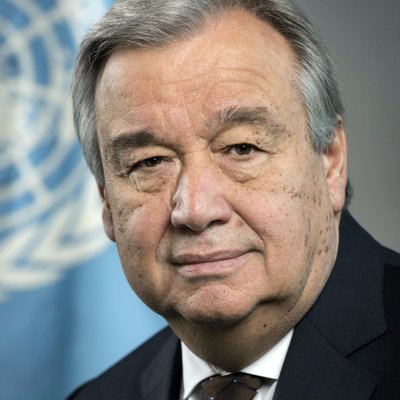
United Nations Secretary-General António Guterres has called for global cooperation to ensure artificial intelligence benefits all countries, warning that AI could either become humanity’s greatest opportunity or one of its greatest risks. Addressing the opening ceremony of the World Artificial Intelligence Conference in Shanghai, Guterres said the future of AI must not be determined by a small group of nations or companies.
“Technology that will shape the future of humanity must be shaped by all humanity,” he said, stressing that “it cannot be governed by a handful of countries or a handful of companies.” The UN chief praised China’s role in advancing global AI cooperation, highlighting President Xi Jinping’s 2023 launch of the Global AI Governance Initiative and describing the World Artificial Intelligence Conference as a natural development of that effort.
“Partnership is also at the center of the Global Digital Compact adopted by the UN General Assembly – with the full support of China,” Guterres said. He noted that the newly established Global Dialogue on AI Governance provides a platform for countries to participate in shaping international AI rules, with the first dialogue held in Geneva carrying a clear message: “Technology must serve people – not the other way around.” Guterres highlighted AI’s potential to accelerate progress on global development goals, including medical innovation, education, agriculture, food security, job creation and new industries. “AI can help usher in a quantum leap across the Sustainable Development Goals,” he said.
However, he warned that unequal access to technology could deepen existing global disparities.
“One-third of humanity is still offline,” he said, adding that many countries continue to face challenges in connectivity, infrastructure and energy access. He cautioned that the concentration of computing power, data and technical expertise could widen gaps between developed and developing nations. “AI risks pushing the world towards even greater inequalities … greater divides in income, in opportunity, in security … greater gaps between North and South,” he said.
Calling for action, Guterres said AI must become “a force for greater inclusion and shared progress,” and highlighted initiatives aimed at supporting developing countries, including a UN-supported Global Network for Exchange and Cooperation on AI Capacity Building and plans for a Global Fund for AI. He outlined three priorities for ensuring all countries can benefit from the AI revolution: capacity, safety and sustainability. On capacity building, Guterres said developing countries possess significant strengths, including talent, ideas and young populations, but require support to develop AI systems suited to their own needs.
“Every country should be able to shape this technology to its own needs: with its own skills, its own data, in its own languages,” he said. He also called for affordable computing access, training opportunities and adaptable open models, saying, “Technology built with developing countries, for developing countries” should guide future efforts. On AI safety, the UN secretary-general urged international standards for testing, risk assessment and accountability.
“We need governance that is inclusive, networked, and anchored in international law,” he said, adding that human rights must remain protected and that humans must retain control over life-and-death decisions. “No AI system should be put in a child’s hands before it has been proven safe,” he said. Addressing sustainability, Guterres warned that AI’s growing demands for energy, water and land must be addressed. He called on major AI companies to disclose the environmental impact of their systems and transition to renewable energy by 2030.
“The defining question is not whether artificial intelligence will transform the world. It will,” he said. “The defining question is whether that transformation will reduce inequalities or reinforce them. Whether it will concentrate power or expand opportunity.”
Guterres said the future of AI represents both a technological and moral challenge. “This is a test of technology – and a test of solidarity,” he said. “Let us pass the test as partners for a brighter future – and make AI a force for dignity, opportunity, and sustainable development for all.”
Related posts:
 UNSG António Guterres Calls for Global AI Fund and Inclusive Governance at India-AI Impact Summit 2026
 Exclusive: United Nations Leadership to Join India-AI Impact Summit 2026 as Global South Shapes AI Governance Dialogue
 UN Chief António Guterres Urges De-Escalation After U.S., Israel Strikes on Iran, Warns of ‘Grave Threat’ to Global Peace
 Middle East Conflict Risks Global Recession as Crisis Deepens with Each Passing Hour: UN Chief
