Join WhatsApp Channel

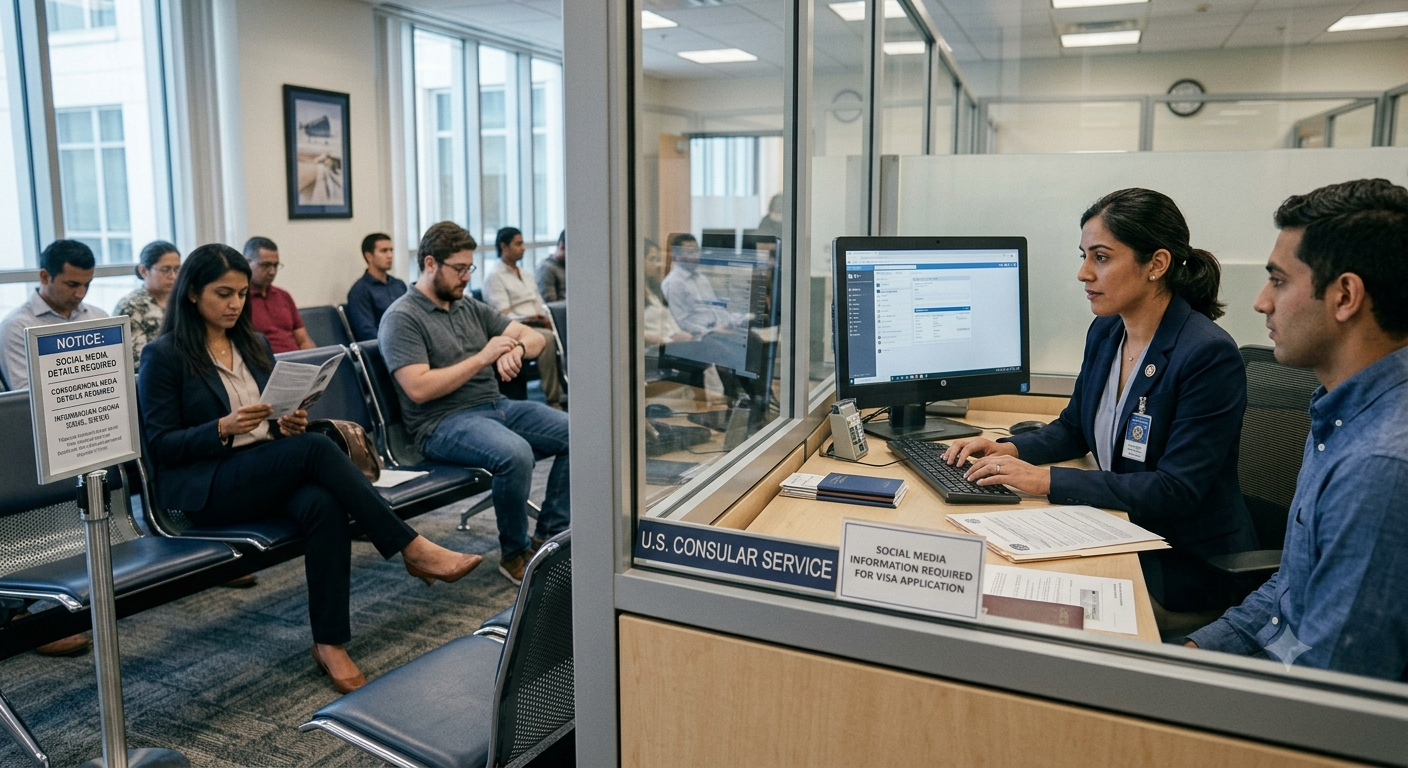
Foreign journalists, media professionals and certain North American professionals applying for U.S. visas will face a new layer of digital scrutiny from October 1, as the State Department expands mandatory social media screening to the I, TN and TD visa categories.
The change is likely to make an applicant’s online presence an increasingly routine part of the U.S. visa process, extending a screening practice already affecting international students, skilled workers, exchange visitors and several family and humanitarian categories.
Under the new rules, applicants for I visas for foreign media representatives and TN and TD visas for USMCA professionals and their dependents must set their social media profiles to “public” or “open” so that consular officials can conduct the required review.
For South Asian professionals and journalists with U.S. travel plans, the immediate question will be how the expanded screening affects visa preparation, particularly as applicants increasingly maintain professional and personal identities across multiple digital platforms.
The State Department has framed the expansion as part of a broader national security and public safety screening system rather than as a separate eligibility test for individual professions.
“The Department relies on every available source of information during visa screening and vetting to identify applicants who may be inadmissible to the United States, including those who pose a threat to national security or public safety,” the department said.
More applicants entering the digital screening net
The October 1 expansion is the latest step in a policy that has steadily widened the range of visa applicants subject to online-presence reviews.
International students applying for F-1 and M-1 visas, exchange visitors seeking J-1 visas and H-1B skilled workers have already been brought into the screening framework. Other categories, including H-3, K, Q, R, S, T and U classifications, have subsequently been added.
The addition of I, TN and TD applicants means that the screening regime will increasingly cover people entering the United States not only for education and employment, but also for journalism, professional assignments and family-linked travel.
That expansion could have a particularly visible effect on international media organizations. Foreign correspondents and other qualifying media personnel may increasingly need to consider their digital footprint as part of routine preparation for U.S. assignments.
For employers and media organizations, the change could also become a planning issue when arranging staff travel, rotations and assignments involving the United States.
Journalists face a new pre-travel consideration
The inclusion of I visa applicants is notable because journalists often maintain extensive public digital profiles as part of their professional work.
News reports, interviews, social media posts, professional biographies and public commentary can form part of a journalist’s visible online presence. The new requirement does not, by itself, establish that particular forms of journalistic activity will result in visa refusal.
Instead, it makes public accessibility of social media profiles an explicit procedural requirement for the affected applicants.
That distinction is likely to become increasingly important as journalists and media organizations assess how the U.S. screening process interacts with professional reporting conducted online.
The State Department has said its officers use available information in determining whether an applicant is eligible for a visa and whether grounds of inadmissibility apply.
Skilled professionals and families
The new rules will also affect applicants in the TN and TD categories, which are linked to the USMCA framework governing eligible professionals from Canada and Mexico.
For TN professionals, the change adds another procedural requirement to a visa process already involving documentation of professional qualifications, employment and eligibility under the applicable occupation list.
TD applicants — generally qualifying spouses and children of TN professionals who require visas — will also be covered.
The effect on South Asians will depend on their nationality and immigration circumstances. An Indian citizen, for example, does not qualify for TN classification simply by being a professional; the category is specifically available to qualifying Canadian and Mexican professionals. But South Asian-origin families who have Canadian or Mexican nationality and use the USMCA professional route could encounter the expanded screening when seeking U.S. visas.
The next phase could be broader digital scrutiny
The significance of the October change extends beyond the three categories being added.
The successive expansion of social media screening points toward a U.S. visa process in which traditional documents, interviews and immigration records increasingly operate alongside publicly available digital information.
For applicants, that could make preparation for a visa interview more complicated than checking passports, employment letters, financial documents and appointment requirements.
Applicants may increasingly need to understand which accounts they maintain, whether profiles are accessible to the public and whether information presented across professional and personal platforms is consistent with their application.
The State Department’s announcement, however, does not say that applicants must create additional social media accounts, generate new content or remove existing material. Its stated requirement is that affected profiles be set to public or open to facilitate screening.
Implications for the South Asian diaspora
The change comes at a time when U.S. immigration policy is already placing greater emphasis on screening, verification and compliance across multiple temporary visa categories.
For the South Asian diaspora, the implications extend beyond people applying for the newly covered visas.
Students, H-1B workers, exchange visitors and other applicants already subject to online screening will continue to operate under the existing requirements, while journalists and qualifying USMCA professionals will join the expanding group.
This could make digital-profile management an increasingly routine consideration for people planning international mobility.
For Indian and other South Asian media professionals, particularly those working for organizations with U.S. operations or regularly covering U.S. affairs, the I visa change could become relevant well before an assignment begins. Employers may need to factor the additional screening requirement into visa timelines and staff deployment.
Likewise, South Asian-origin professionals moving between Canada, Mexico and the United States could need to account for the additional online review when planning cross-border assignments.
Visa preparation could become more digital
The longer-term effect may be a gradual change in how applicants prepare for U.S. visas.
Previously, much of the preparation centered on proving identity, employment, qualifications, financial circumstances, travel purpose and eligibility. With online screening becoming more widespread, applicants may increasingly regard their public digital presence as another part of the overall visa process.
That does not mean that a social media account by itself determines the outcome of a visa application. Consular officers assess applications under U.S. immigration and nationality law, and the department says online information is one component of broader screening and vetting.
But the direction of policy is clear: digital information is becoming more deeply integrated into the U.S. government’s pre-entry screening architecture.
For applicants preparing to travel after October 1, the practical message is therefore forward-looking. Visa preparation will increasingly involve not only assembling documents and preparing for an interview, but also understanding the information that is publicly visible about the applicant online.
As more visa categories are brought into the system, social media screening is likely to become less of an exceptional requirement affecting selected groups and more of a standard feature of U.S. immigration vetting.