Join WhatsApp Channel

In haste, India’s Parliament passed the Public Examination (Prevention of Unfair Means) Amendment Bill, 2026 on July 30, by voice vote with major Opposition parties in both Houses staging a walkout!
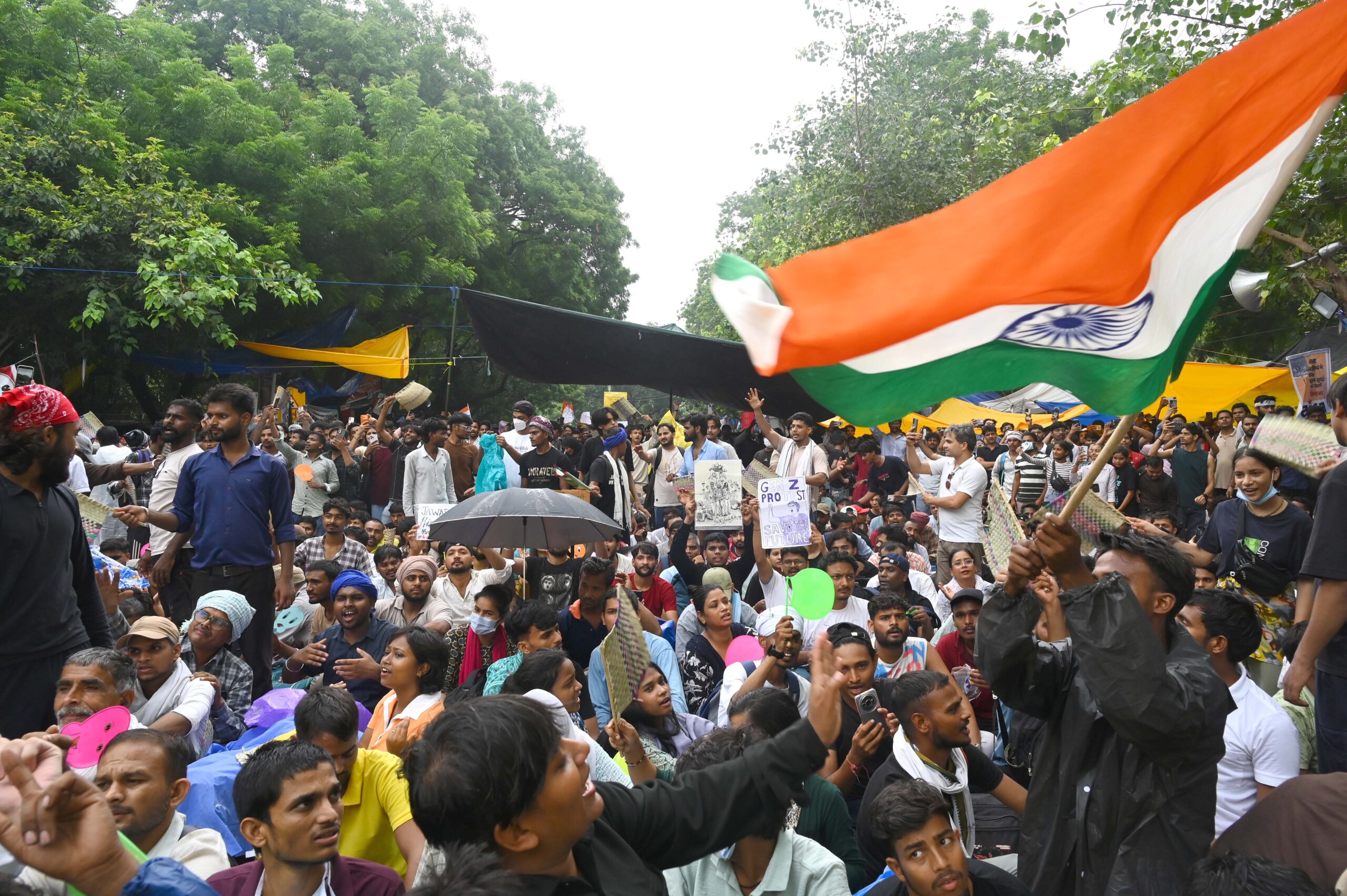
Considering the agitation launched in the capital by the freshly-minted the Cockroach Janata Party (CJP) in the melee of multi-parties occupying the political arena, which took up the singular issue plaguing the student community on the leaks in public examination on which a massive sit-in dharna was staged in the central part of the capital contiguous to Parliament, the Bill did evoke angry exchanges in both Houses even as it was rushed through in less than a couple of days with the Opposition parties launching a broadside and bazooka to keep the Treasury benches on the mat. No doubt, the Human Resources Development Minister Dharmendra Pradhan had to go as a triumphal finale when his resignation was sedulously insisted upon by the CJP and the major Opposition Party Congress’ Rahul Gandhi doing the drumbeat for over a month.
The Prime Minister Narendra Modi no doubt pitched for a transparent and robust system to preclude any such mishaps in public examination for entry into higher education by the aspiring students as they imping upon their job prospects. The Minister of State in the Prime Minister’s Office Dr. Jitendra Prasad, while piloting the bill, assured the nation that the proposed law comprehensively addresses offences ranging from leakages of question papers and answer keys, tampering with answer sheets and computer systems, manipulation of examination processes, creation of fake websites and admit cards to organized bids to facilitate unfair means in examinations.
For a country aspiring to be a developed one by 2047 with 1,293 universities, as many as 64,896 higher education institutions, undergraduate medical seats available at 1.39 lakh and postgraduate medical seats at 86,300 a year, the pressure for admission and placement in employment are really gargantuan, when the student population too is surging steadily year after year. Scaling up this substantial number meant the capacity of the government to conduct common entry level examination pan-India entailed a vastly different system to be in place and the corollary was the National Eligibility cum Entrance Test (NEET) for medicine from the last decade. Parallelly, in just a decade, India has witnessed a welter of coaching centres charging huge fees to train students to face down competitive challenges pan-India. This overtly or covertly made these new-fangled coaches to be conspiring with academic institutions to draw talents for teaching and use the concatenation for insider-trading egregiously!
That the National Testing Agency (NTA) in charge of conducting competitive examinations for higher education in major branches of science and technology has not been able to meet its remit because of the teething troubles, inexperience and lack of due funding and functionaries is quite known particularly when the challenge is to serve pan-India. Hence palliatives such as setting up a Task Force shorn of academic experts but technology celebrities, passing of a new legislation on the assurance of prompt judicial scrutiny when the chips are down may not cut much ice with the listless youths looking for real-time remedy to address their corking concerns about their future.
A cursory glance at the latest legislation shows up glaring lacunae that would put paid to its purpose of serving the affected segment. An independent, not-for-profit group, PRS Legislative research, providing information to the citizens on the works of members of Parliament over and above keeping the latter understand the nuances of various issues and deploying data and evidence to vindicate the implications of various policy steps, has cautioned that it would be difficult to complete the probe of an offence within two months and the trial to be completed within three months from the date of filing of the chargesheet. Clearly there are no further provisions if the probe timeline is not met! Given the history and precedent of all such probes where meeting such timelines are sparse with no penalty for failure, the new legislation is nothing but old pristine wine in a brand-new bottle! A root and branch reform of the entire education system at all levels is de rigueur to prepare the youth for challenging callings.
Disclaimer: The opinions and views expressed in this article/column are those of the author(s) and do not necessarily reflect the views or positions of South Asian Herald.