Join WhatsApp Channel

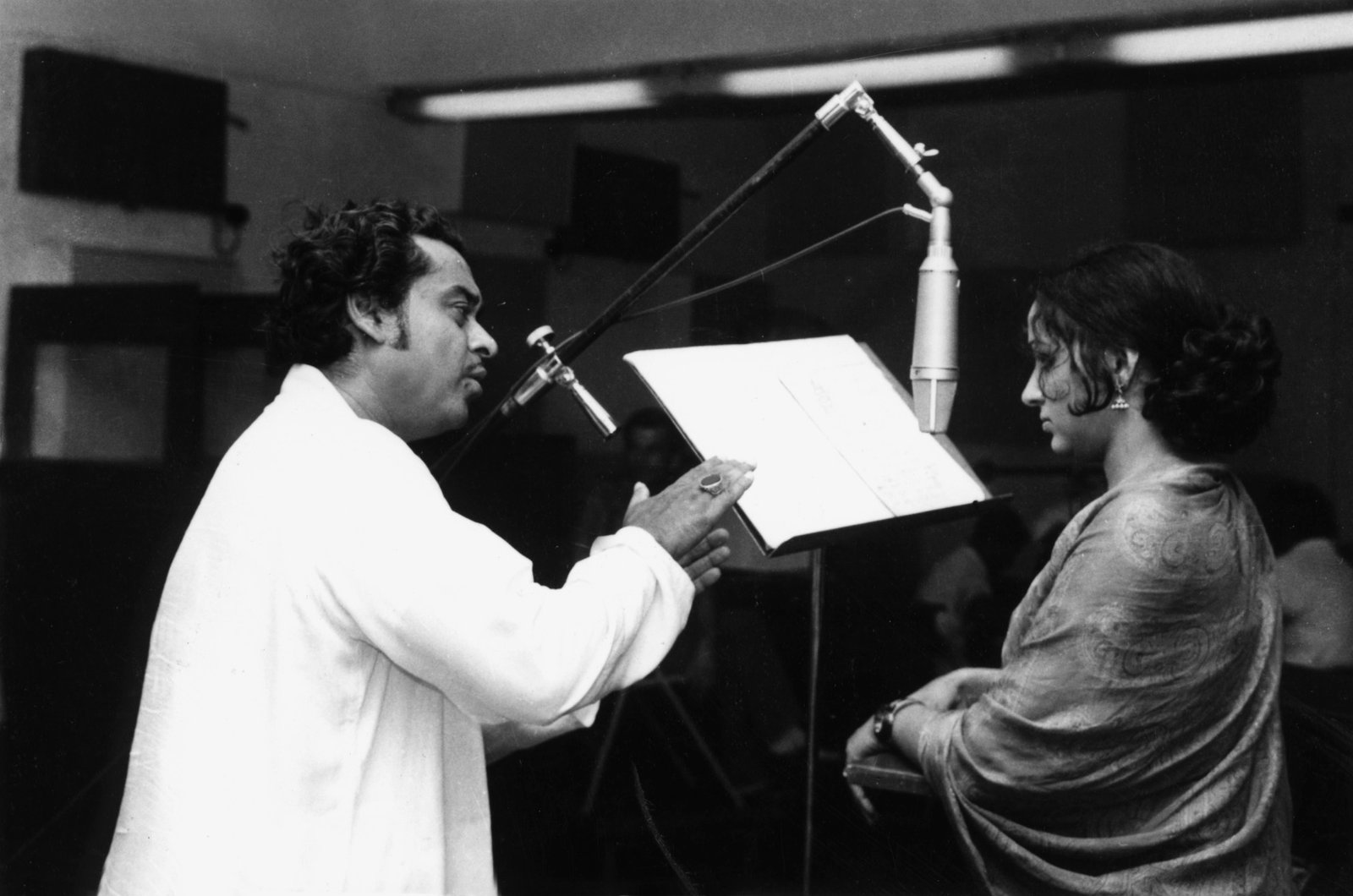
On October 13, we enter the 40th year since Kishore Kumar, Hindi cinema’s most versatile genius, passed on. The actor-singer-filmmaker-composer, who was also a lyricist and writer, was known primarily as a funster. Be it comedies like Chalti Ka Naam Gaadi, Pyar Kiye Jaa, Padosan or crazy songs like Nakhrewali, C A T cat, cat mane billi or Jai Govindam jai Gopalam, he was overridingly considered a comic genius.
But let us not forget that this man could effortlessly make you weep as well, both as an actor-filmmaker and as a singer and composer.
Later as he hit big-time as a playback singer, Kishore Kumar, born Abhas Kumar Ganguly, the temperamentally comic younger brother of superstar Ashok Kumar, also excelled in the romantic numbers of Rajesh Khanna, Rishi Kapoor and Amitabh Bachchan—among others.
And it was only then that Kishore’s immense range, versatility and his brilliance at the pathos-laden song were, to coin a ironical paradox, ‘happily’ recognized.
To be honest, the eccentric genius that was Kishore was not himself free of blame about stultifying his growth as singer in the earlier days. From day one, Kishore would willingly sing playback only for Dev Anand. His first song was him had been the plaintive Marne ki duaen (Ziddi) under Khemchand Prakash. Yet, he would stubbornly refuse singing assignments for other artistes, grandiloquently stating “Main star hoon, singer nahin (I am a star, not a singer)!” And since all films of Kishore the star were comic capers, Kishore was, so to ‘sing’, never taken ‘serious’ly!
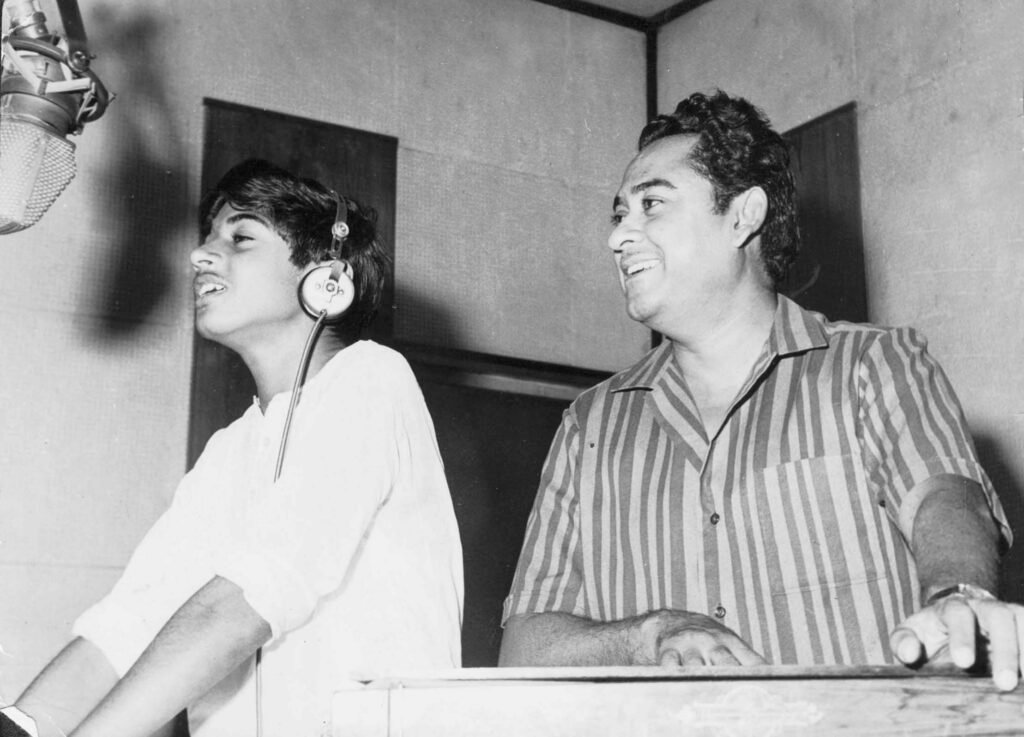
Even as late as 1966, when the then-rapidly rising Kalyanji-Anandji offered him Kasme vaade pyar wafaa (Upkar) and Kishore’s innings as a leading man were on their last legs, this reply was given to the duo. For Kishore-da was a man of (many insist, carefully-orchestrated) moods, and it was a good two years later when K-A offered another pathos-laden gem, Dharti ki tarah har dukh seh le (Suhaag Raat), that he told them loftily, “Haan, ab main singer hoon, main gaoonga (Yes, I will sing now, as I am a singer)!”
Was it Kishore himself who wanted it that way? Or simply the image-fixation rampant in the industry? Why did he have to wait till his post-Aradhana peak to cast his spell as a singer par excellence in the emotional orbit? Or was there a desire within him to crush the comic branding that explained his composing such soulful songs for himself in his own productions as Koi humdum na raha (Jhumroo) and those lovely nuggets from Door Gagan Ki Chhaon Mein (Aa chalke tujhe, Jin raaton ki bhor nahin and Koi lauta de mere beete hue din)?
We will never know. For after all, it was a rare Dukhi man mere from Funtoosh (with music by S.D. Burman), in which Kishore got an opportunity to break his comic mold then.
But it is perhaps very significant to discover the curious fact that two of the three top-line composers who backed him most in his peak phase as a singer—R.D. Burman and Laxmikant-Pyarelal—began their association with him minus the man’s trademark funny grammar. This triumvirate of composing entities (Kalyanji-Anandji were the third) had realized from their career beginnings that they had to cover fresh ground to hold their own against—and then eclipse— the great composers who were calling the shots when they arrived.
And so when Kishore Kumar entered RD’s music room for the first time in 1965, it was to etch out that haunting Bhoot Bungla cry of pathos, Jaago sonewalon, suno meri kahani. A year earlier, Laxmikant-Pyarelal got Kishore to give body and soul to Mere mehboob qayamat hogi (Mr X In Bombay). L-P also composed Yeh dard bhara afsana (Shriman Funtoosh) and Ajnabee tum jaane pehchaane (Hum Sab Ustad Hain).
Ironically again, Kishore Kumar hit his winning streak with Aradhana, a film in which he had two breezy and one sensuous number, but nothing in the department of ‘pathos’logy. But it took the L-P litany Khizaan ke phool pe aati kabhi bahaar nahin (Do Raaste) and that wistful Hemant Kumar winner, Woh shaam bhi kuch ajeeb thi (Khamoshi) to actually consolidate the new Rajesh Khanna-Kishore Kumar bond.
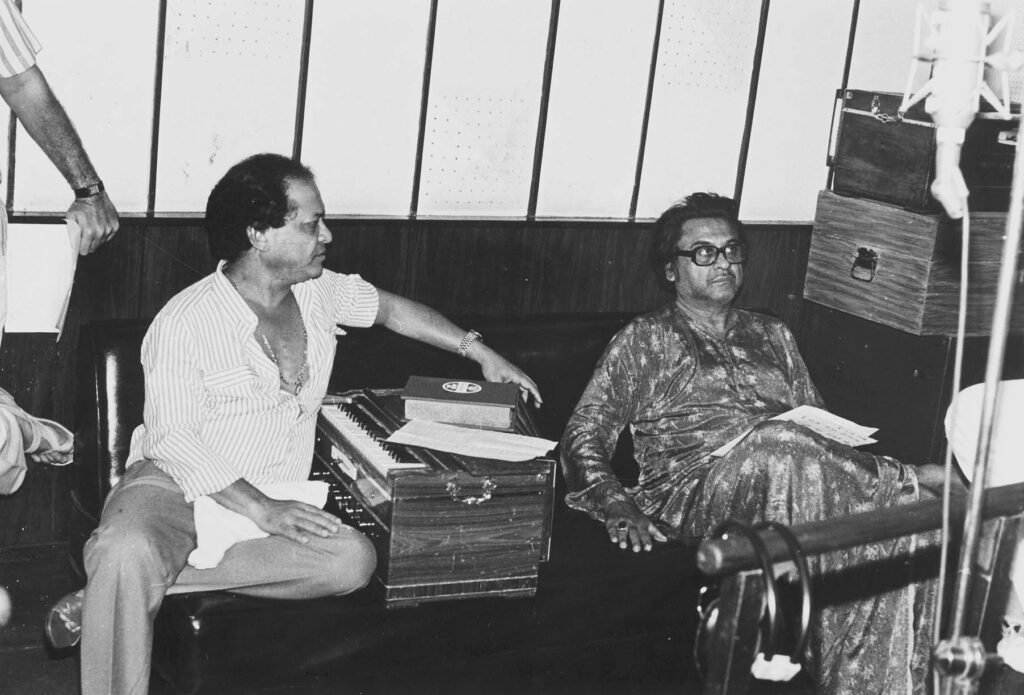
As the Kishore wave sidelined all the competition in the early 1970s, Mukesh no longer became the only compulsory element of a sad song. In O.P. Nayyar’s last burst of glory, Ek Baar Mooskura Do, it was Kishore who belted out the innovatively fast-paced two-version bewafaa number, Tu auron ki kyoon ho gayi and that maudlin masterpiece, Savere ka suraj while Mukesh had two cheerful duets! In L-P’s Manchali, Mukesh had a comic song, while Kishore got the poignant Mile kahin do ajnabi.
Probably not aware of where Aradhana and Rajesh Khanna would take him, Kishore had also done some more self-catharsis in his own film, Door Ka Rahi, by composing numbers like Panthi hoon main and Khushi do ghadi ki. And this time, these lovelies proved to be just two drops in an ocean of explosive emotions.
Because now the serious, sad side of the Harfan Moula (all-rounder) that Kishore-da was, was being highlighted by a dazzling cloudburst of glory in a shower of sentimental beauties.
S.D. Burman himself switched Kishore’s vocals to supreme sadness as he unleashed Dil aaj shaayar (Gambler), Kaise kahoon main (Sharmeelee), Duniya o duniya (Naya Zamana), Tere mere milan ki (with Lata Mangeshkar / Abhimaan), Yeh laal rang (Premnagar), Badi sooni sooni hai and Aaye tum yaad mujhe(Mili), while son RD unraveled a cavalcade of jazbaat in the three aces from Amar Prem (Kuch to logkahenge, Yeh kya hua and Chingari koi bhadke) besides O mere dil ke chain (Mere Jeevan Saathi), Meri bheegi bheegi si (Anamika), Zindagi ke safar mein (Aap Ki Kasam), Tere bina zindagi se (with Lata / Aandhi), Mere naina (Mehbooba) and Rimjhim gire saawan (Manzil).
Kalyanji-Anandji, whose bond with Kishore was deeply personal despite their late professional start, obviously used this phase to adorn the Kishore oeuvre with greats in all genres, and the supreme ‘sad-a-bahaar naghmein’ that they composed for him included Zindagi ka safar (Safar), Jo tum hasogi to duniya hasegi (Kathputhli), Mera jeevan kora kagaz (Kora Kagaz), Apne jeevan ki uljhan (Uljhan) and O saathi re(Muqaddar Ka Sikander) apart from the feelingly rendered sentimental numbers Jeevan se bhari (Safar),Samaa hai suhana (Ghar Ghar Ki Kahani) and Pal pal dil ke paas (Blackmail).
And of course we had Laxmikant Pyarelal, conveying passion, pain or philosophy with Sui jaa tara(Mastana), Mere deewanepan ki bhi dawaa nahin (Mehboob Ki Mehndi), Yeh jeevan hai (Piya Ka Ghar), Mere dil mein aaj kya hai (Daag), Ruk jaan nahin (Imtihan), Gaadi bula rahi hai (Dost), Aadmi jo kehta haiand Nahin main nahin dekh sakta (Majboor), Tere baghair jaanejaana (Anari—one of Kishore’s personal favorites, as per son Amit Kumar), Mere dil ne tadapke and Na hansna mere gham pe (Anurodh), Har raat ek si hoti hai (Aadha Din Aadhi Raat) and Ek rut aaye (Gautam Govinda
Of course, most other composers pitched in too, Shanker Jaikishan with Geet gaata hoon main (Lal Patthar), Ravindra Jain with Ghunghroo ki tarah (Chor Machaye Shor), Rajesh Roshan with the passionate paeans Dil kya kare (Julie), Aao manaaye jashn-e-mohabbat (Doosara Aadmi) and Chhookar mere man ko and Tere jaisa yaar kahaan (both from Yaarana), Bappi Lahiri with Chalte chalte (Chalte Chalte), Nanha sa panchhi re tu (Toote Khilone) and Manzilein apni jagah (Sharaabi), Ravi with Dekha hai zindagi ko (Ek Mahal Ho Sapno Ka), Khayyam with Hazaar raahein (Thodisi Bewafaai), Salil Chowdhury with Koi hota jisko apna (Mere Apne), Madan Mohan with Har koi chahta hai (Ek Mutthi Aasmaan), Chitragupta with Aake mil jaa (Intezar) and even Prem Dhawan with Teri duniya se hoke majboor chalaa (Pavitra Papi).
Indeed for lovers of quality melody, there is a lot to be happy about in the soulful and doleful part of Kishore Kumar’s music.