Every week on When It Hits the Fan, the BBC Radio 4 podcast I co-present with David Yelland, former editor of The Sun and the New York Post, we pull back the curtain on the world of public relations and communications.
We look at how words are deployed as weapons, shields, bridges and sometimes lifelines by the powerful, the famous and the embattled.
This week’s episode we covered a king who charmed Washington. An oil crisis quietly softening us up for bad news. And a country music legend who turned a health announcement into a masterclass in grace under pressure. Let me take you through all three.
The King Who Checked Trump
Advertisement
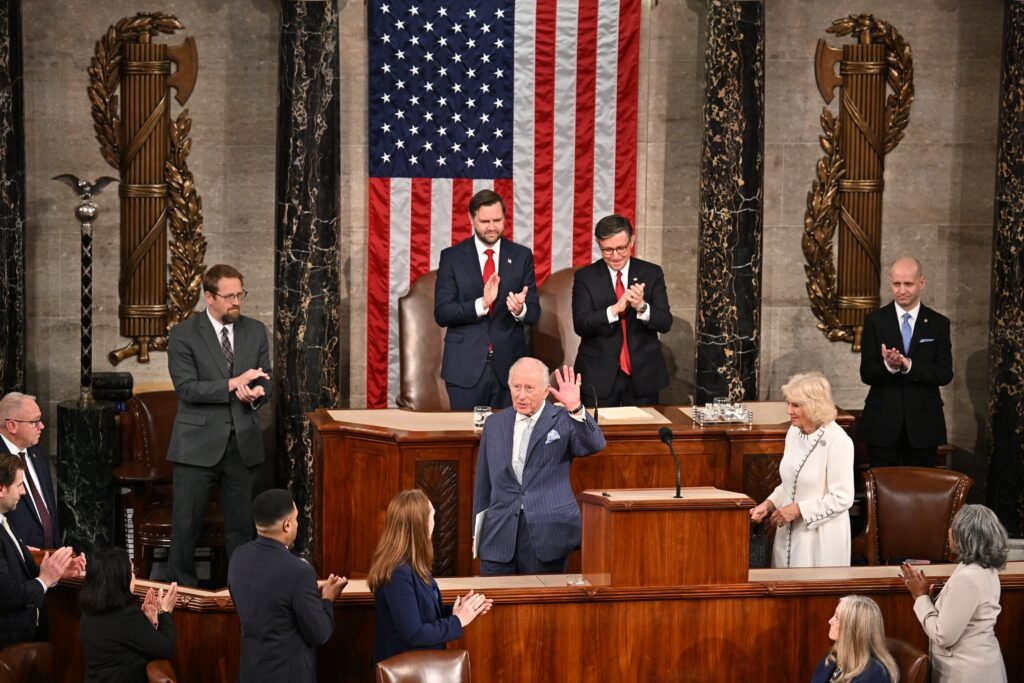
Let us start in Washington, because the state visit of King Charles to the United States was, by any measure, a remarkable piece of public diplomacy. The backdrop could not have been more fraught. UK-US relations were under serious strain, with tensions over NATO, trade tariffs and the western alliance all coming to a head. There were voices calling for the visit not to go ahead at all. And yet, when it was over, the consensus was near-universal: the King had got it exactly right.
He delivered a speech to a joint session of Congress that drew standing ovation after standing ovation. He then gave a second speech at the state dinner that was equally accomplished. Both managed something that many thought impossible: they spoke across the aisle in a deeply divided chamber, and they bridged a widening transatlantic divide.
I spent a long time thinking about what actually went into making those speeches work. The team behind them was small and deliberately so. Sir Clive Alderton, the King’s Principal Private Secretary, a man with thirty years of Foreign Office experience including time as an Ambassador. Theo Rycroft, his deputy, who had served as EU Director at the Foreign Office and was the visit planning lead, the person on whose shoulders everything rested if it went wrong. And Tobyn Andrae, the King’s Communications Director and former deputy editor of the Daily Mail. Three people with deep trust and a complementary skillset.
What that team had was what I would describe as relational capital in all the right places. Sir Clive knew the King’s voice so well, that is the holy grail. I have been in rooms where speeches were assembled by committees, passed through legal teams, sent to the board, reviewed by executives who had never met the person speaking to them. The result is always the same: the words sit on the speaker like an ill-fitting suit. Generic, hollow, unconvincing. The King’s speeches sounded nothing like that.
One moment stood out above all others for me. King Charles spoke about climate change to a room that included many who deny its very existence. He did not use soft, emotive language. He spoke instead about “nature’s own economy” and linked environmental stability directly to national security and prosperity. He used the language of generals and financiers, not campaigners. He was speaking their language, in their chamber, making a point they had walked away from. It was what I would call diplomatic dog-whistling of the highest order.
The gift of HMS Trump’s ship bell was another stroke of genius. Trump has spent a lifetime attaching his name to buildings and towers. A gold bell engraved with his name, connecting him to stories of naval bravery in the Pacific, plays perfectly to that instinct. The King came bearing gifts, but inside those gifts were also foreign policy, subtle corrections and veiled rebukes. Whether the recipient fully unwrapped that dimension is another question entirely.
There is also something important here about how we consume these moments now. Very few people watched either speech from beginning to end. What most of us saw were fragments, clips that the algorithm decided to push into our social media feeds. The King’s team understood this. When applause interrupted him, he went back to the start of the sentence and delivered it again, creating clean edits for the clip economy. That is not accidental. In PR today, we do not just handle media relations. We handle algorithmic relations. The algorithm is the new kingmaker of public perception.
The Quiet Drip of Bad News
The second story we covered is one that deserves close attention because it is likely to affect many of us directly in the coming months. Following the attacks on Iran and the crisis in the Strait of Hormuz, the global supply chain for jet fuel has come under serious pressure. Airlines are now preparing for potential disruptions to their summer schedules, and the government is consulting on how to give airlines greater flexibility in their planning.
The communication around this has been carefully managed. There has been no single dramatic announcement. Instead, information has been released incrementally, through Goldman Sachs reports, ministerial interviews and industry briefings. This is deliberate, and it is a legitimate PR strategy. When bad news is coming, the worst thing you can do is let it land without preparation. People react badly to being blindsided. They need time to process, to plan, to adjust their expectations.
For the airlines themselves, the communications challenge is enormous. Their internal staff must not find out about disruptions through a news alert on their phones. Their customer teams must be proactive, hitting a careful tone that is confident without being dismissive, prepared without being alarmist. And their public affairs teams must be working with government in lockstep, because the blame game is already beginning. If your summer holiday is cancelled, who is responsible? The government? The airline? The oil company recording profits of hundreds of pounds per second? Watch this space. It will be one of the defining consumer stories of the summer.
Dolly Parton’s Masterclass
We began the episode with the King of the United Kingdom. We ended it with the Queen of Country. Dolly Parton announced recently that she is cancelling her rescheduled Las Vegas residency due to ill health. The announcement was made in her own voice, on video, in her own inimitable way. She described her body as an old car in need of rebuilding, her transmission slipping, her oil pan leaking, her spark plugs in need of replacing. And then she added that she could not afford to lose her spark.
David made the point that Dolly Parton has spent decades earning the right to be believed. She funded vaccine research during Covid, she runs an organization that has given three hundred million books to children under five around the world, she personally funded nine hundred families for six months after fires devastated Tennessee. When a person like that speaks, the public listens.
But what struck me watching that video was not just the warmth and the authenticity. It was the precision. Buried inside the announcement of cancellation were three other pieces of news: her Nashville hotel and museum is on schedule, her Broadway musical opens this year and one year on from the death of her husband Carl, she is moving forward. She acknowledged she was doing it, laughed at herself for doing it, and the audience loved her all the more for it. That is not just good character. That is great communication.
Reputation is both earned and managed. You can do everything right and still be misunderstood. PR does not replace character but it gives character a voice, a context and a channel. Dolly Parton is perhaps the greatest living proof of that.
Until next time.
(Farzana Baduel is CEO of Curzon PR and co-presenter of When It Hits the Fan, BBC Radio 4’s hit podcast. New episodes drop every week and the show is available to listen to on BBC Sounds, Apple Podcasts and Spotify.)
Disclaimer: The opinions and views expressed in this article/column are those of the author(s) and do not necessarily reflect the views or positions of South Asian Herald.