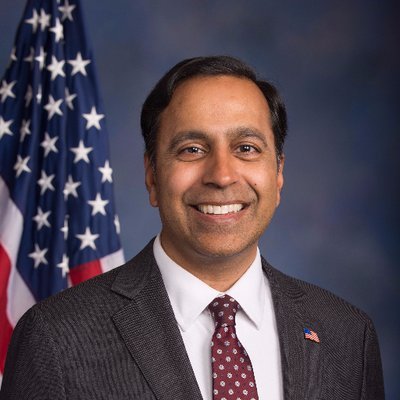
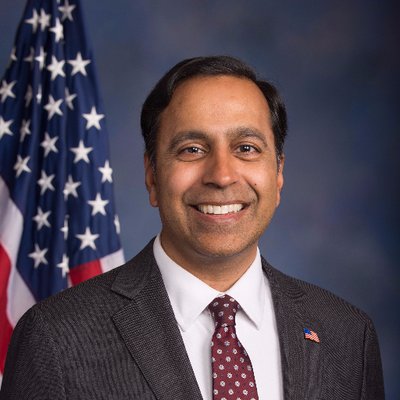
Indian American Congressman Raja Krishnamoorthi, a senior member of the House Oversight Committee, has sent a letter to Department of Homeland Security Secretary Markwayne Mullin seeking clarification following reports that the Trump administration has expanded efforts to “obtain sensitive voter information and engage directly” with state and local election officials.
The letter references reports indicating that DHS personnel requested “voter registration records, voting histories, and other election-related data in multiple states, in some cases including unredacted materials containing signatures and partial Social Security numbers.”
In the letter, Krishnamoorthi wrote, “A recent investigation found that DHS personnel requested voter registration records, voting histories, and other election-related data in at least eight states, including, in some cases, unredacted materials containing signatures and partial Social Security numbers,” adding, “The reporting indicates that these requests were made without a clearly articulated investigative basis and in areas that do not traditionally fall within DHS’s core mission.”
He noted that these reported actions raise significant legal and constitutional concerns. Election administration, he emphasized, is primarily the responsibility of state and local governments, and any federal involvement, particularly where it “touches sensitive voter data, must be clearly authorized, narrowly scoped, and handled with care.”
Advertisement
“They also risk eroding public confidence in the integrity and impartial administration of our elections,” he added.
Krishnamoorthi further highlighted that these developments come amid broader efforts to expand federal involvement in election administration, along with growing concern among election officials about potential political pressure ahead of the 2026 election cycle.
He requested that DHS provide the following information by May 8, 2026:
- “Identify all statutory, regulatory, or other legal authorities DHS relies upon to request or obtain voter registration records, voting histories, or other election-related data from state or local officials.
- Provide a list of all jurisdictions in which DHS personnel have requested or obtained election-related records since January 20, 2025, including the type of information requested and whether such requests were fulfilled.
- For each request, describe the factual basis or predicate for the inquiry, including whether the request was tied to a specific allegation, referral, or ongoing investigation.
- Describe any coordination with the U.S. Department of Justice or other federal entities regarding election-related investigations, including whether such entities reviewed, approved, or directed any such requests.
- Detail the policies and procedures governing the handling, storage, retention, and protection of sensitive voter information obtained by DHS, including any limitations on dissemination, third-party access, breach notification protocols, and timelines for deletion or destruction of such data.
- Provide all internal guidance, memoranda, or directives governing DHS involvement in election-related matters, including any changes to DHS’s role in election security, investigations, or data collection since January 20, 2025.
- Explain how any voter data obtained by DHS has been used, including whether it has been shared with other federal agencies, used to initiate enforcement actions, or incorporated into broader federal databases.
- Describe the training provided to DHS personnel engaging with election officials and the oversight mechanisms in place to ensure compliance with applicable laws, privacy protections, and constitutional limits.”