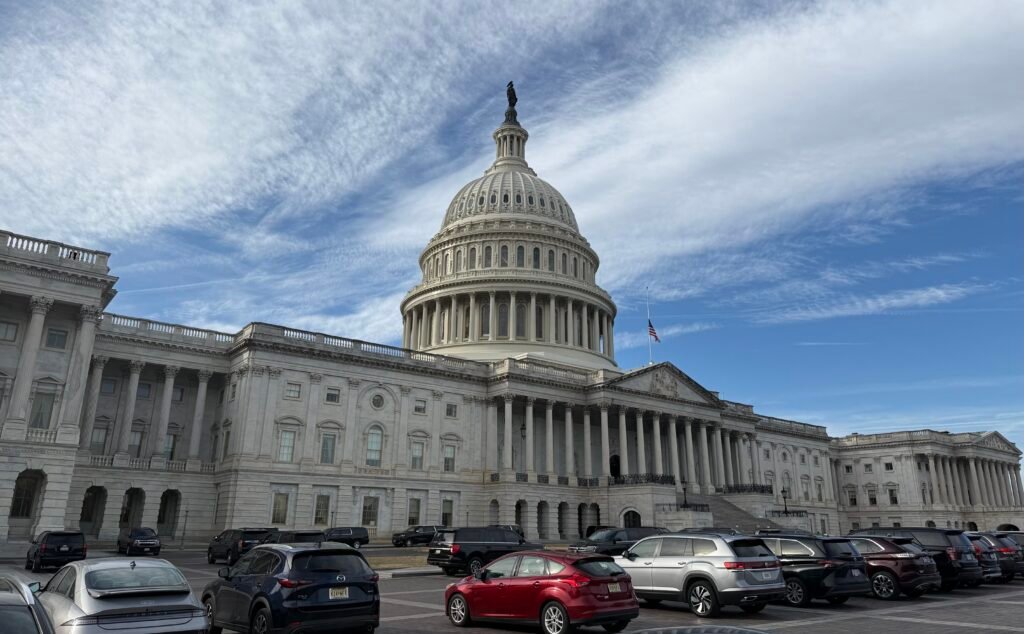
A bipartisan group of 27 U.S. lawmakers is pressing Secretary of State Marco Rubio to dramatically expand Washington’s search-and-rescue and humanitarian response to Nepal’s catastrophic floods and landslides, including the deployment of a U.S. disaster response team, advanced aerial surveillance and additional assistance to locate at least 75 Americans still unaccounted for.
In a Sept. 4 letter to Rubio, the lawmakers urged the State Department to use “every available resource” to support rescue operations and ensure the safety and recovery of Americans and others affected by the disaster.
The appeal comes after an Aug. 26 glacial collapse and landslide in the Himalayas unleashed torrents of water, rock, mud and debris through the Trishuli and Bhote Koshi river corridors, devastating communities in Nepal and along the Nepal-China border.
As of Sept. 4, more than 1,300 people had died and at least 4,000 remained missing, including at least 75 U.S. citizens, according to figures cited in the congressional letter. The disaster has destroyed homes, roads, bridges, hydropower facilities and other critical infrastructure, severely complicating rescue efforts.
Advertisement
The lawmakers acknowledged the initial U.S. response, including $500,000 provided through Catholic Relief Services for emergency shelter, relief supplies and water, sanitation and hygiene assistance, as well as $3.6 million in humanitarian assistance announced Aug. 29.
But they said the scale of the disaster demanded a far larger response.
“Nonetheless, given the unprecedented loss of life and countless missing persons, we urge the Department to do much more,” the lawmakers wrote.
The lawmakers called for five immediate measures, placing the fate of missing Americans at the center of their appeal.
They asked the State Department to provide daily updates to families of missing Americans and to Congress, adequately staff consular hotlines and provide repatriation assistance to U.S. citizens and their families.
They also called for the immediate deployment of a Disaster Assistance Response Team, or DART, to flood-affected communities. Such teams can provide search-and-rescue support, logistics, medical assistance and coordination with local authorities and humanitarian organizations. The lawmakers said a DART should be deployed “as soon as possible.”
The congressional group is also seeking a technology-driven search operation.
It urged the State Department to coordinate with other U.S. agencies and private companies to deploy high-altitude assets, thermal and infrared drones, satellite imagery and other aerial surveillance capabilities to identify people who may be stranded or trapped.
The lawmakers specifically called for coordination with the National Geospatial-Intelligence Agency and Defense Department agencies to securely share geospatial and aerial imagery with first responders, humanitarian organizations and local governments. They also urged the administration to work with commercial satellite companies to make updated, unclassified imagery available to rescue teams.
They went further, asking the State Department to explore the use of phone-location data to help find missing people.
“These tools can save lives by providing geographical awareness for safe and efficient rescue operations,” the lawmakers wrote.
The letter also calls for diplomatic coordination extending beyond Nepal. The lawmakers urged Rubio to engage disaster authorities in Nepal and China, along with international partners and donor countries, to ensure rescue teams have access to all affected areas and search zones.
The broader U.S. response, they argued, should not end when the immediate search is over.
The lawmakers called for additional International Disaster Assistance funding for search and rescue, water and sanitation, food and transportation, as well as a long-term reconstruction strategy for Nepal.
Citing Nepal’s Finance Minister Swarnim Wagle, they said reconstruction could cost $4 billion to $5 billion, or nearly one-tenth of Nepal’s economy.
“The State Department should plan for significant reconstruction assistance to rebuild lost communities, harden infrastructure against future disasters, and spur development in affected regions,” they wrote.
The letter noted that Nepal is receiving international assistance from Britain, South Korea, India, China, the Red Cross Society of China, the World Bank, the United Nations and nongovernmental organizations.
But the lawmakers argued that Washington should assume a more prominent role.
“We urge the State Department to take a leading role in the search and rescue efforts, find all missing Americans, and help rebuild communities devastated by this tragedy,” they wrote.
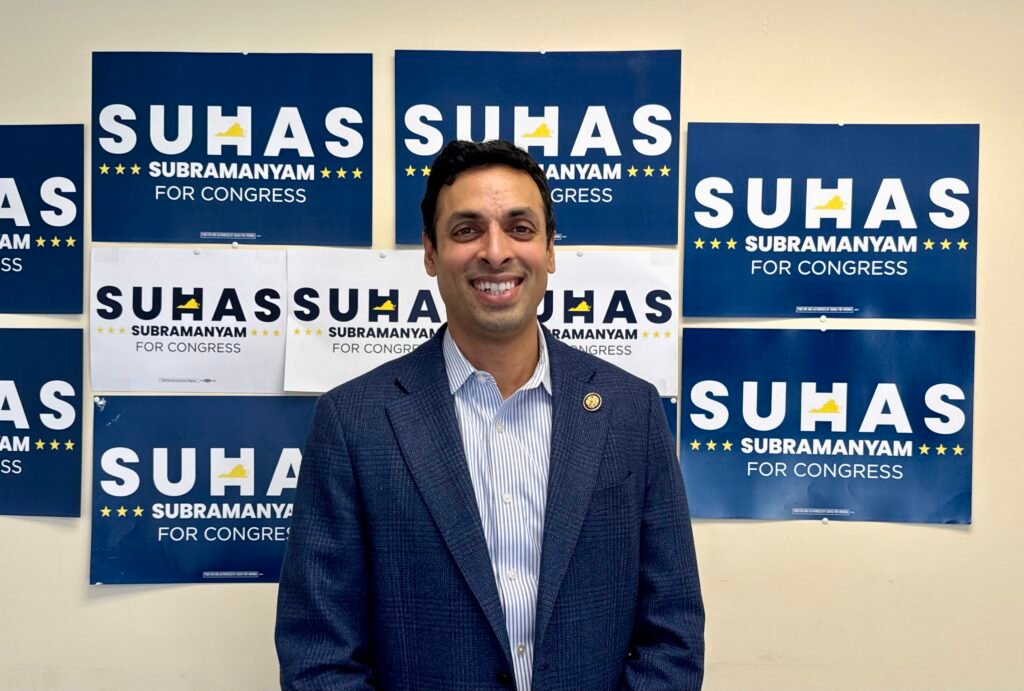
The signatories include several prominent members of the Congressional South Asian community: Ro Khanna, Raja Krishnamoorthi, Suhas Subramanyam, Pramila Jayapal and Shri Thanedar.
The full list of signatories is:
Ro Khanna, Raja Krishnamoorthi, Suhas Subramanyam, Yvette D. Clarke, Lateefah Simon, Jasmine Crockett, Nydia M. Velázquez, Rashida Tlaib, Eleanor Holmes Norton, Ilhan Omar, Pramila Jayapal, Stephen F. Lynch, Shri Thanedar, Jesús G. “Chuy” García, James P. McGovern, Kevin Mullin, Sydney Kamlager-Dove, Eric Sorensen, Robert Garcia, Adelita S. Grijalva, Sylvia R. Garcia, Jan Schakowsky, Jennifer L. McClellan, Thomas R. Suozzi, Sarah Elfreth, Marc A. Veasey and Yassamin Ansari.
For the Nepalese and wider South Asian diaspora in the United States, the congressional intervention has particular significance because the disaster has directly affected American citizens with family and community ties to Nepal.
The lawmakers’ demands now put pressure on the State Department to move beyond its initial humanitarian assistance and mobilize the specialized personnel, technology and diplomatic resources they argue are necessary to find the missing and help Nepal begin rebuilding.