There is a particular kind of reputational crisis that happens when powerful people start to believe the whole world is against them. It can be emotionally persuasive. It can rally supporters. It can turn scrutiny into persecution and defeat into proof that the system was rigged all along. But it is also a difficult card to play well, because the public tends to have a sharp ear for self-pity from people who already have money, status and influence.
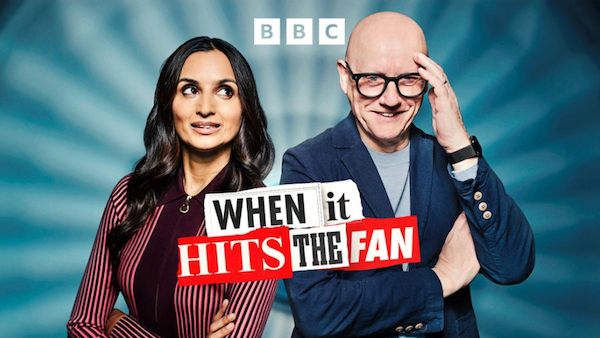
This week on When It Hits the Fan, David Yelland and I looked at the communications strategy behind two very different men facing scrutiny in very different circumstances. Prince Harry, after losing his High Court case against the publisher of the Daily Mail. And Nigel Farage, after responding to questions over his finances and parliamentary declarations with a long, direct-to-camera attack on the media.
Both men appeared to be making a similar move. When the system turns against you, tell the public the system itself is the problem.
Prince Harry and the Limits of Grievance
Prince Harry lost his High Court privacy case against Associated Newspapers, the publisher of the Daily Mail and Mail on Sunday, over allegations of unlawful information gathering. He and the other claimants, including Baroness Doreen Lawrence, responded by describing the judgment as a “whitewash.”
Advertisement
It was not a surprising response because it continued a pattern that has come to define much of Harry’s public life: the belief that the press has not merely wronged him, but actively shaped the damage around him.
There is real history behind that feeling. Harry is not inventing his grievance from nothing. He has previously won in his wider battles over phone hacking, and few people could reasonably deny that sections of the British tabloid press behaved badly in the past. His anger has a foundation.
But in reputation management, being right about one part of the story does not mean the public will follow you through every chapter of it.
That is Harry’s problem now. His brand is in danger of being consumed by grievance. What may once have felt like a campaign for justice can, over time, start to feel like a permanent argument with the world. Even sympathy has limits when it is repeatedly asked to return to the same emotional place.
There is also an important communications truth here. Winning in court and winning the story are two different verdicts. Losing in court and attacking the judgment may satisfy your existing supporters, but it also risks strengthening the very opponent you were trying to defeat.
Paul Dacre, the former Daily Mail editor-in-chief, is normally a private figure, but after the ruling he appeared in a video statement defending the Mail and attacking Harry’s position. This legal victory gave the Mail permission to become louder and more personal.
Harry’s challenge is now to move from “me against the media” to something more uplifting and hopeful. Invictus remains his strongest reputational asset. It is the story of service, veterans, resilience and collective purpose. In that space, he is not “me against the world.” He is part of something larger than himself.
That is the story that can still do positive reputational work for him.
Nigel Farage and the Outsider Trap
Nigel Farage responded to questions about his finances with a 14-minute piece to camera. No journalist in the room. No follow-up questions. No hostile interviewer. Just Farage, speaking directly to the people he wanted to reach.
From a communications perspective, this is owned media deployed as a defensive weapon. The questions around Farage concern reported financial support, including claims about George Cottrell, a long-time associate, and donations and benefits in kind. Farage’s response was not simply to deny wrongdoing. It was to suggest that scrutiny itself was part of a wider campaign against him.
When scrutiny becomes uncomfortable, the temptation is to turn the spotlight away from the substance and onto the people asking the questions. The story is no longer “what happened?” It becomes “why are they coming after me?”
For Farage, this is politically useful territory. He has spent years positioning himself as the man outside the establishment, even though he is now very much part of the political system he attacks. That outsider image is central to his appeal. It allows him to convert investigation into persecution, criticism into proof, and scrutiny from institutions into evidence that he must be doing something right.
The risk is that this works too well. If your brand depends on being under attack, you need to keep finding attackers. The Media, parliament, regulators, basically the wider establishment. The danger is that every question starts to look like a conspiracy and every process becomes a stitch-up. That can be energizing for supporters, but narrowing for everyone else.
The difference between Farage and Harry is audience. Farage has built a direct channel to people who already distrust the institutions scrutinizing him. He understands the creator economy. He knows how to speak to camera, create drama and make himself the center of the story. He is not merely reacting to a media cycle. He is trying to create one.
Harry does not have that same infrastructure. He does not have a personal social media platform through which to mobilize millions of supporters directly. He often has to rely on statements, legal filings and coverage from the very media ecosystem he distrusts.
That makes the victim strategy much harder for him to land.
The Trump Playbook Does Not Always Travel Well
The obvious comparison is President Donald Trump who has spent years turning legal jeopardy, media scrutiny and institutional pressure into proof of his own advantage. His message after indictment was not simply “they are coming after me.” It was “they are coming after you, and I am standing in the way.”
That is a powerful piece of communication because it makes the audience feel they too are under attack. Suddenly, criticism of the leader becomes criticism of the public. A legal process becomes a political drama. The individual becomes the shield. It is crude and highly effective, but it took years to build.
Trump did not begin with the victim narrative. He built an audience who became his base. He trained his supporters to distrust mainstream media, to see negative coverage as confirmation, and to interpret legal scrutiny as political persecution. “Fake news” became not just a slogan, but a protective wall.
Farage is borrowing some of that language and posture, but Britain is not America. A tactic that lands in one political culture can misfire in another. The British media may be brutal, but Parliament’s standards processes are not easily dismissed as “fake news.” The institutional landscape is different. The emotional contract with the public is different. The appetite for spectacle exists, but so does a deep suspicion of people who appear too keen to cast themselves as martyrs.
The victim narrative is always a gamble. Get it right and you turn scrutiny into solidarity. Get it wrong and it sounds like self-pity from someone with power, money and privilege.
When powerful people claim the whole world is against them, they may win applause from those already on their side, but seldom attract sympathy from beyond their base.
If everyone is always against you, perhaps the problem is not your enemies. Perhaps it is a me problem.
Disclaimer: The opinions and views expressed in this article/column are those of the author(s) and do not necessarily reflect the views or positions of South Asian Herald.