Born in Kenya in 1948 during the British colonial era, Surjit Singh Rihal belongs to a distinguished generation of hockey Olympians whose careers extended far beyond the field. A player, coach, referee, teacher, researcher, and author, Rihal’s contributions to hockey and education spanned Africa, Asia, and North America, making him one of the sport’s most multifaceted figures.
Rihal spent his formative years between Kenya and India. He began playing hockey at Juja Road Primary School in Nairobi before moving to India to study at Lyallpur Khalsa College in Jalandhar, where he trained alongside notable hockey players including Ajit Pal Singh, Hardial Singh Kular, Hardev Singh Kular, and Shiv Datt.
After returning to Kenya, Rihal enrolled at the University of Nairobi and joined the renowned Sikh Union Club. His hockey career quickly flourished, earning him selection for the inaugural Hockey World Cup in Barcelona in 1971, followed by participation in the 1973 World Cup in Amsterdam. He was also selected for the World XI squad during the 1972 Munich Olympic Games, further cementing his place in international hockey.
Widely regarded as one of the unsung contributors to Kenyan hockey’s rise on the global stage, Rihal was part of a golden era for the sport in Kenya. The national team, led by Avtar Singh Sohal, narrowly missed a podium finish at the 1971 World Cup after losing the bronze medal match to India. Kenya’s performances during that period established the country among the world’s leading hockey nations, with players of Indian descent, particularly Punjabis, forming the backbone of the team.
Advertisement
Unlike many athletes of his era, Rihal also pursued academics and worked as a Geography teacher, a path rarely taken by hockey Olympians. Following his playing career, he remained closely connected to the sport as a coach and umpire, including a stint in Canada, before eventually settling in England while continuing to maintain strong ties with Kenyan hockey.
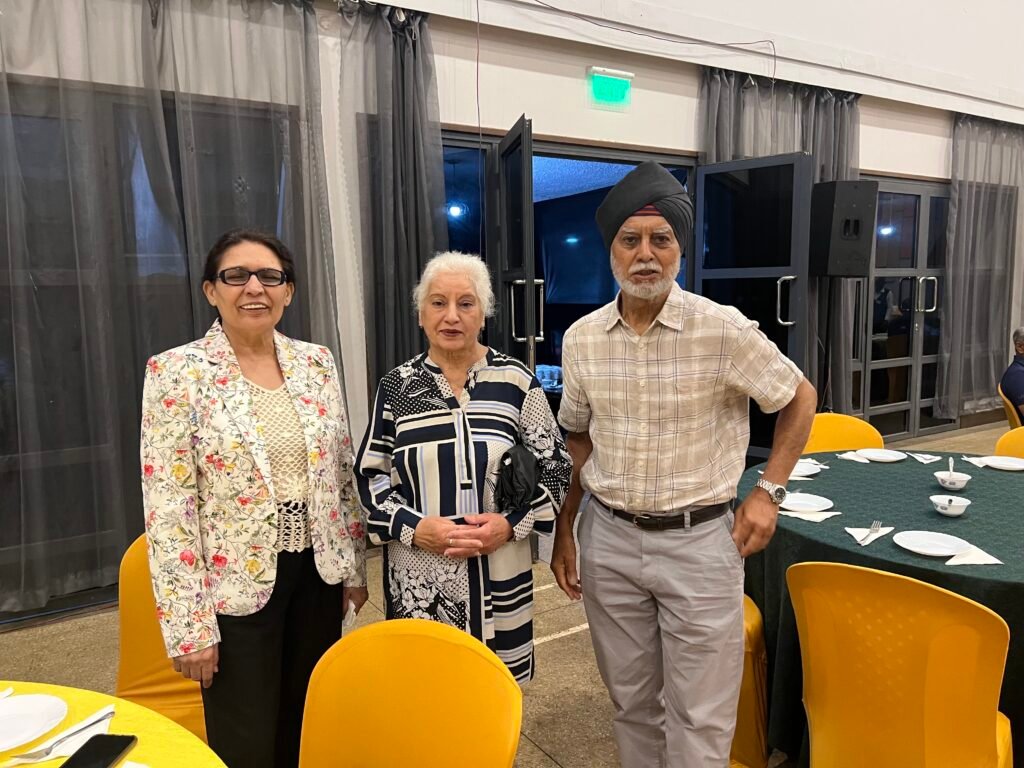
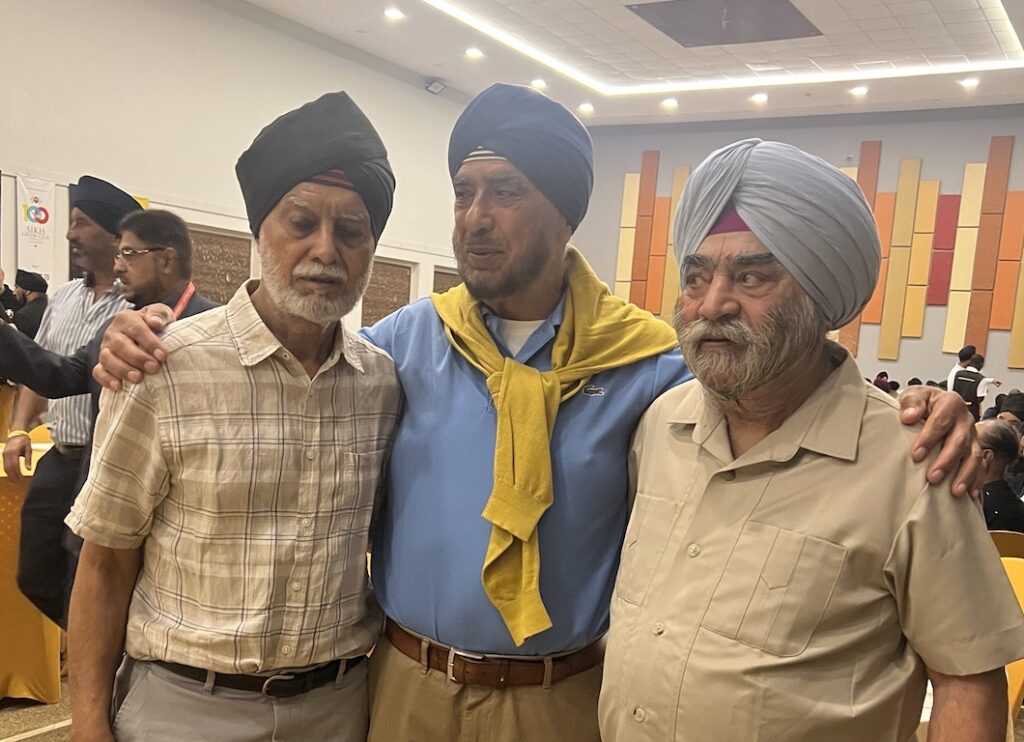
Recently, Rihal and his wife, Kiran, returned to Nairobi to participate in the centenary celebrations of Sikh Union Club, where he began his hockey journey. During the celebrations, he introduced a richly illustrated family memoir documenting the history of his ancestors in both India and Kenya. The book reflects on immigration, family heritage, rural Punjab, and the evolution of the Punjabi community in Kenya.
The memoir also captures vivid details of Rihal’s childhood in Nairobi’s Niagara neighborhood, where many Punjabi settlers lived. He recounts growing up in modest conditions before his family eventually built a larger home in Park Road in the early 1950s. The book further traces his ancestral roots in Bhin village in Punjab’s Nawanshahr district and recalls his family’s long journey from Mombasa to Mumbai and onward to Punjab by rail and horse-drawn carriage.
Rihal also reflects on the influence of early mentors, including Edgar Fernandes, who represented Kenya at the 1960 Rome Olympics and inspired him both in hockey and teaching. During the Sikh Union Club celebrations, Rihal delivered a digital presentation highlighting his family history and the evolution of Kenyan hockey.
Rather than focusing solely on his sporting achievements, Rihal’s book, Happiness is the Main Goal in This Game of Life, edited by Sham Lal Puri and published by Crownbird Publishers, pays tribute to his parents, grandparents, and extended family while reflecting on life in rural Punjab and the immigrant experience in Kenya. The work offers a broader portrait of a hockey star whose legacy extends well beyond the sport.