Join WhatsApp Channel

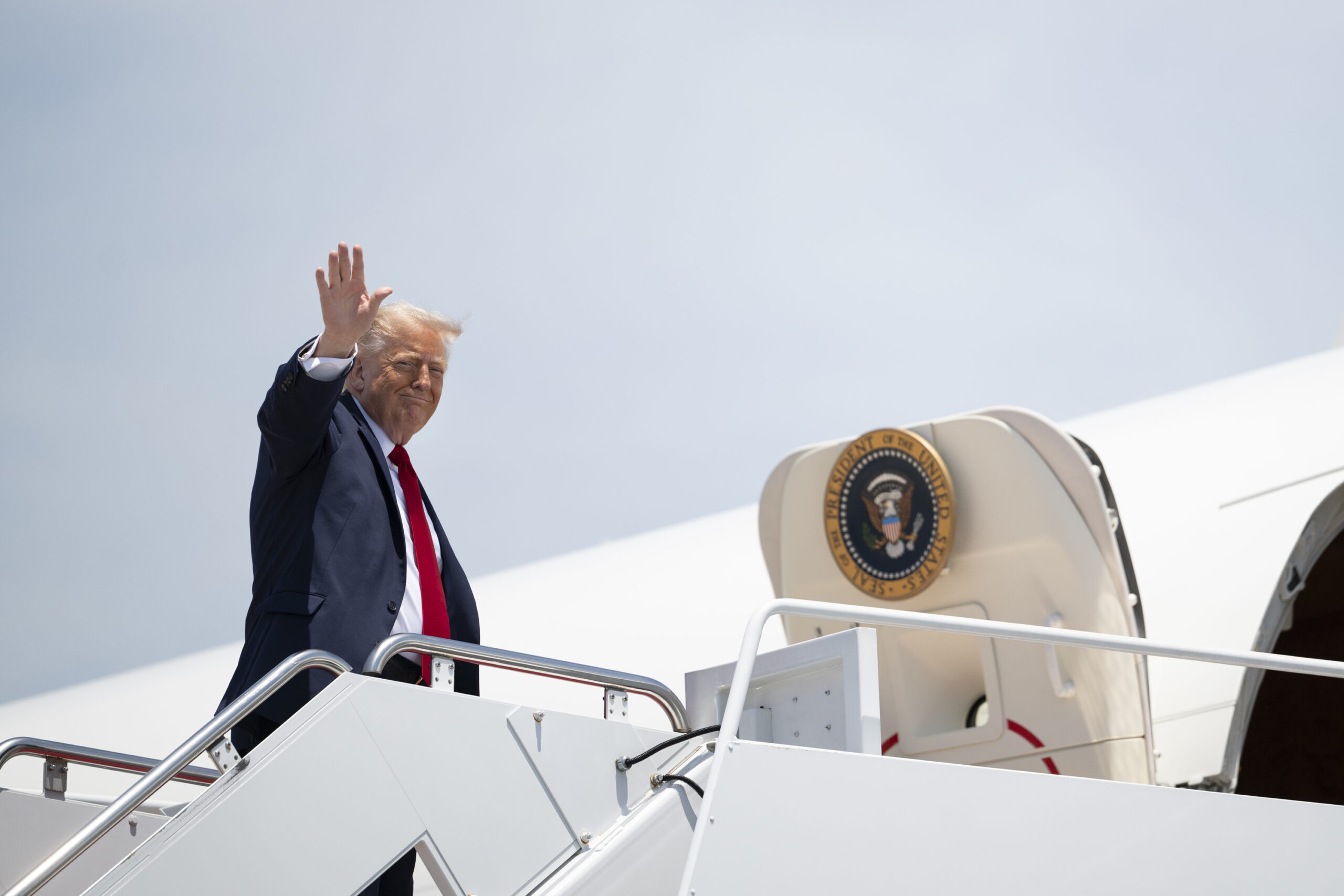
Indian Americans welcomed a June 8 ruling by a federal court in Massachusetts that invalidated President Donald Trump’s proclamation requiring employers to pay a $100,000 fee for new H-1B visa petitions. The court’s ruling concluded that the fee effectively constituted a “tax” and lacked authorization from Congress.
In his decision, U.S. District Judge Leo T. Sorokin wrote that the administration exceeded its authority by implementing the fee without approval from Congress.
“The Court finds that the Policy imposes a tax on H-1B petitions without the requisite delegation by Congress,” Sorokin wrote. “There are no statutory powers authorizing Defendants to implement a $100,000 tax on H-1B petitions.”
In State of California et al. v. Mullin et al., Judge Sorokin noted that President Trump signed a proclamation on September 19, 2025, requiring employers seeking new H-1B visas to pay $100,000 per petition. The lawsuit was brought by 20 states challenging the actions of federal departments and officials responsible for implementing the proclamation.
“The Policy implementing the Proclamation is declared unlawful and is VACATED in its entirety,” the judge ruled.
Welcoming the decision, Indian American Congressman Raja Krishnamoorthi said that the “ruling is a welcome rejection of an unlawful policy that threatened America’s economic competitiveness and made it harder for businesses, hospitals, universities, and research institutions to attract the high-skilled talent they need to succeed.”
He noted that the H-1B program drives “innovation, strengthens American leadership in critical industries, and supports job creation” here at home by helping companies grow and invest in the United States.
“Instead of imposing arbitrary barriers that push talent and investment elsewhere, we should focus on preventing abuse while ensuring America remains the best place in the world to build, innovate, and grow our economy,” added Krishnamoorthi. “I will continue working to strengthen our workforce, protect American workers, and expand economic opportunity.”
President, American Medical Association, Bobby Mukkamala, said the “decision blocking the $100,000 visa fee is a victory for patients. At a time when communities across the country face physician shortages and growing barriers to care, we should be removing obstacles—not creating new ones— to attract talented physicians and other highly skilled professionals.”
Mukkamala noted that International medical graduates play a “vital role” in caring for patients, particularly in underserved and rural areas. The American Medical Association supports policies that strengthen the physician workforce and help ensure patients can get the care they need, when and where they need it.
Khanderao Kand, chief of Policy & Strategy, Foundation for India and Indian Diaspora Studies (FIIDS) welcomed the Massachusetts federal court’s decision striking down the $100,000 H-1B visa fee, which restores predictability and fairness to the employment-based immigration system. This ruling, according to him, is appropriate for preserving America’s competitive advantage in “innovation, research, and entrepreneurship.” Access to highly skilled global talent remains essential for the continued growth of “technology, healthcare, and advanced manufacturing sectors.”
“The judgment reinforces the principle that major policy changes must be grounded in statutory authority and economic realities,” he said adding that FIIDS believes a “balanced, merit-based” immigration framework strengthens both American businesses and the broader economy.
Related posts:
 New $250 Visa Integrity Fee to Increase U.S. Travel Costs for Foreign Nationals and Employers
 Maryland Reappoints Chung Ki Pak as Chief Administrative Law Judge
 President Trump Says India Trade Deal Intact After Supreme Court’s Decision Striking Down Global Tariffs
 President Trump’s Proclamation Imposes $100K H-1B Fee, Sparks Indian American Outrage