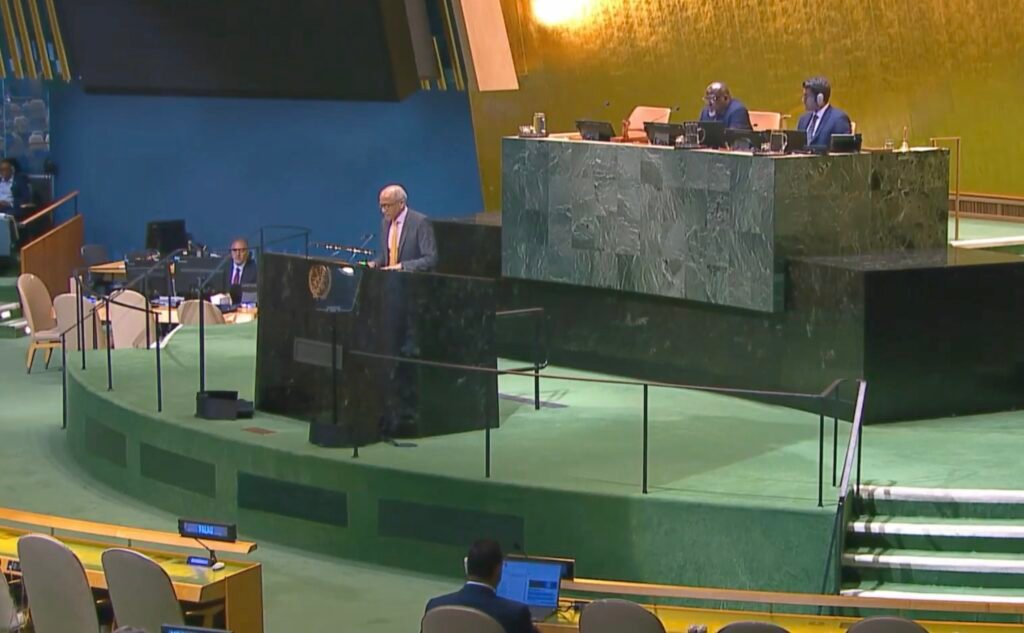
India’s Permanent Representative to the United Nations, Ambassador P. Harish, has told the United Nations General Assembly (UNGA) that New Delhi has been closely monitoring the conflict in Iran and the Gulf region since its outbreak on February 28, 2026, expressing “deep concern” and calling on all parties to act with restraint.
India has urged all states to “exercise restraint, avoid escalation and prioritize safety of civilians.”
Addressing the UNGA debate under the Veto Initiative on “The Situation in the Middle East” on April 16, Ambassador Harish said, “We have urged all states to promote dialogue and diplomacy and de-escalation of tensions, and to purposefully address underlying issues. We have also called for respect of sovereignty and territorial integrity of all states.”
The Ambassador addressed the General Assembly during a session in which China and the Russian Federation explained their use of the veto on April 7. The veto blocked a Security Council draft resolution submitted by Gulf States that sought to ensure freedom of navigation in the Strait of Hormuz amid rising tensions in the Middle East.
Advertisement
Ambassador Harish highlighted that developments affecting “commercial shipping” through the Strait of Hormuz are of particular concern to India, given their implications for the country’s “energy and economic security.” He noted that India has “deplored” the targeting of commercial vessels during the conflict, adding that Indian seafarers have lost their lives in the course of the hostilities.
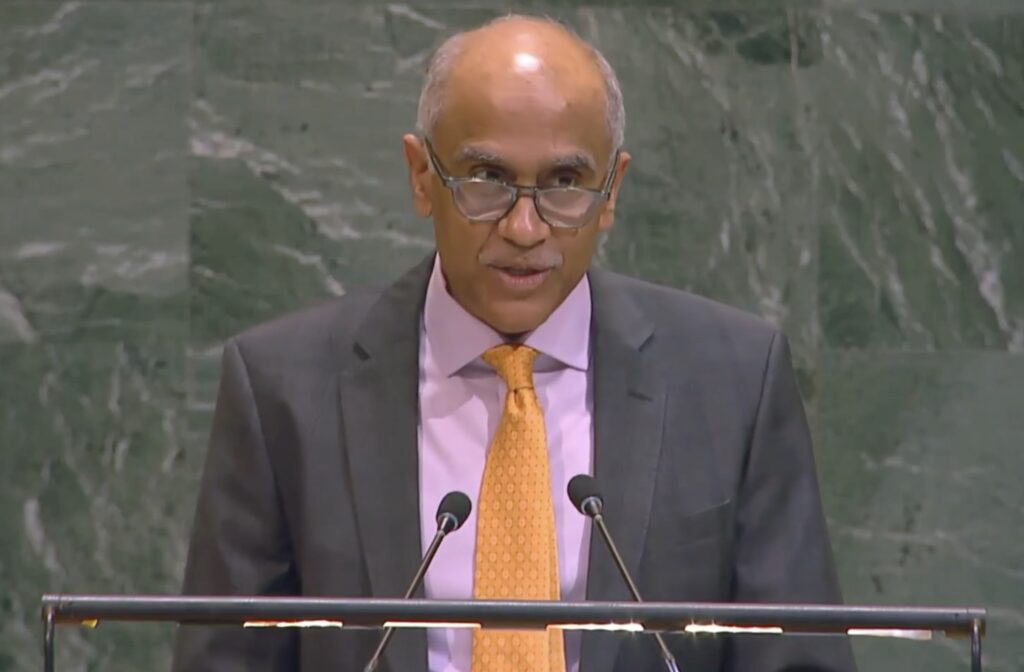
“We reiterate that the targeting of commercial shipping and endangering innocent civilian crew members, or otherwise impeding the freedom of navigation and commerce in the Strait of Hormuz are unacceptable. International law in this regard must be fully respected,” Ambassador Harish said.
Ambassador Harish further added, “We strongly urge that safe and unimpeded freedom of navigation and global commerce through the Strait of Hormuz be restored at the earliest.”
“Oil prices have surged by more than 40 per cent, rising to around $100 per barrel, with spikes above $110,” noted General Assembly President Annalena Baerbock, adding, “While the vetoed resolution focused on the Strait of Hormuz, what we are witnessing is not a single crisis, but the convergence of multiple, overlapping and long-standing fault lines.”
The representative of the Russian Federation said her country exercised the veto because the draft resolution failed to reflect the broader context of the conflict and could have enabled the Council to authorize certain protective measures under the pretext of ensuring safe navigation, according to UN.
“Every paragraph was replete with confrontational and factually incorrect elements,” she said, adding that the text attempted to portray Iran as the sole threat to international peace and security.
China’s delegate said his country’s veto upheld international fairness and justice, defended the UN Charter, prevented further escalation, and created conditions conducive to dialogue.
He added that Beijing “always determines its voting position based on the merits of the issue itself and whether the adoption of a resolution would genuinely contribute to resolving the issue and achieving peace.”
Justifying the vetoes by China and the Russian Federation, Iran’s delegate noted, “Any viable solution must ensure a definite and irreversible end to the aggression.”