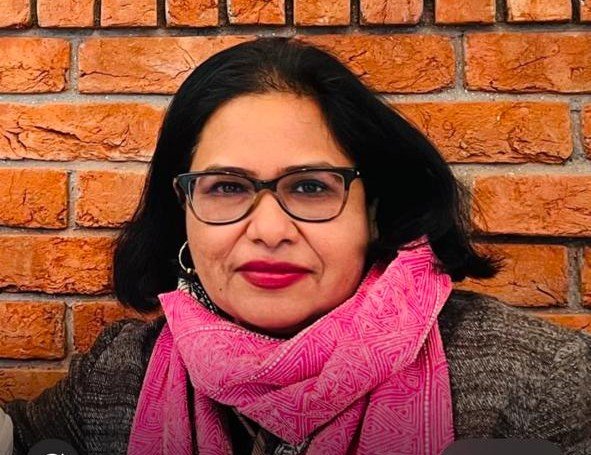
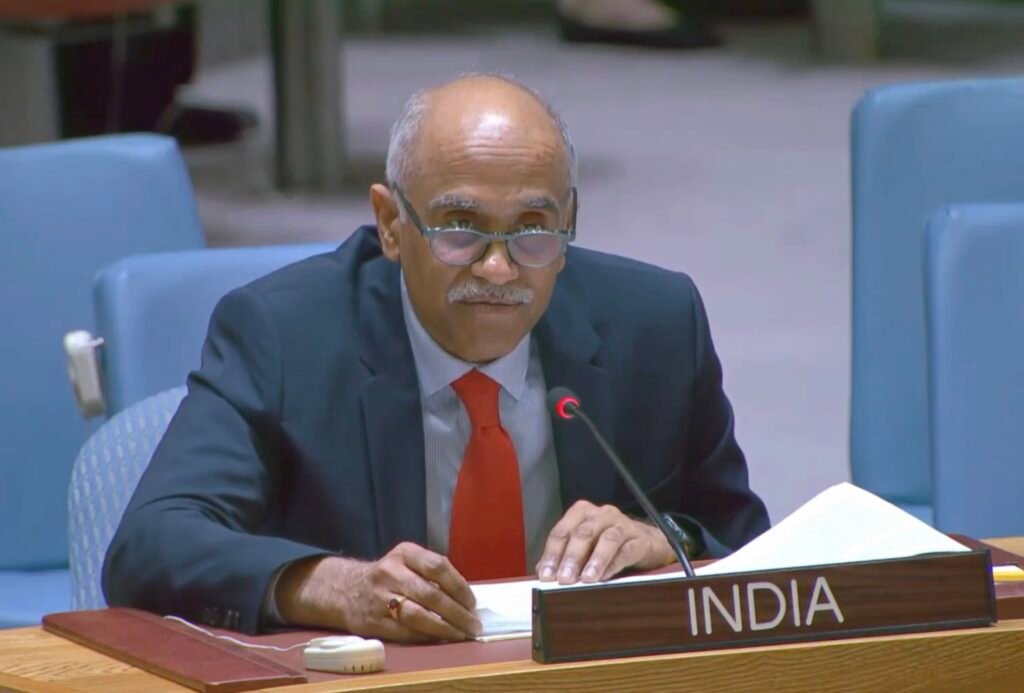
Speaking at the United Nations Security Council Open Debate on “Upholding the Purposes and Principles of the UN Charter and Strengthening the UN-centered International System” on May 26, 2026, India’s Permanent Representative to the United Nations, Harish Parvathaneni, underscored the growing strain on multilateralism amid ongoing geopolitical tensions and divisions.
Harish said the debate’s theme had gained renewed importance at a time when global fragmentation and geopolitical fault lines were testing the effectiveness of the United Nations and the broader multilateral system. He noted that concerns surrounding the legitimacy, relevance, and effectiveness of the UN, particularly the Security Council’s ability to fulfill its mandate of maintaining international peace and security, were increasing.
Reflecting on the origins of the United Nations, he said the institution emerged from the devastation of the Second World War, a conflict that deeply affected India despite it not being directly involved as an independent nation at the time.
“The devastating impact of this War was strongly felt by my country, India. Over two and a half million Indian soldiers fought alongside the Allied Powers and over 87,000 Indian soldiers made the supreme sacrifice,” he said. “This was not our war, but we paid dearly for it. Therefore, it was natural for us to become a founding member of the UN. It was reflective of our yearning for peace.”
Advertisement
He added that despite the establishment of the United Nations, colonialism persisted for several decades, preventing countries such as India from receiving recognition for their contributions and sacrifices during the war.
Harish said India remained firmly committed to the United Nations and multilateralism throughout the Cold War period, contributing significantly to UN peacekeeping and peace and security initiatives in regions including Korea, Indochina, Congo, and Gaza. “India continues to be guided by this approach,” he said.
Highlighting the need for institutional reform, he noted that although the UN Charter mandated a review conference in 1955, no such comprehensive review has taken place. He pointed out that while limited amendments in the 1960s and 1970s expanded the number of elected members in the Security Council and increased membership in ECOSOC, the core decision-making structure of the Council’s permanent members has remained unchanged for nearly eight decades.
According to the Indian envoy, the Security Council’s role expanded significantly after the Cold War, accompanied by increased peacekeeping responsibilities and budgetary growth. However, he said the geopolitical environment had changed substantially since the 1990s and was now marked by confrontation and divisions, including among veto-wielding permanent members.
Describing the UN’s institutional framework as outdated, Harish said, “The central to UN’s challenges today is an architecture that is frozen in the 1940’s. It is akin to running advanced AI technologies on the 1945 version of the computer called the Electronic Numerical Integrator.” He added that the lack of progress in inter-governmental negotiations on Security Council reform reflected entrenched interests seeking to preserve the existing structure.
Calling for adaptability within the organization, he said the UN “must be flexible and adaptable to deliver meaningfully on the principles and purposes of the UN Charter.” He also warned against what he described as increasing double standards in the international system, including inconsistencies between stated principles and actual actions.
India outlined several proposals aimed at strengthening a UN-centered international system. First, Harish emphasized the importance of reinforcing the role of the General Assembly, describing it as the UN’s most democratic organ because it does not provide disproportionate privileges to any member state.
Second, he called for comprehensive reform of the Security Council to reflect current geopolitical realities, including expansion of the permanent membership category. He argued that continuing to shield permanent membership from reform while only discussing increased representation in the elected category would not adequately address concerns over representation and legitimacy.
He also stressed the need for greater transparency within the Security Council, stating that broader UN membership should have improved access to both historical and contemporary documents. He added that maintaining the Council’s rules of procedure in provisional status was no longer sustainable. “The UN Security Council must be a living instrument, not a fossil.” he said.
During his remarks, Harish also responded to comments made by Pakistan at the debate, calling them “baseless and unwarranted.” He stated that India had faced cross-border aggression from Pakistan since independence and accused Islamabad of violating the principles of sovereignty, territorial integrity, and peaceful coexistence through wars and continued support for cross-border terrorism.
“The use of cross-border terrorism by Pakistan and its doctrine of ‘bleeding India by a thousand cuts’ exposes its hollow rhetoric of commitment to the UN Charter,” he said, adding that India had the right to defend itself against terrorism. He further stated that Pakistan must “credibly and irrevocably end its support for all forms of terrorism.”
Harish also reiterated India’s commitment to the principles of the UN Charter and stressed that reforming the United Nations, particularly the Security Council, was essential for preserving the institution’s credibility, legitimacy, and continued relevance.