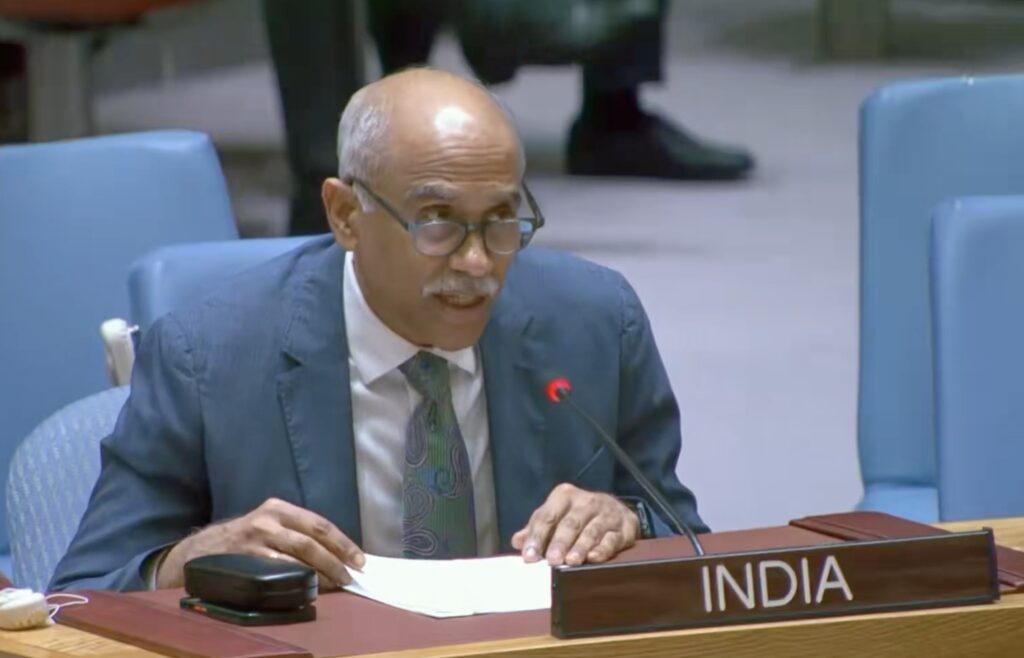
India’s Permanent Representative to the United Nations, Ambassador Harish Parvathaneni, underscored India’s commitment to combating conflict-related sexual violence (CRSV) while highlighting the country’s domestic initiatives and contributions to UN peacekeeping operations.
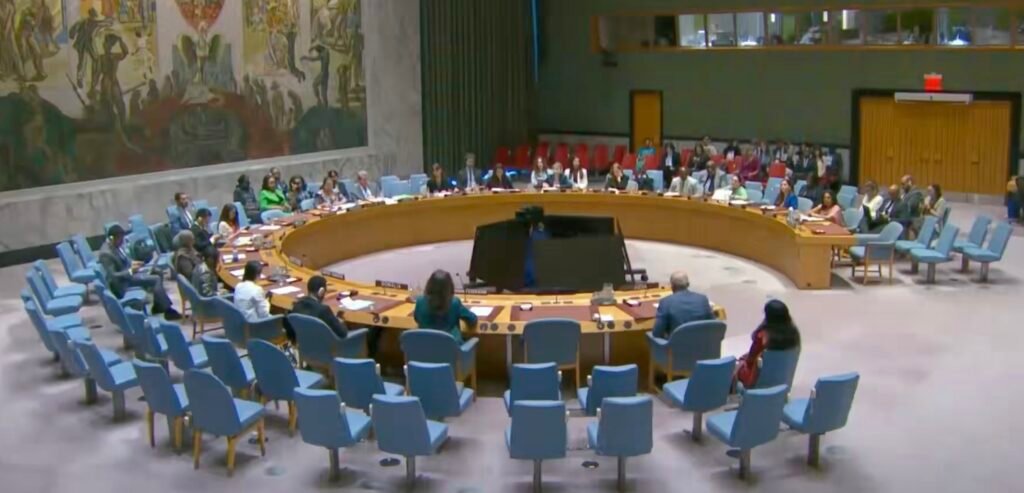
Speaking during the UN Security Council Open Debate, “Honoring the Promise of International Law to Survivors of Conflict-Related Sexual Violence (CRSV),” on July 8, 2026, Ambassador Harish said the issue requires sustained collective action by UN member states, particularly in light of the UN Secretary-General’s latest report, which documented a sharp rise in verified cases of conflict-related sexual violence in 2025 and the extreme brutality associated with those crimes.
“Sexual violence continues to be used as a means of war, terrorism, torture and political repression — to subjugate communities, suppress dissent and inflict human suffering. This continues amid a thriving culture of impunity. We strongly condemn such heinous acts,” he emphasized.
Harish said conflict-related sexual violence “devastates” women and leaves lasting “scars” on the broader communities affected by violence.
Advertisement
“Beyond physical harm, the psychological trauma and social isolation that follows demand carefully designed interventions for the rehabilitation and reintegration of survivors,” he added. “Addressing this scourge, therefore, calls for a multi-faceted national approach, aimed towards deterring and prosecuting such crimes and ensuring delivery of justice to the victims.”
Highlighting India’s experience in UN peacekeeping, the Ambassador described the deployment of women peacekeepers as a “proven measure” with a transformative impact in addressing CRSV. He noted that India’s first all-women Formed Police Unit, deployed to Liberia in 2007, played a key role in addressing “criminality, deterring sexual and gender-based violence” while helping restore safety and confidence among local communities.
He said women peacekeepers also strengthen institutional mechanisms to prevent conflict-related sexual violence. As an example, he highlighted the work of Major Mouiz Yaseen, who, as Force Ombudsperson and Welfare Officer with the United Nations Mission in South Sudan (UNMISS), established an accessible, confidential, and victim-centered channel for informal grievance reporting.
According to Harish, Yaseen conducted more than 40 tailored training sessions for troop- and police-contributing countries and military observers and established a Force Gender Database to support “evidence-based, gender-responsive planning.”
The Ambassador also recognized the contributions of Major Soniya Devendra Newaskar, the focal point for uniformed women and a member of the UNMISS Gender Task Force. He said she played an active role in intelligence and planning efforts to prevent CRSV, strengthened collaboration between UN Police and military personnel through best practice networks, and engaged with the host nation on gender-related issues.
He noted that both Major Mouiz Yaseen and Major Soniya Devendra Newaskar are being awarded the 2026 Military Gender Advocate of the Year Recognition Certificate by the UN Secretary-General for their outstanding contributions.
Turning to India’s domestic efforts, Harish said the country’s international initiatives are rooted in a three-pronged national strategy to eliminate violence against women.
“Our international efforts to combat CRSV flow from our domestic policy based on a three-pronged approach to eliminate violence against women,” he said, noting that the strategy focuses on creating a safe environment for women, effectively implementing laws to protect them, and providing infrastructure to support women in distress.
He said India has established the nationwide Women’s Helpline 181, which operates across the country, and launched the Safe City Project in major urban centers to improve women’s safety in public spaces. Women Help Desks have also been established at police stations nationwide.
In addition, more than 900 Sakhi One Stop Centres have been established across India to provide women in distress with shelter and medical, legal, and psychological assistance under one roof.
“India’s penal code was also revamped by introducing stringent provisions in criminal law for violence against women, including enhanced penalties for sexual offences and instituting survivor-centric procedures to safeguard the dignity and rights of victims,” he added. “Fast Track Special Courts have been set up to ensure efficient investigation and prosecution of offenders. These efforts are underpinned by the Nirbhaya Fund, with a corpus of nearly US $930 million, specifically dedicated for initiatives on women’s safety.”
Harish reaffirmed India’s commitment to working with the United Nations and member states to share its experience and support global efforts to protect women and ensure justice for survivors of conflict-related sexual violence.
The Ambassador also congratulated the Democratic Republic of the Congo on assuming the presidency of the UN Security Council for July and thanked the UN Secretary-General’s Special Representative on Sexual Violence in Conflict, Pramila Patten, and other participants for their contributions to the discussion.