 Join WhatsApp Channel

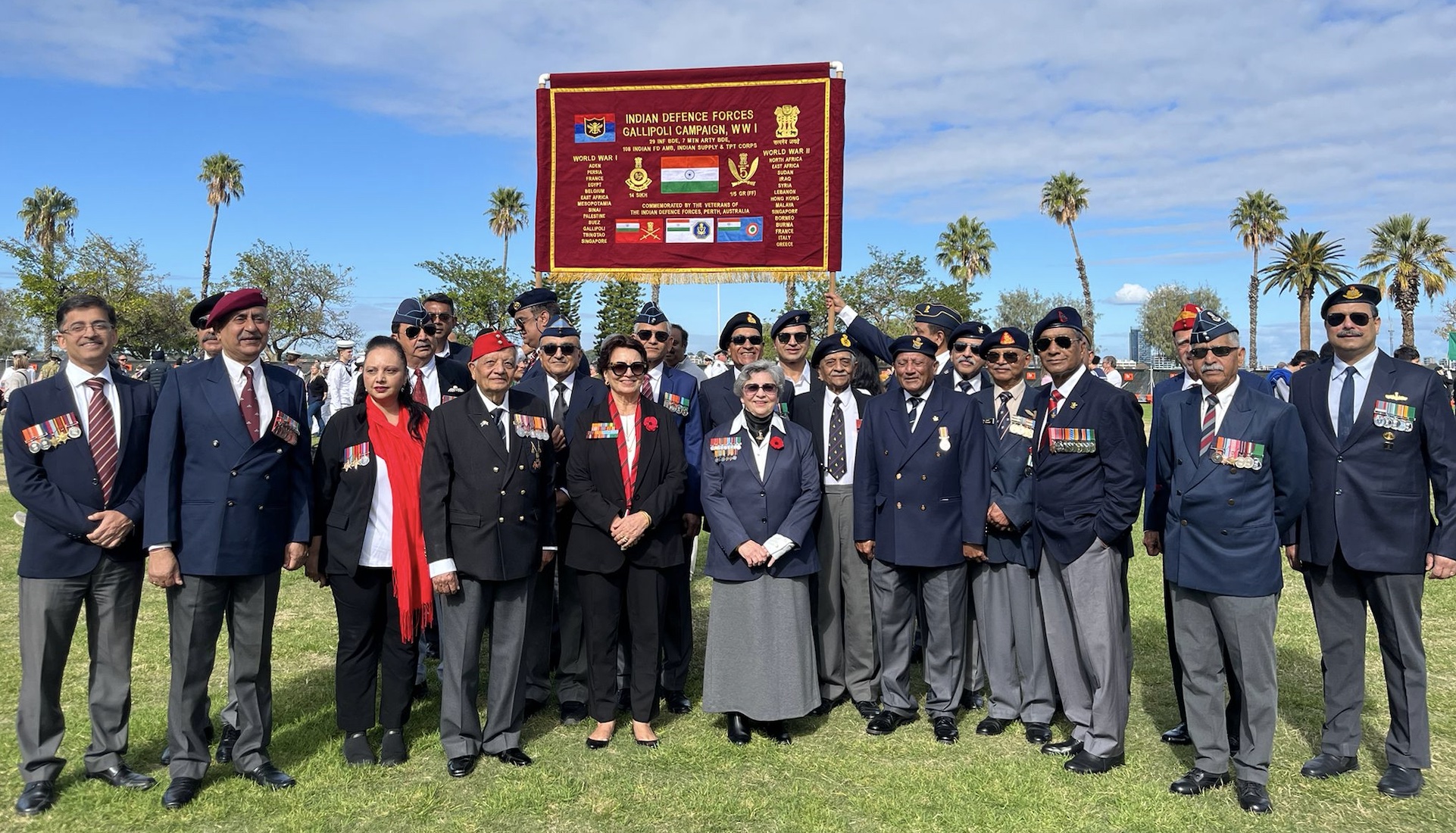
The Indian Military Veterans contingent joined thousands at the ANZAC Day Parade in Perth on April 25, 2026, carrying forward a shared history of service that links India and Australia across generations.
Led by veterans and accompanied by next of kin, the contingent marched in tribute to Indian soldiers who fought alongside the ANZACs. Captain Rajesh Mittal, who marched with the Indian contingent, noted that around 16,000 Indian soldiers took part in the Gallipoli campaign in 1915 during the First World War, and that nearly one in ten of them lost their lives. The presence of next of kin alongside veterans formed a visible part of the contingent’s tribute.
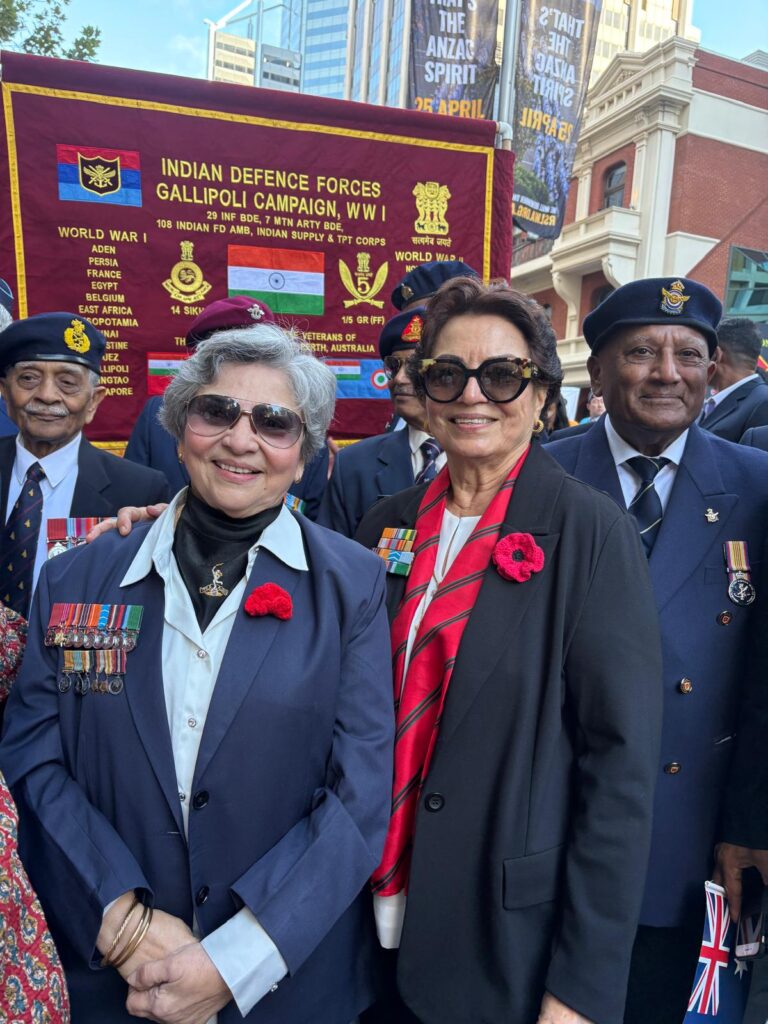
Captain Mittal added that participation also reflects military protocol and remembrance, with veterans wearing their own medals on the left lapel, while next of kin wears those of their loved ones on the right. Among those marching were two women whose presence anchored the emotional core of the contingent.
Armaiti Mistry described her association with the Armed Forces as “a long and happy journey,” shaped by both being born into and married into the life, with her father, Lt Col Feroze Mehta, and her late husband, Colonel Ronnie Mistry, both having served. Marching on ANZAC Day, she said, was a way to honor “these two great men,” and a privilege to stand alongside veterans.
She recalled the crowd’s response as “heartwarming,” with cheering and applause evoking many emotions. The experience, she reflected, draws strength from her love for her late husband and the support of family and Services friends, adding, “I will continue marching for as long as I’m able.”
Walking alongside her was Jennifer Borgonah, who carried her husband’s memory with equal resolve. Brigadier David Borgonah, an Ati Vishisht Seva Medal (AVSM) awardee, had marched in Sydney in 2018 for what would be his last ANZAC Day appearance before illness prevented further participation. He passed away in Perth in 2023.
For her, the march remains deeply personal. She shared that she marches for her husband, “who wore his uniform with pride and loved both India and the spirit of service,” adding that this year, she “felt him walking beside” her. The day, she said, is a reminder that “courage and sacrifice have no borders.”
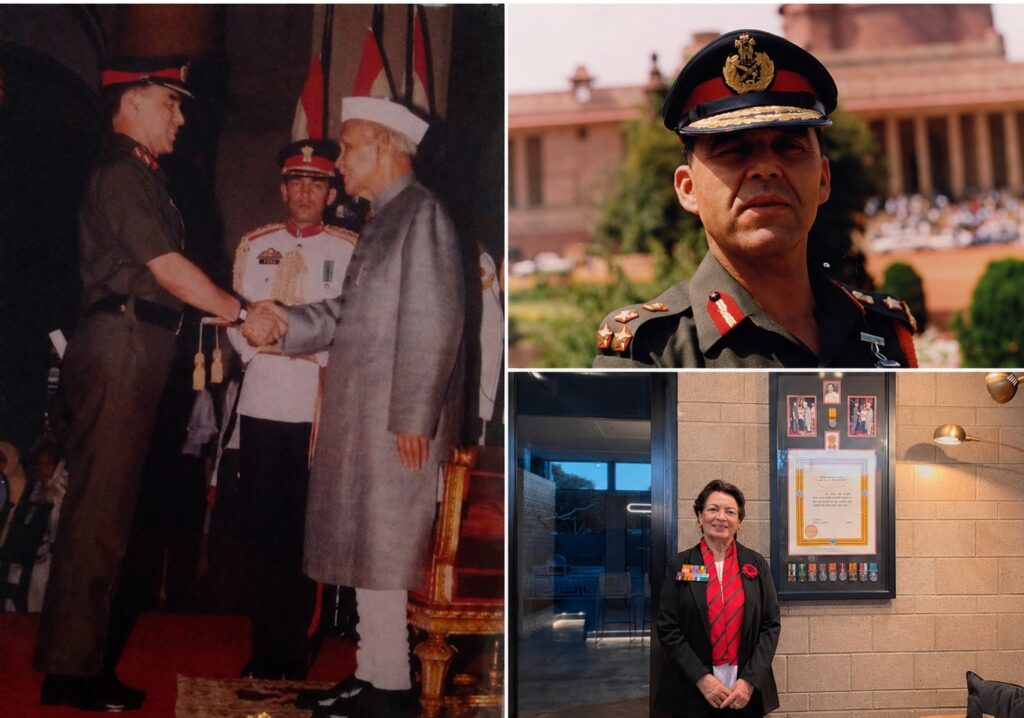
Encouraged by fellow veterans and the wider fraternity, she continues to return each year. “I will continue to march in my husband’s memory till I physically can.” The ceremony itself, she reflected, carries a quiet power, where the silence, the Last Post, and the faces in the crowd together convey a message to every family that “your loved one’s service mattered. We will remember them.”
She also spoke of the sense of belonging felt during the march, noting the “spirit of inclusion” extended by Australian veterans and the public, and the pride she carries “as an army wife,” supported by a community where, in her words, she is “never alone.” The resilience of army families, she added, continues to resonate, describing them simply as “tough cookies.”
The contingent also included decorated veterans such as Wing Commander J. Saklani, a recipient of the Vir Chakra, and Colonel Pankaj Awasthi, a three-time Sena Medal (Gallantry) awardee. Their regular participation reflects a continued commitment by the Indian veterans’ community in Perth to be part of the ANZAC commemorations.
Captain Mittal noted that the presence of both veterans and next of kin ensures that remembrance extends beyond those who served, to those who carry their legacy forward. The Indian contingent, he said, has been a regular feature of the ANZAC parade in recent years.
For many in the group, India remains the land of service, while Australia is now home. On ANZAC Day, the two come together in a shared act of remembrance, marked not by words alone, but by quiet steps, medals worn with care, and stories carried forward with dignity.
Related posts:
 New York Expands Job Access for Disabled Veterans as Governor Hochul Signs Assemblywoman Rajkumar’s Bill
 FIA New England Honors Veterans with Parade and Food Drive in Collaboration with American Legion and BC4T
 House Members Press VA and HUD for Answers on Budget Proposal That Could Undermine Veteran Housing Programs
 FIA hosts 42nd India Day Parade in New York City
