Join WhatsApp Channel

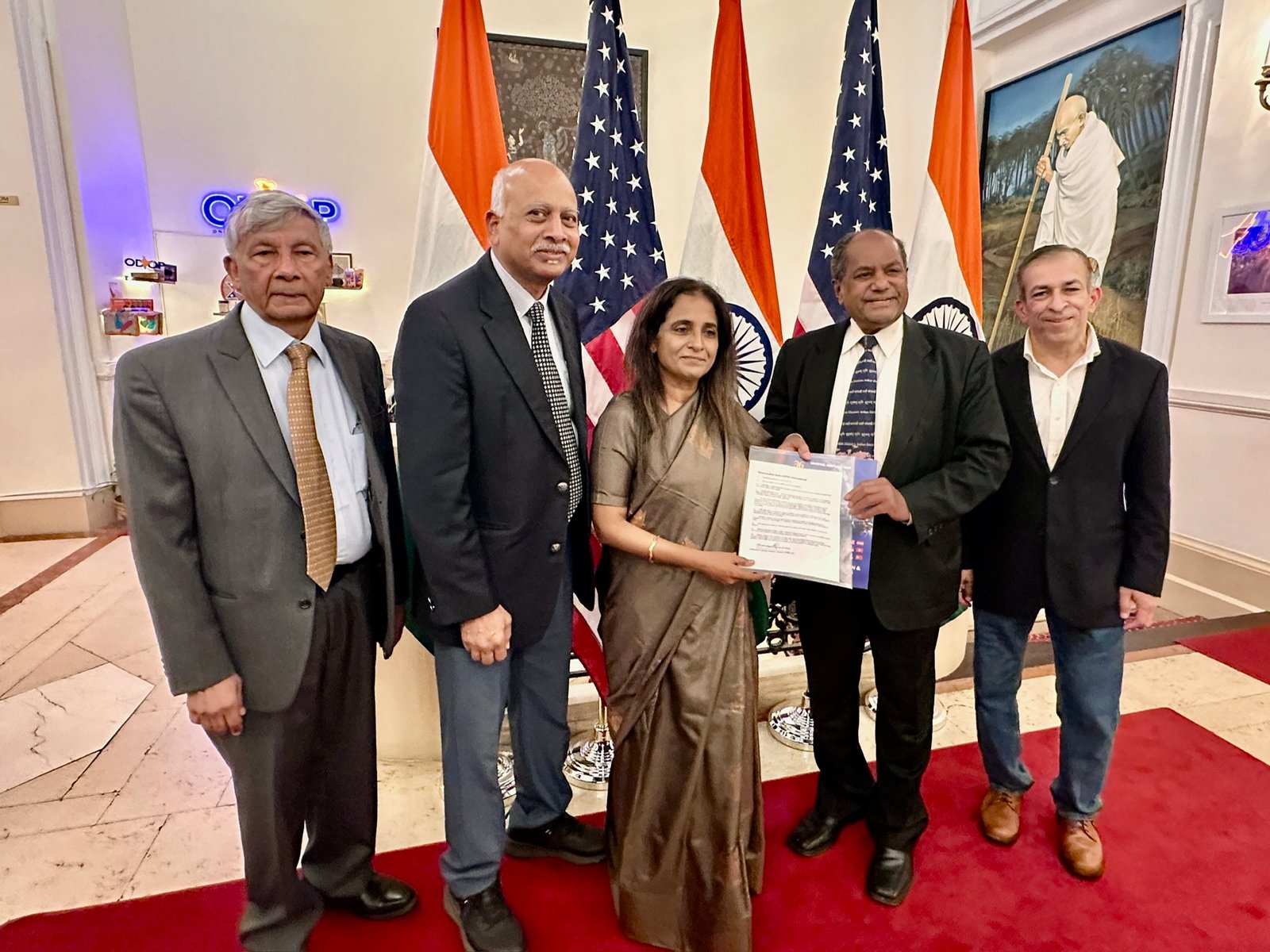
The Global Organization of People of Indian Origin (GOPIO) submitted a memorandum to India’s Minister of External Affairs, S. Jaishankar, outlining concerns and recommendations from the Indian diaspora during his recent visit to New York for an event at the Asia Society.
GOPIO International Chairman Thomas Abraham presented the memorandum, which drew on feedback from diaspora members worldwide and addressed consular services, administrative procedures, philanthropy, cultural connections, and engagement with India, according to a GOPIO statement.
A GOPIO delegation had earlier submitted the memorandum to Ministry of External Affairs (MEA) officials at a September 26 meeting organized by the Consulate General of India in New York. Officials attending included Ambassador Sripriya Ranganathan, the secretary responsible for passport, visa, and overseas Indian affairs, and Anken Banerjee, joint secretary of the Diaspora Engagement Division.
The meeting brought together representatives of Indian American community organizations, including AIA, FIA, AAPI, FOKANA, TANA, BJANA, Milan USA, Indian Diaspora Council, Friends of Madhya Pradesh, India Cultural Association of North America, Chhatrapati Foundation, Kannada Koota, and World Vegan Vision.
According to the GOPIO statement, the memorandum outlined the following priorities and recommendations:
- Simplify OCI applications: Make the Overseas Citizen of India application process easier to understand and navigate.
- Expand Aadhaar access: Establish a mechanism through which nonresident Indians (NRIs) and OCI cardholders could obtain Aadhaar cards, where appropriate.
- Facilitate charitable contributions: Address barriers that prevent overseas Indians from supporting legitimate charitable organizations in India, including nonreligious educational and social service institutions that face difficulties receiving overseas funds.
- Increase diaspora representation at Pravasi Bharatiya Divas: Include more overseas Indians as speakers and panelists. The memorandum noted that a substantial share of speakers has traditionally come from India.
- Recognize previous award recipients: Invite past Pravasi Bharatiya Samman Award recipients to subsequent Pravasi Bharatiya Divas events and acknowledge their contributions. GOPIO described these honorees as a valuable resource for the diaspora.
- Create opportunities for direct dialogue: Organize dedicated discussions at Pravasi Bharatiya Divas between selected diaspora leaders and officials from the MEA and relevant Home Ministry offices to address concerns and consider solutions.
- Engage diaspora expertise: Appoint qualified NRI and person of Indian origin scientists, technology professionals, and entrepreneurs to advisory committees in relevant ministries, including those overseeing science and technology, information technology, commerce, and industry.
- Enable payments with foreign-issued credit cards: Explore ways for overseas Indians to use credit cards issued outside India for certain bill payments and other transactions in the country.
- Address visa concerns among Pakistani American Hindu Sindhis: Review difficulties faced by community members seeking to visit India for religious pilgrimages, visits to Ram Janmabhoomi, weddings, shopping, and other family or cultural activities.
- Ease passport renewals for Indians facing U.S. immigration-status issues: Simplify renewals or consider longer passport validity, where appropriate, for Indians who are out of status in the United States and receive short-duration passports, requiring repeated applications and lengthy processing.
- Strengthen connections with diaspora youth: Develop cultural, educational, professional, technology, and youth-exchange initiatives to help second- and third-generation Indian Americans and other young diaspora members build closer ties with India.
Representatives of participating organizations also raised additional concerns during the September 26 meeting, the statement said. These included consular and passport services, obstacles to overseas donations for Indian charitable and educational institutions, cultural tourism, youth programs, and banking and financial transactions affecting naturalized citizens of Indian origin living abroad.
Participants reiterated the call for Aadhaar access for NRIs and OCI cardholders. They also proposed memorials commemorating the history of Indian indentured laborers and an Indian Diaspora Museum in New Delhi.
GOPIO’s delegation at the consulate meeting comprised Abraham; Mahesh Jhangiani, president of GOPIO-CT; and Prof. Raj Vanagapty, president of GOPIO-Manhattan.
The delegation described the memorandum as a collection of constructive proposals intended to improve relations between the Indian government and overseas Indians. Abraham thanked the MEA and the consulate for allowing community organizations to present their concerns directly.
“The global Indian diaspora represents a tremendous resource for India. Our objective is to strengthen the two-way relationship between India and its diaspora by identifying practical issues and developing mechanisms through which overseas Indians can contribute more effectively to India’s development, while receiving responsive services from the Government of India,” Abraham said.
According to the statement, GOPIO plans to continue discussions with the Indian government and relevant ministries on these proposals and other issues affecting the global Indian diaspora.
Related posts:
 Exclusive: Thomas Abraham on Building Institutions, Advancing Innovation, and Living the American Dream
 Indian Diaspora Center Hosts Symposium on “Indian Television: Yesterday, Today and Tomorrow”
 GOPIO-CT Marks 20 Years, Honors Five Indian American Leaders
 Pravasi Bharatiya Divas 2025: Odisha Hosts a Historic Celebration of the Indian Diaspora