Join WhatsApp Channel

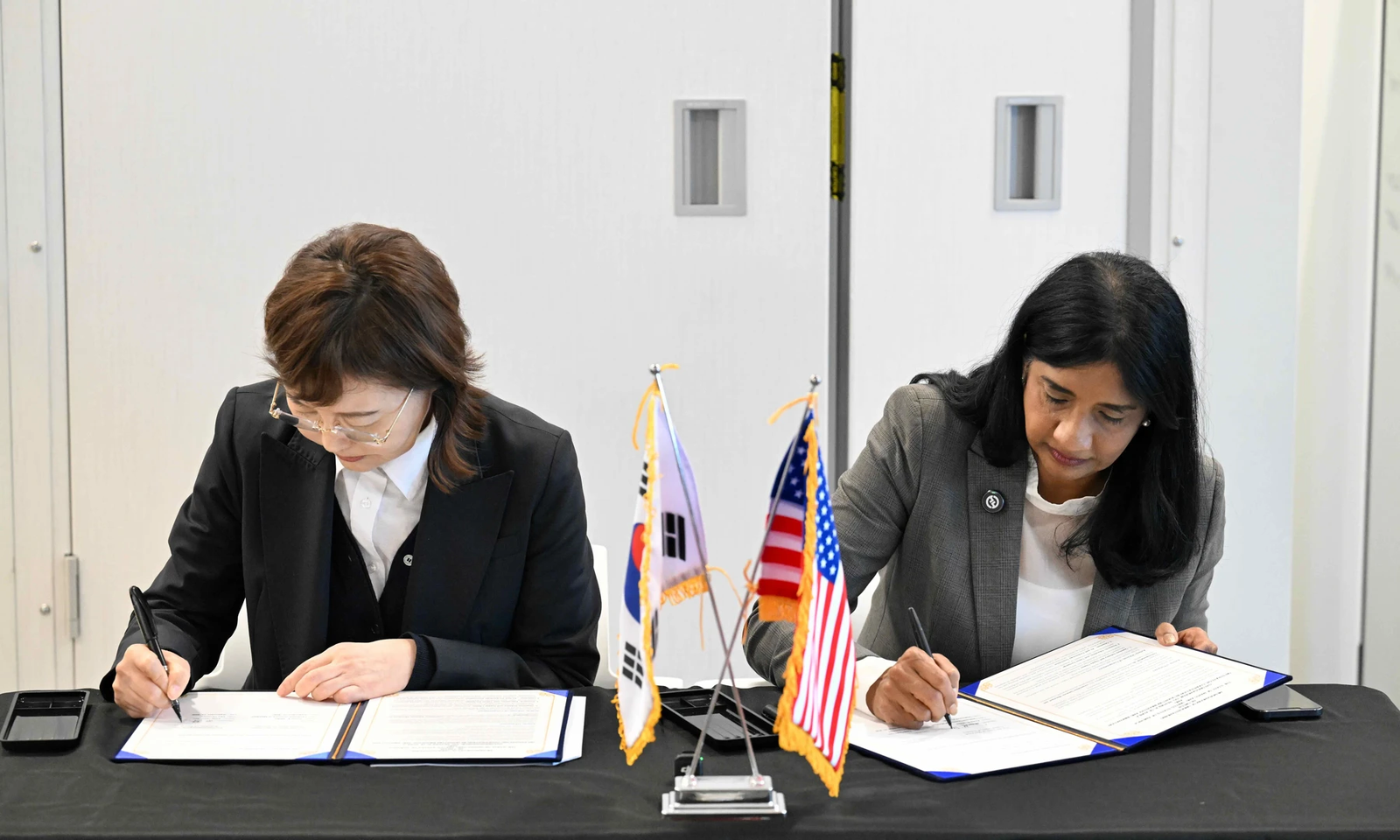
Maryland Lt. Gov. Aruna Miller and officials from South Korea’s Gyeongsangbuk-do Province signed a memorandum of understanding on September 29 to expand cooperation in quantum technology, research, and economic development.
According to a statement from the lieutenant governor’s office, the agreement will connect Maryland’s quantum research and technology resources with the province’s manufacturing and industrial capabilities. The partnership aims to advance quantum technologies, develop infrastructure, and support the growth of quantum companies.
Miller and Gyeongsangbuk-do Vice Governor Geum-hee Yang signed the agreement at the 2026 Quantum World Congress at the University of Maryland, College Park. The university is a central part of Maryland’s Capital of Quantum initiative. The congress convenes quantum leaders from around the world to explore collaboration in quantum science and technology.
“Today’s MOU with Gyeongsangbuk-do will not only strengthen our bilateral collaboration, but it will also create new opportunities for innovation in both Maryland and the Republic of Korea,” said Miller. “College Park is home to Maryland’s quantum ecosystem, and there is no better venue to sign this agreement than at QWC 2026, where leaders from around the world are coming together to advance the future of quantum.”
“This agreement will serve as a catalyst to accelerate the commercialization of quantum technology by connecting Maryland’s quantum research capabilities with Gyeongbuk’s manufacturing foundation,” said Yang. “We will support this collaboration so that it expands to universities, research institutions, and supply chain companies in both regions, and ultimately translates into business opportunities for local companies and jobs for young people.”
The agreement establishes a framework for joint research, exchanges of students and professionals, and the sharing and exploration of emerging technologies, according to the statement. It also promotes cooperation in quantum computing, innovation, and economic development.
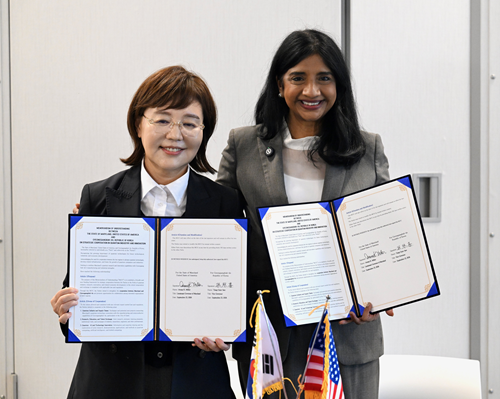
A focus of the partnership is linking Maryland’s quantum technology sector with Gyeongsangbuk-do’s manufacturing and semiconductor capabilities, particularly in the city of Gumi.
The agreement builds on Maryland’s existing ties with South Korea. According to the statement, the Moore-Miller administration’s 2025 trade mission helped secure investments from Korean companies, including Samsung Biologics and Nature Cell. Both companies announced new Maryland facilities expected to support hundreds of jobs.
“Maryland’s longstanding partnership with the Republic of Korea has fostered meaningful and productive collaboration in areas such as biotechnology and aerospace,” said Maryland Commerce Secretary Harry Coker, Jr. “We are proud to build on that strong foundation by formally extending our partnership into quantum technology. By combining our shared expertise, resources, and commitment to innovation, we can create new opportunities for economic growth and technological advancement in both regions.”
Maryland’s Capital of Quantum initiative brings together public and private partners to support quantum research and commercial development. Its resources include the University of Maryland’s quantum programs, the National Quantum Lab, known as QLab, and the Quantum Startup Foundry.
The initiative connects federal laboratories, national security agencies, research institutions, investors, and industry partners across the region. Since its launch in 2025, Maryland has secured more than $500 million in quantum investments, according to the statement.
Related posts:
 Raman Institute Finds Noise Can Help Build More Robust Quantum Systems
 Exclusive: Aruna Miller Reflects on Progress, Vision for Next Four Years
 Maryland Governor Wes Moore and Lt. Governor Aruna Miller Celebrate Diwali with the South Asian Community
 From Maruti to Microchips: Japan’s India Investment Story Enters a New Era