Join WhatsApp Channel

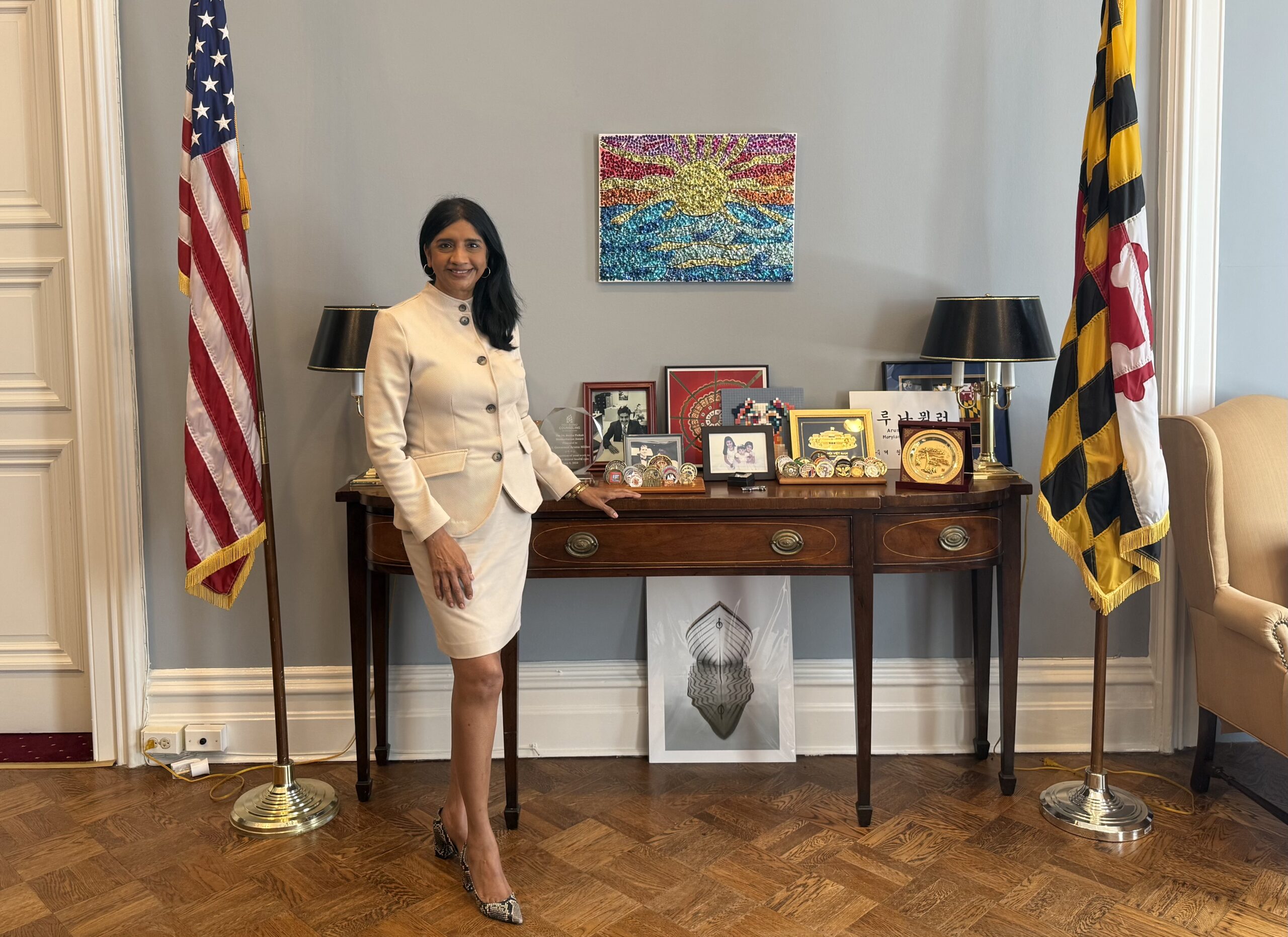
Following the Moore-Miller administration’s decisive victory in Maryland’s Democratic gubernatorial primary on June 23, Lieutenant Governor Aruna Miller spoke with South Asian Herald in an exclusive interview about the administration’s accomplishments over the past three-and-a-half years and its priorities for a second term.
Miller made history in 2022 as the first immigrant elected to statewide office in Maryland and the first South Asian and Indian American woman elected Lieutenant Governor in the United States.
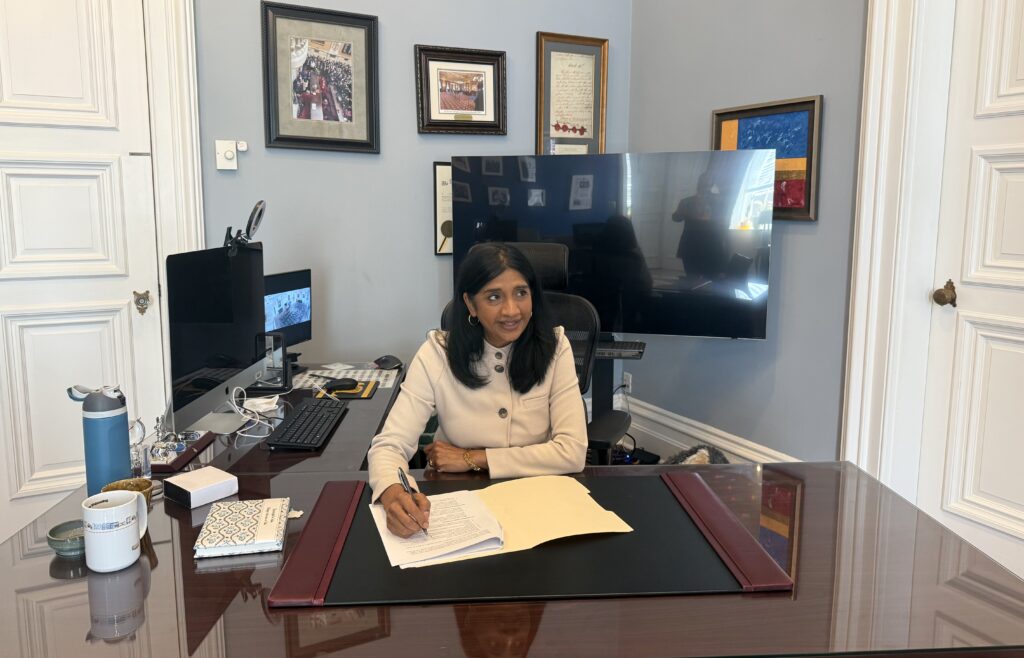
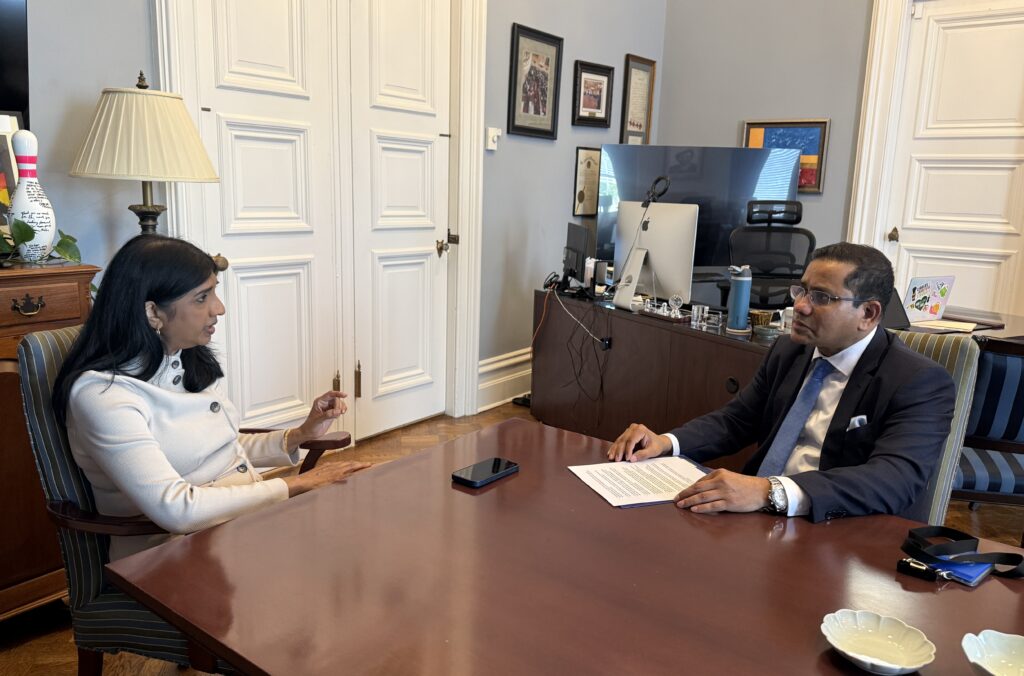
In this wide-ranging candid conversation at her office in State Capitol, Annapolis, on June 25, Miller discusses the growing influence of the Indian American and broader South Asian communities in Maryland, the importance of representation in public service, the state’s partnership with India, and the impact of federal immigration policies on the economy and higher education. Miller also shares Maryland’s efforts to foster interfaith unity, support immigrant communities, and build a more inclusive and prosperous future for all residents.
Miller also talks about economic growth, affordability, transportation, public safety, infrastructure, education, opioid response, and her vision for Maryland’s future.
Congratulations on the Moore-Miller ticket’s victory in Maryland’s June 23 gubernatorial primary. How are you feeling following the win, and what does it mean to you and your team?
We are incredibly grateful to the voters who believed in us and once again placed their trust in our team. We’re excited about the road ahead as we work toward November, and we’re hopeful the voters will give us another opportunity to serve. We don’t take anything for granted, and we’ll continue working as hard as we can. I also want to congratulate all the candidates who made it through the primary.
Maryland is home to a growing Indian American community, as well as a broader South Asian population. How do you view the contributions these communities have made to the state’s economic growth and cultural diversity?
Maryland is the most diverse state in the Mid-Atlantic region, and we’re very proud of that. We have more than 500,000 AAPI residents, and while they represent a relatively small percentage of our population, their contributions far exceed their numbers. Whether in STEM careers, entrepreneurship, or businesses of every size, the AAPI community – including Indian Americans – plays a vital role in driving Maryland’s economy. I’m incredibly proud of their contributions and the richness they bring to our state.
Can you please talk about your journey and the South Asian representation and diversity in Maryland
The Indian American community is increasingly stepping into public policy and public service. We’re seeing more individuals serving throughout our administration, running for office, and winning elected positions. In this past election cycle, for example, Amar Mukunda defeated longtime State Senate Majority Leader Nancy King in the Democratic primary. That’s something you don’t see every day, and he is likely to become the first South Asian state senator in the Maryland General Assembly. When I first ran for office, people would often tell me, “I’ve never seen someone who looks like you run for public office.” That representation inspired people to get involved. They began volunteering, paying attention to public policy, sharing the concerns of their communities, and eventually asking themselves, “Why can’t I run for office one day?” That’s how meaningful change happens. Representation truly matters. When Governor Moore and I took office, we assembled the most diverse cabinet in Maryland’s history, with 50 percent women and 50 percent people of color serving as cabinet secretaries. We firmly believe that diversity is one of our greatest strengths.
As an immigrant who made history in public service, how do you assess current federal immigration policies, and what impact are they having on Maryland and its communities?
Look, Vishnu, you came to this country seeking opportunity. My parents came here for the very same reason. The America I know is one where a young girl who didn’t speak a word of English can grow up to become the Lieutenant Governor of the great State of Maryland. That’s the America I believe in – one that embraces immigrants, creates opportunities, and tells people they can achieve anything they set their minds to. Unfortunately, what we’re seeing today from the current administration is a very different approach. Immigrants are being portrayed as the reason others lack opportunity, and I simply don’t believe that’s true. If anything, immigrants have created jobs, strengthened our economy, and contributed as entrepreneurs, small business owners, and technology leaders. What concerns me even more is the disregard for due process. If the government believes someone is undocumented, there is a legal process that must be followed. You cannot simply detain individuals without respecting their constitutional rights.
Can you please talk about the impact these policies are having on H1B and education?
The proposal to impose a $100,000 tax on employers hiring H-1B visa holders hurts our economy. We’re effectively driving away some of the brightest and most talented people who want to contribute to this country. If we turn them away, many other nations will gladly welcome them. The same is true for international students. They contribute enormously to our higher education system, both academically and economically.
Today, many are increasingly hesitant about coming to the United States, which not only affects university revenues but also diminishes the diversity and talent that have long strengthened our institutions. That ripple effect is deeply concerning. Here in Maryland, Governor Moore is not backing away from these challenges. We’re focused on growing and diversifying our economy. While Maryland once relied heavily on the federal government, we’re now investing in what we call our lighthouse sectors – artificial intelligence, life sciences, quantum computing, and aerospace. These industries represent Maryland’s future, and we’re making strategic investments to help them grow and create more high-quality jobs.
You and Governor Moore recently hosted Indian Ambassador Vinay Kwatra in Annapolis. Could you discuss the significance of that meeting and Maryland’s growing partnership with India?
Our partnership with India will continue to grow. It’s a partnership between the world’s oldest democracy and the world’s largest democracy, and we’re proud of that relationship. As an Indian immigrant serving alongside Governor Moore, he understands how important this partnership is – not just to me, but to all Marylanders. It presents tremendous opportunities to strengthen our ties economically, academically, and culturally. Both countries have so much to gain. We had an excellent meeting with Ambassador Kwatra, who invited Governor Moore and me to lead a trade mission to India. We’re exploring that opportunity, and I look forward to returning to India to help bring more jobs and investment to Maryland while also encouraging Maryland companies to invest in India.
There has been growing concern over anti-Hindu incidents and anti-immigrant rhetoric across the country. What steps is the State of Maryland taking to protect immigrant communities and ensure they feel safe and welcomed?
It’s unfortunate to see our country becoming increasingly divided, with one community being pitted against another. That’s deeply concerning. One of my first priorities as lieutenant governor was establishing Maryland’s first-ever Interfaith Council because I recognized the need to bring communities together. We traveled across the state, bringing together leaders from Hindu, Muslim, Christian, Jewish, Buddhist, and many other faith communities. The focus has been on the overwhelming majority of values we share—how we can strengthen our state, support our most vulnerable residents, and serve as trusted partners within our communities. When people feel afraid or uncertain, they often turn to their places of worship for comfort and guidance. That’s why it’s so important that we hear directly from faith leaders about the concerns their communities are facing and work together to address them. We’re also celebrating the rich diversity of Maryland by recognizing religious and cultural holidays at Government House, including Eid, Hanukkah, Vaisakhi, Diwali, and many others. Those celebrations send a clear message that every community belongs and is valued in Maryland.
Looking ahead, what is your vision for a second Moore-Miller administration, and what would you like to accomplish over the next four years?
Let me tell you, during the first term of our administration, we’ve accomplished quite a bit—growing our economy, making Maryland a safer state for everyone, and ensuring our public education system is funded for future generations of Marylanders. However, we’ve also lost more than 31,000 federal jobs as a result of the Trump-Vance administration’s “egregious and reckless” policies. Despite that, Maryland’s economy has continued to grow. We’ve created nearly 100,000 new jobs, and entrepreneurship has flourished. During our administration, more than 55,000 businesses have opened across the state, ranging from small businesses to global companies such as Hitachi Rail, Samsung Biologics, and Nature Cell. These companies chose Maryland, creating new opportunities for our residents. Existing businesses are expanding as well. AstraZeneca, a leader in the life sciences sector, announced a $2 billion investment—the largest private capital investment in Maryland in the past decade. Public safety has also improved significantly. Under the previous administration, Baltimore was experiencing nearly a homicide a day. Over the past three-and-a-half years, we’ve seen homicides decline to their lowest level in 50 years. In education, teacher vacancy rates have dropped by more than 50 percent, meaning more teachers are returning to classrooms, while student reading and math scores have improved.
We’re also encouraging Marylanders to come together, invest in their communities, and embrace public service. Governor Moore launched the nation’s first Service Year Option, giving high school graduates an eight-month opportunity to explore fields such as the trades, education, nursing, and many others. We connect them with businesses, local governments, or nonprofit organizations, provide compensation, teach valuable workplace skills, and most importantly, instill the importance of giving back through public service. Finally, from day one, Governor Moore has made addressing child poverty a priority. There is no reason that children should live in poverty when we are one of the wealthiest states in the richest nation in the world. We’ve been working closely with local communities to tackle that challenge, and we’re proud of the progress we’ve made as we look toward a second term.
Following the primary victory, you said, “Together we have made real progress here in Maryland, but the job’s not done.” Could you elaborate on what you meant by that and the priorities you believe still need to be addressed?
Progress doesn’t have a final destination. The road to progress is always under construction. While we’ve made significant achievements over the past three-and-a-half years, we know there’s still much more work to do. We want to ensure Maryland remains affordable for every resident, especially as federal policies under the Trump-Vance administration have driven up costs. Working alongside our partners in the Maryland General Assembly, we’ve advanced more than $300 million in measures to help address skyrocketing energy prices and provide relief to ratepayers as quickly as possible. We also recognize that when our country faces wars overseas and tariffs increase, the cost of living rises as well. The prices of everyday necessities go up, and that’s something we’re committed to addressing.
Affordability remains a major concern for many Maryland families. How is the Moore-Miller administration addressing that issue?
Affordable housing is a major focus for our administration. During this legislative session, we passed Transit-Oriented Development legislation because we know that when Marylanders have convenient access to jobs, education, healthcare, and other opportunities, it improves both quality of life and affordability. As a transportation engineer, I’ve always believed that building infrastructure means building pathways to opportunity. Transit-Oriented Development is about bringing housing and opportunity closer together. Housing and transportation are the two largest household expenses for most families. When you reduce transportation costs by connecting people more efficiently to where they need to go, you make life more affordable for Marylanders.
You have a distinguished background as a transportation engineer. How has that experience shaped your approach to public service and informed your role as Maryland’s Lieutenant Governor?
It has played a tremendous role. I began my career as a transportation engineer in local county government, and the principles I learned then continue to guide my work as lieutenant governor. Whenever you begin a project, you have to do your research. You have to understand the pros and cons, identify who supports it and who opposes it, and bring stakeholders together to hear their concerns and ideas before developing solutions that serve the broader public. That’s exactly how we approach policymaking today. Engineering also teaches you to design with redundancy – to prepare for the day you hope never comes. Unfortunately, that day arrived when the Francis Scott Key Bridge collapsed. No one anticipated that tragedy. We immediately brought together all the necessary stakeholders to reopen the shipping channel as quickly as possible. Many believed it would take nearly a year. We accomplished it in just 11 weeks. Governor Moore’s leadership, combined with strong partnerships across government and my engineering background, allowed us to coordinate that response effectively. We also enacted roadway safety legislation, and since its passage, we’ve seen an 18 percent decline in roadway fatalities.
Since transportation and infrastructure have been major priorities for your administration. Could you discuss some of the key initiatives you are currently leading, including the reconstruction of the Francis Scott Key Bridge and the Transit-Oriented Development legislation enacted this year?
The Francis Scott Key Bridge reconstruction is well underway, and we’re currently on track for completion by 2030. We’ve divided the project into four separate construction contracts, creating greater opportunities for companies to compete for the work. It will be Maryland’s first cable-stayed bridge – and just as the original Key Bridge was, our new bridge will also be constructed in accordance with industry standards, using the best materials available. Like many large infrastructure projects, tariffs have significantly increased the cost of construction materials compared to three or four years ago. Even so, we’re confident the project will be completed on schedule. In fact, during his visit to Maryland, Transportation Secretary Sean Duffy said the Key Bridge is the fastest-moving major capital project in the country. The federal government has also committed to reimbursing 100 percent of the construction costs. Another major transportation priority is the Purple Line light rail project. It began under the previous administration but experienced significant delays as a public-private partnership. Since taking office, we’ve worked to move the project forward as quickly as possible, and we expect it to be operational for Marylanders by 2027.
In May, you partnered with Maryland’s Office of Overdose Response to launch a public dashboard that tracks how opioid settlement funds are received, distributed, and invested across the state. What impact do you hope it will have on transparency, accountability, and public health?
Absolutely, I believe it will have a positive impact in all three areas. We want Marylanders to know exactly how every dollar from the opioid restitution fund is being spent because we want to be held accountable. Are we investing those resources in the right places? Are we seeing positive outcomes? So far, the answer is yes. During our administration, opioid overdose fatalities have declined to their lowest level in a decade. Through the Lieutenant Governor’s Office, we’re continuing to elevate this issue. Governor Moore placed the Maryland Office of Overdose Response under my leadership, with Secretary Emily Keller leading the day-to-day effort. We’re taking an all-of-government approach by bringing together 18 state agencies on a quarterly basis to coordinate our efforts, share best practices, and identify what’s making the greatest difference in the lives of Marylanders struggling with addiction.
(This interview has been edited for length, brevity and clarity)
Related posts:
 Maryland Governor Wes Moore and Lt. Governor Aruna Miller Celebrate Diwali with the South Asian Community
 “Hate Will Have No Oxygen,” Says Gov. Wes Moore While Addressing AAPI Leaders in Maryland
 Governor Wes Moore Calls Lt. Gov. Aruna Miller a “Human Diwali” at Maryland’s Diwali Celebration
 Moore and Miller Launch 2026 Reelection Campaign in Maryland