Join WhatsApp Channel

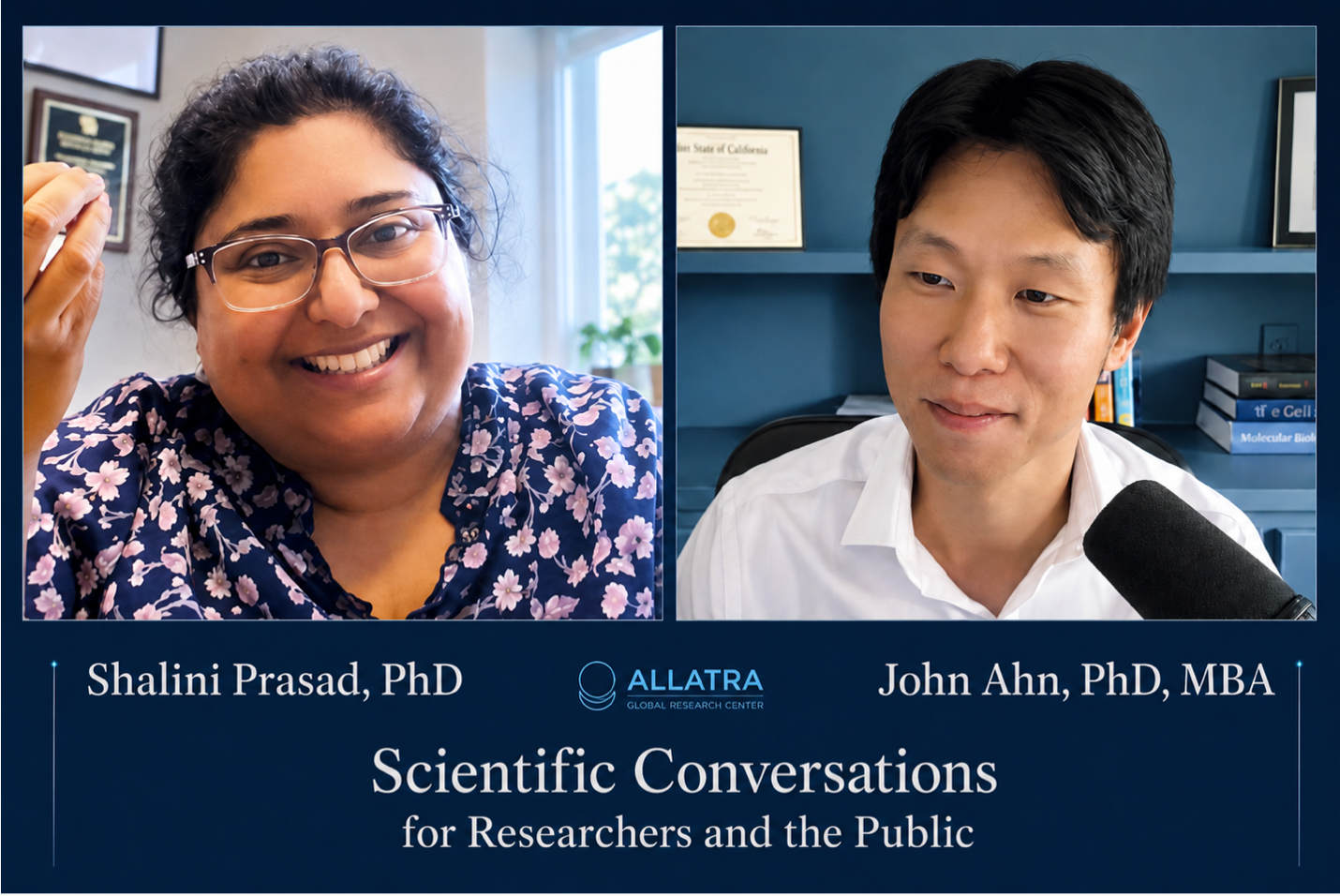
The ALLATRA Global Research Center has launched a podcast series on micro- and nanoplastics. It brings university researchers into extended conversations with the center’s scientific experts. The newest episode features Dr. Shalini Prasad of The University of Texas at Dallas. It focuses on a problem that comes before any credible estimate of environmental or health risk: how to identify and measure particles that become harder to analyze as they get smaller.
In the roughly 38-minute conversation with ALLATRA GRC Chief Scientist Dr. John Ahn, Dr. Prasad discusses biosensors, electrochemical impedance spectroscopy, and materials science. She considers how those tools might find micro- and nanoplastics in water, food, biological fluids, and other complex samples. The discussion moves from basic engineering principles to the harder question of how a laboratory device becomes a validated, affordable test that can work outside the lab.
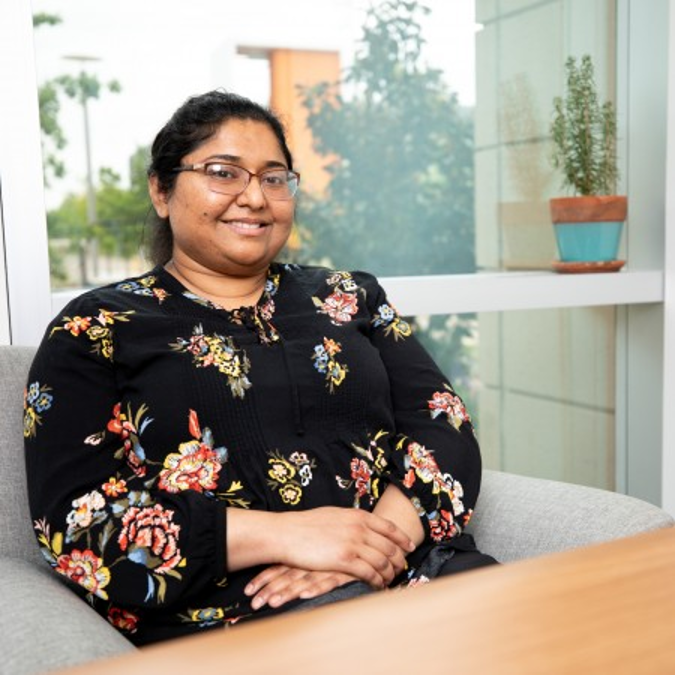
Dr. Shalini Prasad, professor and head of the Department of Bioengineering at The University of Texas at Dallas. Courtesy: The University of Texas at Dallas.
According to Dr. Prasad’s UT Dallas profile, she earned a bachelor’s degree in electronics and communication engineering from the University of Madras in 2000 before completing a Ph.D. in electrical engineering at the University of California, Riverside, in 2004. She is now a professor of bioengineering at UT Dallas and leads research involving nanomaterials, biosensing and portable diagnostics.
A Risk Question That Begins With Measurement
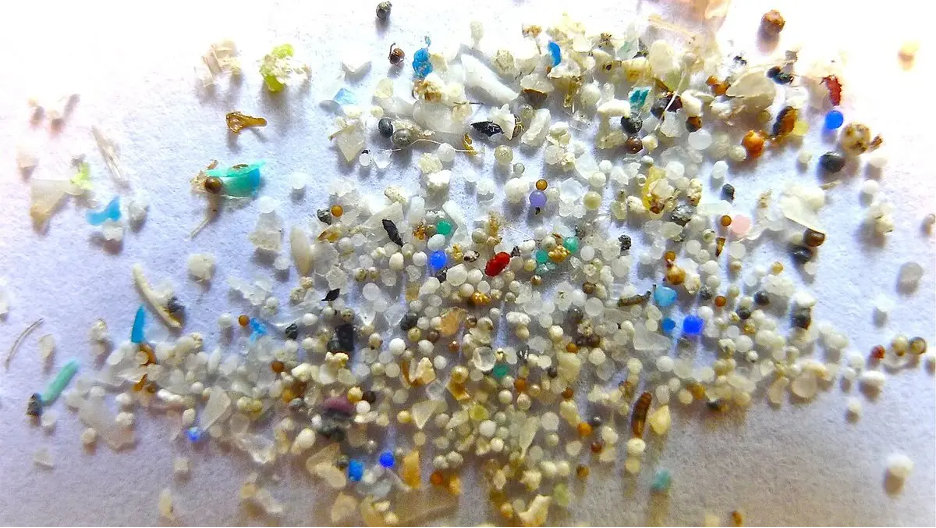
Microplastics are commonly described as plastic particles smaller than 5 millimeters. Nanoplastics are smaller still, although the precise boundaries used for both categories can differ among studies and regulatory frameworks. That lack of uniformity is not a minor technical detail. Size affects which instruments can detect a particle, how samples must be prepared and whether results from separate laboratories can be compared.
Researchers have reported plastic particles in human blood, lung tissue, and placentas. A 2024 observational study in The New England Journal of Medicine also reported micro- and nanoplastics in carotid artery plaques and found an association between their presence and later cardiovascular events.
The World Health Organization’s 2022 review examined exposure through food, water and air and identified substantial research needs and continuing uncertainty about health effects. In the United States, the National Institute of Standards and Technology is developing sample-preparation protocols, validated characterization methods and control materials for measuring small plastic particles in complex samples. NIST researchers note that many current techniques miss the tiniest particles or struggle to distinguish plastic from background material.
The micro- and nanoplastics measurement gap is one of the main issues addressed in the ALLATRA GRC podcasts, focusing on basic but important research questions: What was detected? What was the particle size? What type of sample was analyzed? Which method was used? What controls were included, and how certain are the results?
What the Shalini Prasad Episode Focuses On
Dr. Prasad entered bioengineering through electrical engineering and signal detection. In the podcast, she recalls studying those subjects in India before moving into research that combined semiconductors, neuroscience, biology and materials science. That path helps explain her approach to microplastics: she treats detection as a signal problem inside a noisy environment.
Her explanation is organized around three particle properties — size, charge, and shape. Size affects whether a sensing surface can interact with the target strongly enough to produce a measurable signal. Charge influences how the particle interacts with the sensor and surrounding material. Shape matters because irregular particles can present different surface areas and behave differently from uniform spheres.
The episode’s most technical section concerns electrochemical impedance spectroscopy, or EIS. In simplified terms, EIS measures how a sample resists and stores an alternating electrical signal across a range of frequencies. A particle suspended in liquid can alter the electrical behavior at an electrode interface, creating a pattern that researchers may use as a fingerprint. Unlike large imaging systems confined to a laboratory, electrochemical instruments can potentially be miniaturized for portable screening.
That possibility is supported by Dr. Prasad’s recent research. She co-authored a paper in Processes, “Machine Learning-Guided Electrochemical Fingerprinting for Rapid Polyethylene Microplastic Detection in Seawater and Seafood Matrices.” The study combined EIS, coulometry, and machine-learning analysis to detect polyethylene microplastics in artificial ocean water and shrimp-derived samples.
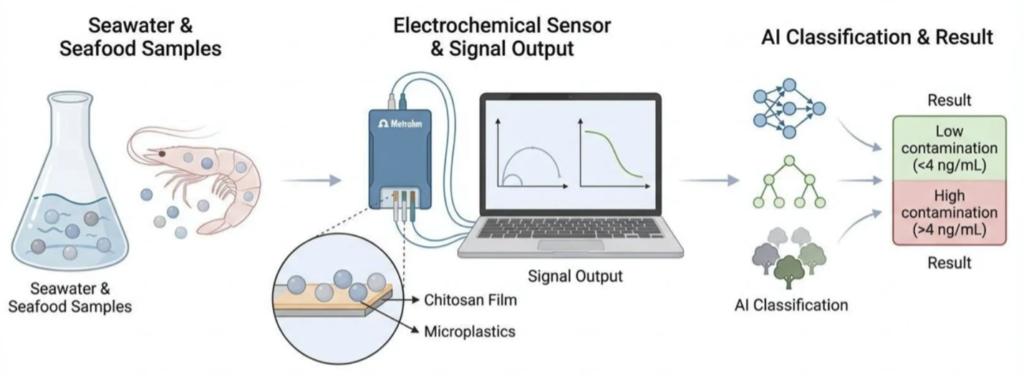
The difficulty increases when particles enter blood, tissue, food or natural water. Proteins, lipids, salts, organic debris, and other particles can coat a plastic fragment or obscure its signal. A method that performs well with clean, manufactured particles may not perform the same way in a river sample or biological fluid. Dr. Prasad discusses the need to build reference libraries, separate overlapping signals, and validate portable tests against established laboratory methods.
She also explains that a useful screening tool must work across relevant sample types, be tested in a statistically powered pilot study, and be checked against reference techniques before it can move into routine use.
“A publication doesn’t have public impact unless you can take it out and put it in diverse settings,” Dr. Prasad says near the end of the episode. It is a practical summary of the conversation: sensitivity in a controlled experiment matters, but reproducibility, cost and deployment determine whether a sensor changes how exposure is measured.
What the Other Episodes Add
The other episodes in the series expand the picture.
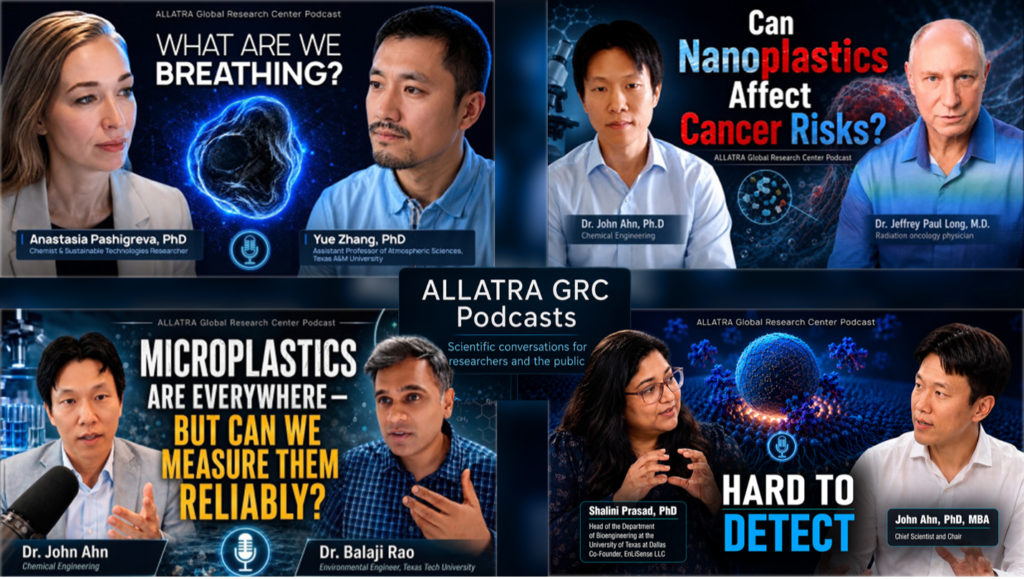
In “The Invisible Side of Air,” ALLATRA GRC researcher Anastasiya Pashigreva speaks with Yue Zhang, an assistant professor of atmospheric sciences at Texas A&M University. Their conversation examines airborne particles, aerosol measurements, possible sources and the problem of tracking materials that move through indoor and outdoor air.
In “The Scientific Challenge of Tracking Microplastics,” Dr. John Ahn interviews Dr. Balaji Rao, an assistant professor of environmental engineering at Texas Tech University. Dr. Rao grew up in Chennai, studied chemical engineering and worked in a petrochemical refinery before moving into environmental engineering in the United States. He explains how his researchers follow micro- and nanoplastic through stormwater, sediments and biosolids.
The health-focused episode with Dr. Jeffrey Long examines the potential influence of micro- and nanoplastics on inflammation, chronic disease, and cancer biology, presenting the subject as a legitimate emerging concern that requires further evidence and attention.
What ALLATRA and Its Research Center Are
ALLATRA describes itself as an international, volunteer-based nonprofit organization headquartered in the state of Georgia. Its stated areas of work include public education, scientific communication, climate and geodynamic research, environmental issues, and the protection of human rights.
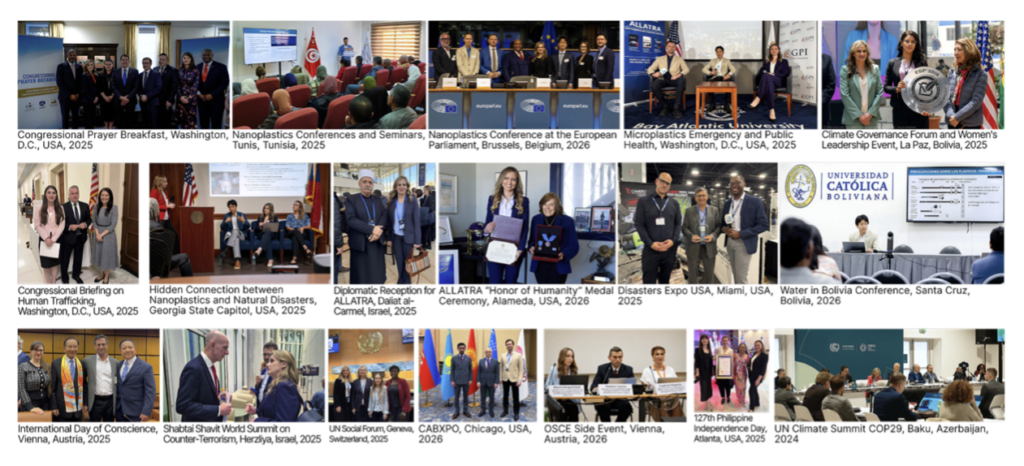
The ALLATRA Global Research Center operates under ALLATRA Inc, a Georgia-based nonprofit recognized as tax-exempt under Section 501(c)(3). The center emphasizes that its work is volunteer-driven and includes open-source research, policy analysis and public science communication. Research on micro- and nanoplastics is one of its principal areas, alongside natural disasters, geodynamic change and human rights.
The center has also published its own open-access report, Nanoplastics. A Systematic Risk Analysis for Human Health, Ecosystems, and the Environment, identified by DOI 10.65849/agrc.report.mnp.2026.04001. In August 2026, ALLATRA GRC published the inaugural issue of ALLATRA Natural Science Review, a quarterly interdisciplinary publication intended to place scientific developments in a broader public and policy context. The 97-page first issue, titled Natural Science in an Age of Planetary Change, brings together scientific articles, expert reviews and interviews on subjects including micro- and nanoplastics, geodynamics and natural hazards, climate processes, immunology, quantum technologies, artificial intelligence and ocean science.
Where to Listen
The ALLATRA GRC podcast page hosts the series as video conversations and provides full transcripts for the published episodes. The series will be most useful to listeners who want to understand how scientists frame a difficult problem rather than hear a list of settled conclusions.
For the public, the value of these conversations lies in access to the scientific process itself. Instead of reducing micro- and nanoplastics to a headline or a single health claim, the podcasts show how researchers frame the problem, choose methods, interpret evidence and decide which questions still matter most. That makes the series useful not only for specialists, but also for students, journalists, policymakers and readers trying to follow a rapidly developing field.
Disclaimer: The opinions and views expressed in this article/column are those of the author(s) and do not necessarily reflect the views or positions of South Asian Herald.