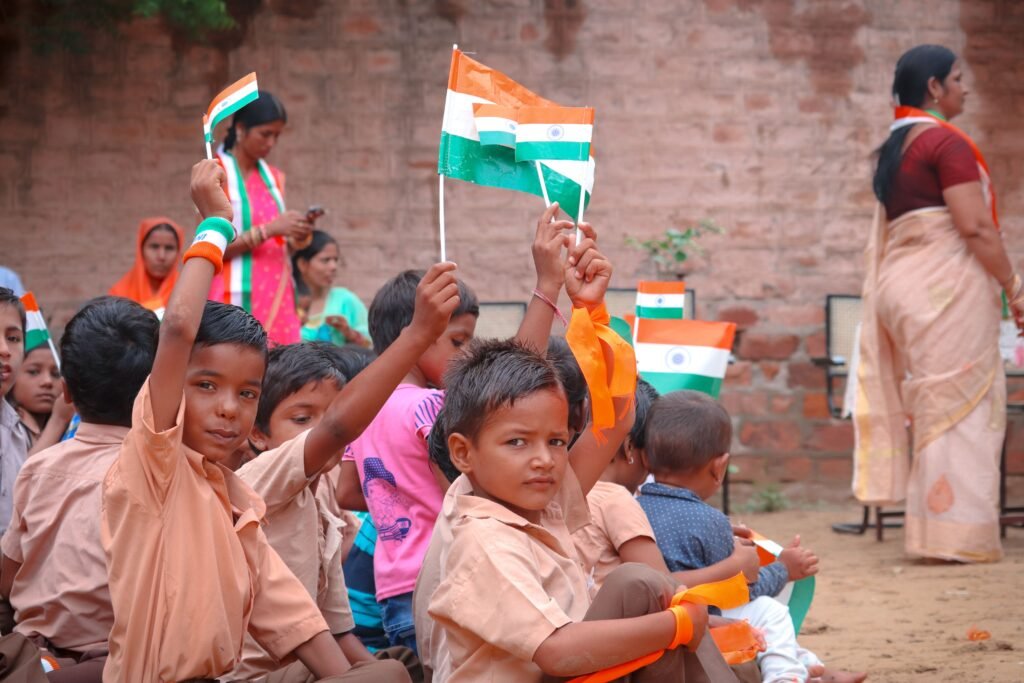
A child may be enrolled in a neighborhood school and still be excluded from education.
The child may be unable to enter the building without assistance. The classroom may have no suitable learning materials. Teachers may not know how to adapt instruction or assessment. A child with a disability may sit alone during group work, be treated as a burden by peers, be pushed towards a separate room, or quietly leave school after repeated experiences of failure and humiliation.
This is the uncomfortable distinction South Asian education systems must confront: access is not the same as inclusion.
Across India, Bangladesh, Nepal, Sri Lanka, Bhutan, Pakistan, Maldives and Afghanistan, policy commitments to disability-inclusive education have grown. Yet children with disabilities remain among those most likely to be excluded from meaningful schooling. UNICEF’s regional mapping of disability-inclusive education practices shows that the challenge is shared across South Asia: countries have laws, schemes, pilot projects, special educators and accessibility measures, but many children still encounter schools designed around a narrow idea of the “normal” learner.
Advertisement
For India, with its enormous and diverse school system, the question is not merely whether children with disabilities are admitted. It is whether the education system is willing to change so that every child can participate, learn, belong and progress with dignity.
The gap between presence and participation
India has important policy foundations for inclusive education. Children with disabilities are covered under the Right of Children to Free and Compulsory Education framework, the Rights of Persons with Disabilities Act and school-education initiatives such as Samagra Shiksha. Official data increasingly track the enrolment of Children With Special Needs, or CWSN, alongside indicators of school accessibility.
These measures matter. A child cannot be included in a classroom from which they have been excluded. Nor should the value of ramps, assistive devices, resource support, transport assistance, accessible textbooks and special educators be minimized.
But enrolment alone is a low bar.
Recent UDISE+ reporting indicates that only 54.9% of Indian schools had ramps with handrails in the 2024–25 reporting year. The share with CWSN-friendly toilets was lower, at around 35.6%. Even these indicators reveal only part of the picture. A ramp may be too steep, blocked, or lead to only one part of a campus. A toilet may exist on paper but be locked, unusable or inaccessible in practice. We measure whether a facility exists; we also need to ask whether a child can actually use it.
Can a child who is deaf follow the lesson? Can a child with a visual impairment access textbooks and digital content on time? Can a neurodivergent learner participate without being punished for behavior rooted in sensory overload, anxiety or communication differences? Can a child with a learning disability receive assessment accommodations without being labelled lazy? Can a child with a mobility impairment join sports, assemblies, laboratory sessions, excursions and friendships?
These are not specialized questions. They are questions about whether a school is actually a school for all.
Inclusion is not a separate room
A common institutional response is to enroll children with disabilities in a regular school but provide only occasional support through a special educator, a resource room or a segregated classroom. Such support can be valuable, particularly when it gives children access to therapies, assistive technology or individualized instruction. The problem begins when the resource room becomes the child’s actual school and the classroom remains unchanged.
Inclusion asks the reverse question: how should the classroom change?
It requires teachers to use more than one way of explaining a concept, more than one mode of participation and more than one form of assessment. It requires predictable classroom routines, accessible learning materials, peer support, flexible seating, additional time where required and a culture in which asking for help is not a source of shame.
It also requires school leaders who see disability inclusion as a whole-school responsibility rather than the job of one visiting specialist.
This does not mean that every child has identical needs or that specialist support should disappear. It means that support should enable children to participate in the shared life of the school, not remove them from it.
The real measure of inclusion is not whether a child’s name appears on a register. It is whether the child can say: “This is my classroom. These are my friends. My teacher expects me to learn. I can ask for what I need without being embarrassed.”
South Asia has lessons to exchange
India need not look only to wealthier Western systems for ideas. South Asia itself offers instructive, though imperfect, examples of how inclusion can be approached under conditions of limited resources, large class sizes, uneven teacher preparation, poverty, stigma and fragmented public services.
UNICEF’s regional mapping of disability-inclusive education practices across Afghanistan, Bangladesh, Bhutan, India, Maldives, Nepal, Pakistan and Sri Lanka shows that the region has no single ready-made model. But it also shows that useful approaches already exist in law, community support, teacher development, local adaptations and recognition that exclusion cannot be solved by education departments working alone.
Nepal, for example, offers an important rights-based principle: children with disabilities should not be denied access to general education simply because schools are unprepared to include them. Its approach includes integrated schools, resource classes and support arrangements intended to widen access to mainstream schooling. Yet Nepal also illustrates a critical truth: progressive commitments are not self-executing. Infrastructure, trained personnel, funding, learning materials and local implementation capacity remain uneven.
That is precisely why Nepal is useful for India not as a flawless success story, but as a reminder that the right to attend a mainstream school must be accompanied by a public obligation to make that school accessible and supportive.
Bangladesh offers another lesson: inclusion becomes more viable when schools work with communities, parents, local organizations and disability-rights groups rather than treating disability as an issue to be managed privately by families. In resource-constrained settings, community-linked identification, family outreach and locally relevant support can help reach children whom formal systems miss.
Sri Lanka, meanwhile, offers a useful case for thinking about how education, health, rehabilitation and specialist support can be better connected. A child’s learning needs do not begin and end at the classroom door. Hearing support, vision screening, mobility devices, communication support, nutrition, transport and family counselling may all shape whether a child can remain in school and learn.
The lesson for India is not to import another country’s system wholesale. India’s scale, linguistic diversity, federal structure and variation across states make simple policy borrowing impossible. The lesson is more practical: countries facing similar constraints can share methods, not merely slogans.
India’s scale can become an advantage
India’s education system faces immense challenges, but it also has considerable capacity. It has nationwide school-data systems, large public programmes, teacher-education institutions, state-level innovation, civil-society expertise and growing access to digital learning tools. If these strengths are directed towards inclusion, India could move from scattered good practice to a more dependable public system.
That requires a change in what governments measure and what schools are expected to achieve.
Educational success is often discussed through enrolment, examination performance, infrastructure, digital access and teacher-pupil ratios. Each matters. But inclusive education demands additional questions.
How many children with disabilities attend regularly throughout the year? How many transition from primary to upper-primary and secondary school? How many receive textbooks, assistive technology and reasonable accommodations on time? How many experience bullying or exclusion? How many teachers have practical training in differentiated instruction? How many parents believe their children are treated with respect? How many children leave school because the environment has communicated, directly or indirectly, that they do not belong?
These indicators are harder to collect than admission data. They are also more meaningful.
India should strengthen disability-disaggregated data while protecting children’s privacy and avoiding labelling that produces stigma. It should assess not only whether facilities exist, but whether they function. It should also track learning and retention without treating standardized test scores as the sole definition of progress.
A child who begins to communicate more confidently, participates in a group task, reads with adapted materials or remains in school through adolescence may be making educational gains that conventional systems do not adequately recognize.
What schools can do now?
The most urgent work does not have to wait for another policy announcement. Schools can begin with changes that are realistic, measurable and rooted in dignity.
At the heart of this is teacher preparation. Every teacher not only a special educator needs practical preparation in inclusive pedagogy. Teachers need to know how to adapt explanations, use visual and multisensory methods, organize peer learning, allow different forms of response and recognize that behavior is often communication rather than defiance.
But pedagogy cannot work if the school itself remains inaccessible. Accessibility has to extend across the entire school day from gates, classrooms and toilets to playgrounds, transport, digital platforms, examinations, school events and emergency procedures. A ramp at the entrance is not inclusion if a child cannot reach a classroom on the first floor or use the toilet independently.
The same principle applies to how schools respond to behavior. Children with disabilities need clear protection from bullying, humiliation and exclusion. A child should not be punished for behavior that adults have not taken the time to understand. School discipline, therefore, cannot be separated from inclusion.
Schools also need to rethink how they work with families. Parents should be treated as partners, not as people who must repeatedly prove their child’s needs. Families often possess deep knowledge of what helps their children learn. They need honest guidance, respectful communication and connections to support services—not another institutional barrier to navigate.
And perhaps most importantly, children themselves need to be heard. Policies written about them are not enough. Schools need to ask children with disabilities what makes them feel safe, what keeps them out of activities, what they wish teachers understood and what belonging would look like in their own lives.
Inclusion, ultimately, is not a programme that a school implements for children. It is a way of organizing the school around the fact that children are different.
A regional promise worth keeping
South Asia is home to extraordinary educational aspiration. Families make sacrifices to send children to school. Teachers work in demanding conditions. Governments repeatedly promise universal access. Yet access without dignity can become another form of exclusion.
The region should not accept a system in which children with disabilities are admitted but not taught, present but not included, assessed but not understood, or protected in policy but isolated in practice.
India has the opportunity to lead a more honest regional conversation. It can acknowledge its implementation gaps while learning from Nepal’s rights-based commitments, Bangladesh’s community-linked approaches, Sri Lanka’s possibilities for coordinated support, and the many educators and families who already demonstrate what inclusion looks like every day.
The goal is not to make children fit unchanged schools.
The goal is to build schools that are ready for children in all their differences, capacities, needs and possibilities.
Disclaimer: The opinions and views expressed in this article/column are those of the author(s) and do not necessarily reflect the views or positions of South Asian Herald.