Join WhatsApp Channel

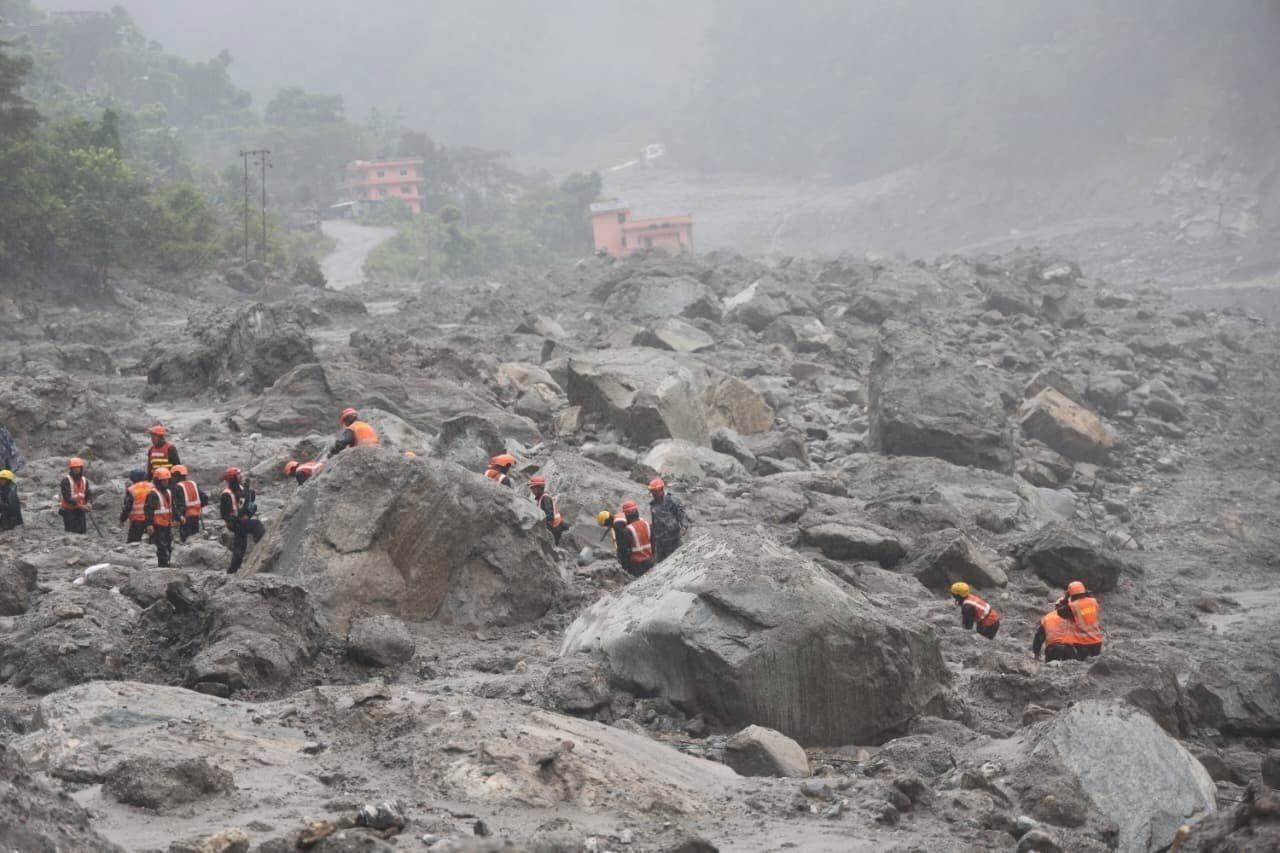
The recent devastating flash floods in Nepal show, once again, that climate change is a global crisis that extends far beyond national borders, a powerful reminder of a reality the world can no longer afford to ignore: climate disasters know no boundaries. They do not stop at national borders, distinguish between rich and poor countries, or spare nations simply because their contribution to global greenhouse-gas emissions is small. A changing climate is a shared global crisis, but its impacts are often felt most severely by countries that have contributed the least to the problem and it is now a harsh reality.
Nepal is a striking example of this injustice. According to the global emission reports, Nepal contributes less than 0.1 percent of global carbon dioxide emissions. Yet the country remains highly vulnerable to climate-related disasters. The recent flash floods shown in different videos demonstrate how quickly extreme weather can turn into a humanitarian tragedy, destroying homes, infrastructure and livelihoods and putting countless lives at risk. The accompanying various documents similarly emphasize that Nepal’s extremely small contribution to global emissions has not protected it from serious natural calamities.
The tragedy becomes even more compelling when Nepal’s geography is considered. Home to some of the world’s highest mountains, Nepal is part of the Himalayan region, an area sometimes described as the “Third Pole” because of its enormous stores of ice. The several videos highlight the alarming loss of Himalayan glacier ice, noting that Nepal’s glaciers have lost around one-third of their ice over three decades as global temperatures have risen. This transformation is not merely an environmental concern. It threatens water security, agriculture, ecosystems, settlements and millions of people who depend on Himalayan rivers.
When glaciers melt more rapidly, the consequences can occur in stages. Initially, increased melting can contribute to greater water flows and create dangerous glacial lakes. These lakes can become unstable, potentially triggering sudden floods downstream. At the same time, continued glacier loss threatens the long-term availability of water for communities and agriculture. Thus, what happens high in the mountains can eventually affect people far beyond the immediate glacier environment.
The recent flooding illustrates the human face of this crisis. The floating videos in social media show rescuers working through dangerous floodwaters to save people, including elderly and vulnerable residents. It also reports that at least 538 – 550 people were killed and around 1,500 were missing across Nepal and China’s Tibet in the disaster depicted. Behind these numbers are families separated from loved ones, homes swept away, communities struggling to recover and people suddenly deprived of their livelihoods.
This is the fundamental injustice of climate change: those who contribute the least can suffer some of the greatest consequences.
For decades, industrialized economies have produced a disproportionately large share of historical greenhouse-gas emissions. According to the UNEP Emissions Gap Report 2025; the G20 group of the World’s largest 20 economies accounted for about 77 percent of global GHG emissions in 2024. Meanwhile, countries such as Nepal and Bangladesh, which have made a comparatively tiny contribution to cumulative global emissions, face extraordinary exposure to climate-related hazards.
This imbalance raises an important question of climate justice: Who should bear the cost of a crisis that has been created collectively but contributed to unequally?
Climate change is not simply an environmental issue. It is an issue of justice, development, poverty, human rights and international responsibility. A devastating flood in Nepal can destroy the progress that communities have achieved over decades. Roads, bridges, schools, homes, farms and businesses can disappear within hours. For families living close to the poverty line, losing a house or livelihood can mean years of hardship.
The effects also extend beyond the immediate disaster zone. Floods can disrupt transportation, communication, electricity and food supplies. Agricultural production may suffer, while damaged infrastructure increases the cost of reconstruction. Governments in vulnerable countries are then forced to divert scarce resources from education, health, poverty reduction and development toward emergency response and rebuilding.
This is why climate disasters know no boundaries. The atmosphere does not recognize political borders. Carbon dioxide emitted in one country mixes throughout the global atmosphere and contributes to warming everywhere. Emissions from factories, power plants, vehicles and other sources in one part of the world can influence climatic conditions thousands of kilometers away. A country cannot isolate itself from the consequences of global warming simply by reducing its own emissions.
But recognizing this interconnectedness must not become an excuse for inaction. Every country has a responsibility to reduce emissions and strengthen climate resilience according to its capacity and circumstances. At the same time, countries that have contributed more significantly to historical emissions have a particular responsibility to support vulnerable nations around the world, especially South Asian countries.
For countries like Nepal, adaptation is essential. Communities need stronger early-warning systems, climate-resilient infrastructure, safer settlements, improved disaster preparedness and effective emergency-response mechanisms. Mountain ecosystems require greater protection, and scientists need continued support to monitor glaciers, glacial lakes and other indicators of environmental change.
However, adaptation alone cannot solve the problem. There is a limit to how much vulnerable countries can adapt if global temperatures continue to rise. The world must therefore jointly address the root cause: greenhouse-gas emissions.
The lesson from Nepal should also resonate strongly across South Asia. Bangladesh, India, Bhutan, Pakistan and other countries in the region face different but interconnected climate risks. Floods, cyclones, landslides, droughts, heatwaves, river erosion and changing rainfall patterns are already threatening communities across national borders. What happens in the Himalayas can influence river systems downstream. What happens in one country can create consequences for another.
This interconnected nature of climate risk requires interconnected solutions.
Governments must strengthen regional cooperation in disaster preparedness, weather forecasting, river management and information sharing. International institutions like United Nations, must ensure that vulnerable countries receive meaningful financial and technical assistance. Climate finance should reach communities on the front lines of climate impacts rather than remaining trapped in complicated bureaucratic systems.
Most importantly, climate action must move beyond speeches and declarations. The people facing floods, storms, droughts and disappearing glaciers cannot afford endless promises. They need practical action: safer infrastructure, reliable warnings, resilient livelihoods, accessible finance and international solidarity to reduce global warming.
The images of rescuers carrying people from floodwaters are more than scenes of a natural disaster. They are a warning to the world. They show how climate change ultimately becomes a human crisis. Behind every statistic is a person whose life has been disrupted.
Nepal’s experience therefore demands that we rethink how we understand climate responsibility. A country’s emissions may be small, but its vulnerability may be enormous. Conversely, countries with greater historical emissions have a greater responsibility to lead the transition toward a low-carbon future and help those already suffering the consequences.
Climate change is global, but climate vulnerability is unequal.
The tragedy unfolding in vulnerable mountain communities should remind the international community that there is no safe distance from the climate crisis. Borders may separate countries politically, but they cannot separate them from the atmosphere, oceans, rivers and weather systems that connect our planet.
Climate disasters know no boundaries. Neither should our responsibility to prevent them, prepare for them and protect those who are most vulnerable.
The time has come for the world to recognize that climate justice is not charity. It is a shared responsibility. If emissions produced in one part of the world can contribute to suffering in another, then climate action, financing, technology and solidarity must cross borders as well.
Nepal’s floods should not be viewed as an isolated national tragedy. They should be understood as a warning from a vulnerable country to the entire world: no nation can escape a changing climate alone, and no country should be left to face its consequences alone.
Disclaimer: The opinions and views expressed in this article/column are those of the author(s) and do not necessarily reflect the views or positions of South Asian Herald.