Join WhatsApp Channel

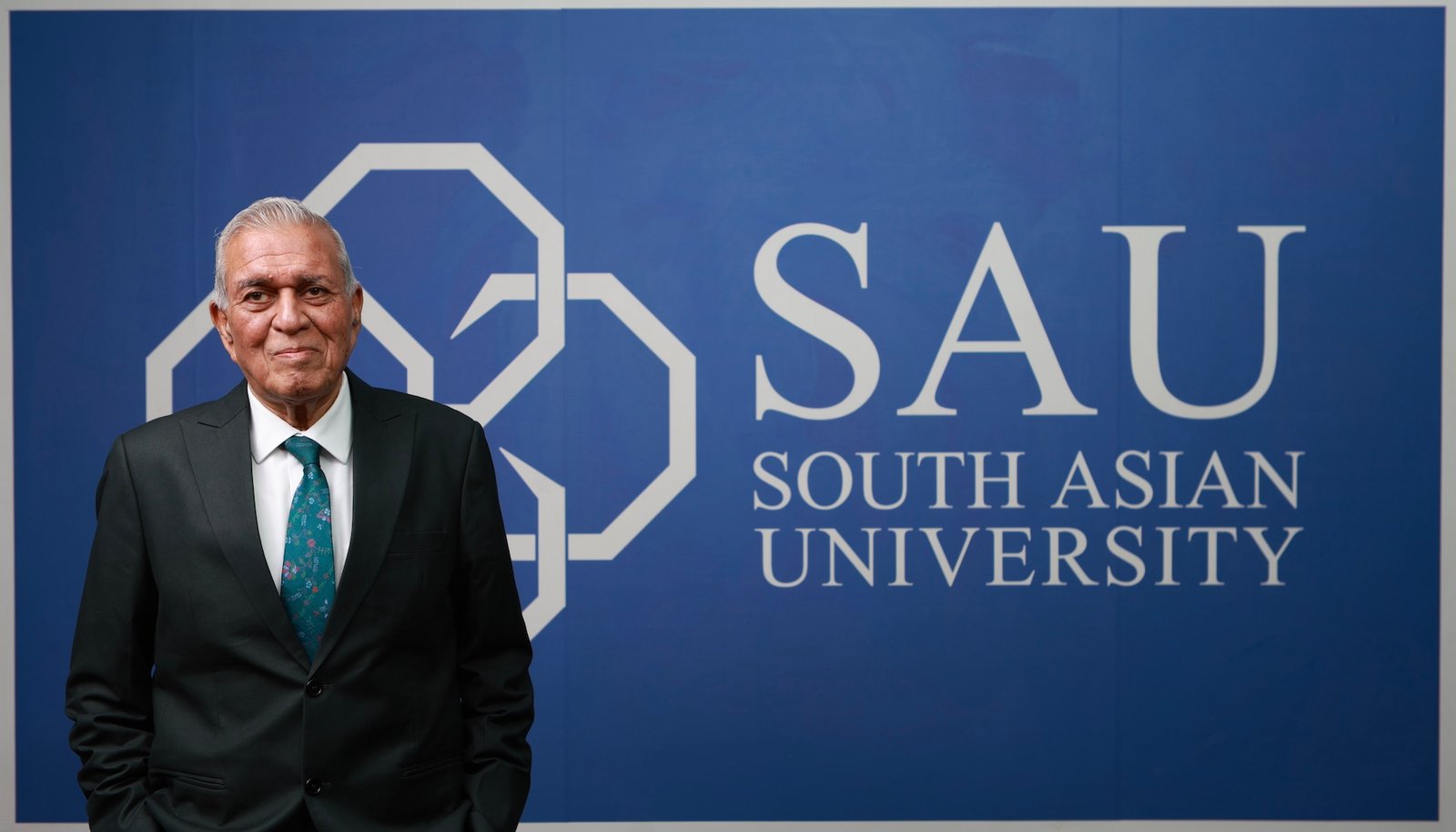
South Asian University (SAU) is strengthening global academic partnerships, expanding interdisciplinary research and widening its educational offerings as it works to advance regional cooperation across the eight South Asian Association for Regional Cooperation (SAARC) member countries.
In an exclusive interview with South Asian Herald, President of SAU, Prof. K.K. Aggarwal discussed the institution’s distinctive governance model, recent U.S. outreach, student and faculty representation, development challenges, and new initiatives in climate change, nutrition, health and enterprise development.
You recently visited the United States. Could you share some highlights from the visit and discuss the collaborative initiatives explored to further the objectives and global engagement of SAU?
The visit was directed at one question: how can individuals and institutions abroad help SAU serve the whole of South Asia. I met academics, administrators and members of the diaspora who have long-standing interest in the region, and the conversations were about concrete instruments — joint supervision of doctoral students, visiting faculty for our interdisciplinary centers, curriculum inputs in emerging areas, and research partnerships that give our students exposure to global standards while keeping their work rooted in regional problems.
A particular highlight was the interaction around our Interdisciplinary Centre of Climate Change & Sustainability, where Kilaparti Ramakrishna of the Woods Hole Oceanographic Institution delivered a lecture. That association is an example of what I hope to build more of: individual scholars of standing lending their time and networks to a young university.
I returned with a clear sense that SAU’s model interests’ people abroad. Very few institutions anywhere are owned jointly by several governments, and that novelty opens doors.
The idea of establishing South Asian University was proposed by late Prime Minister of India, Manmohan Singh at the 13th SAARC Summit in Dhaka in 2005. Could you reflect on SAU’s evolution since then and highlight some of its key milestones and achievements?
The proposal by the late Prime Minister of India Manmohan Singh at the 13th SAARC Summit was an act of considerable foresight. The idea of “South Asianness” — a shared regional space for higher education — was articulated more than fifteen years before it became fashionable to speak of regional public goods in education.
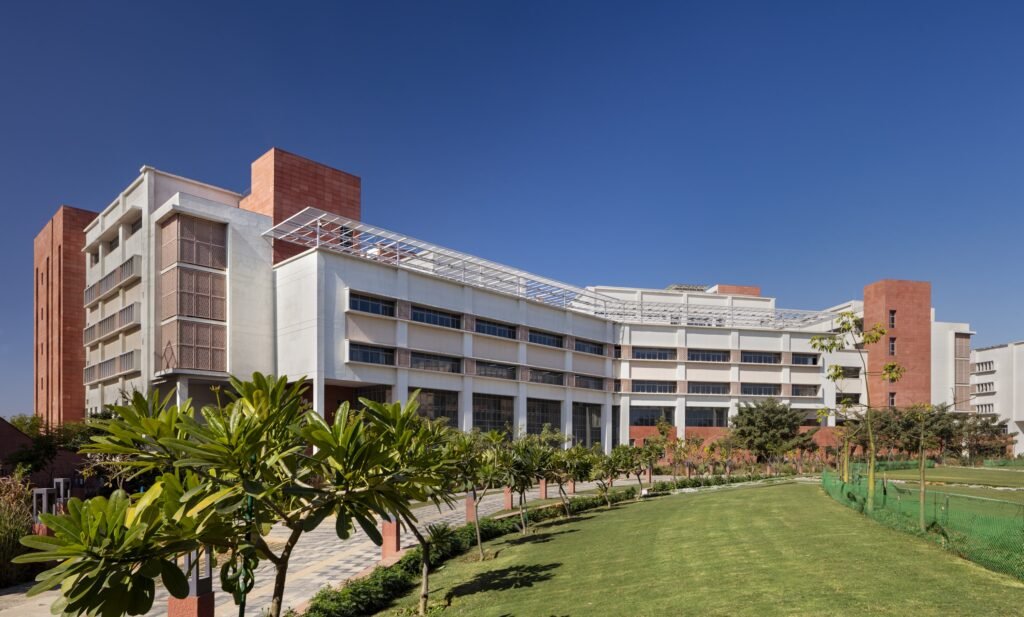
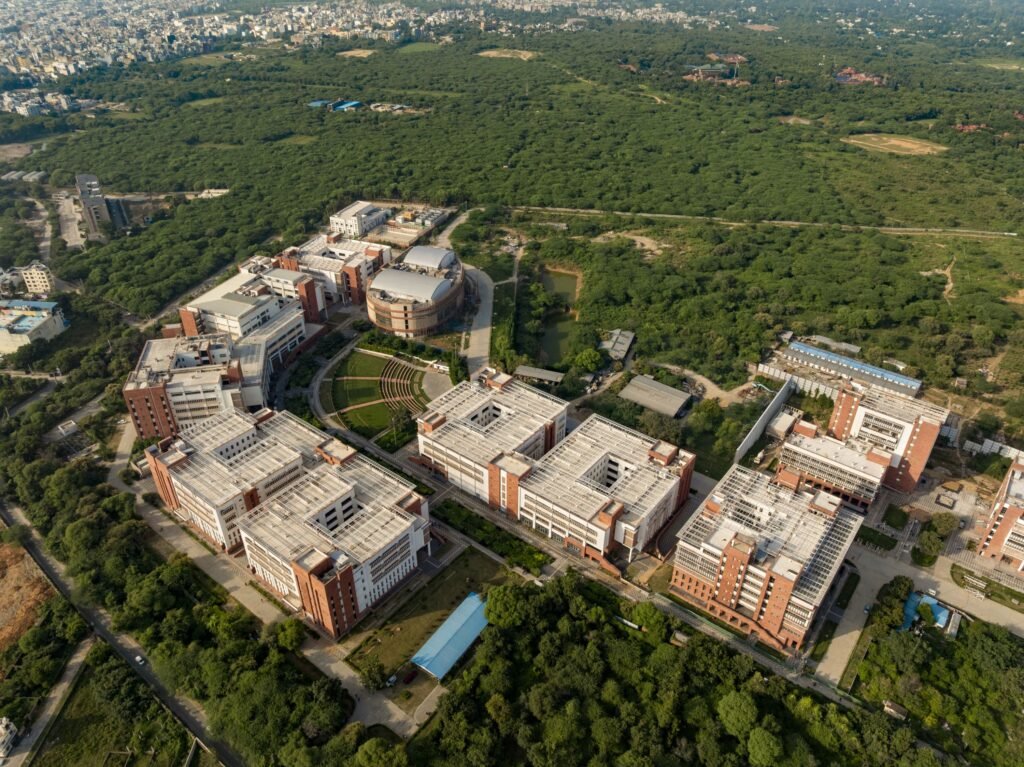
The University admitted its first batch of students in 2010, in a rented facility, with two programs. It has since grown into a full university with faculties spanning economics, social sciences, life sciences and biotechnology, mathematics and computer science, legal studies and management, and has moved to its own campus at Maidan Garhi in New Delhi.
Three milestones matter most to me. First, the degrees awarded by SAU are recognized across all member states, which is what makes regional mobility real rather than symbolic. Second, our alumni are now placed in universities, governments, international organizations and industry across South Asia and beyond. Third, and most recently, we have extended from postgraduate and doctoral education into undergraduate education. Younger students have more years ahead in which to carry the idea of the region forward, and reaching them earlier changes what the University can achieve.
The tagline of this University, “Knowledge without Borders,” is an accurate description of the enterprise. Education is an effective means of building bridges, and that instrument should be respected and used to its fullest extent.
SAU is unique in that it is collectively established and supported by the governments of the SAARC member countries. Could you explain this distinctive model and how it shapes the University’s governance, mission, and regional role?
To the best of my knowledge, SAU is the only university in the world governed and owned jointly by the governments of all the countries of its region. The eight SAARC member states — Afghanistan, Bangladesh, Bhutan, India, the Maldives, Nepal, Pakistan and Sri Lanka — established it collectively and support it through contributions to its budget.
Governance follows from that ownership. The Governing Board draws representation from the member states, and major decisions on academic direction, finance and appointments carry the participation of all of them. India, as host country, provided the campus and land and contributes the largest share (approximately 85% of the total till date), and the University’s academic character remains regional rather than national.
I regard this arrangement as a significant case study in collaboration, and I say that with full awareness of the demands it makes. Consensus among eight governments takes time. What it buys is legitimacy: a student from any member state arrives at an institution that belongs to their government as much as to any other.
It also shapes the mission in a practical way. My concern is that the University’s umbrella extends to the development of all of South Asia, and not only to the host country. Asking how SAU can be of greater assistance to each of these nations is the central administrative question I put to myself.
Could you give us an overview of the composition of SAU’s student body and faculty, particularly in terms of representation from different SAARC countries?
Students, faculty members and administrative staff are drawn from across the member states. Seats are allocated on a country-wise basis so that every member state has assured representation, and admission within each country’s allocation is by competitive entrance examination. We have a total student strength of about 2500, currently being represented by all countries.
Faculty positions are similarly open across the region. We boast of 125 faculty members at present. Our faculty and staff members comprise of nationals from India, Nepal, Sri Lanka, and Bangladesh.
What are some of the key challenges or development initiatives you foresee as SAU expands its academic, research, and regional footprint?
Coordination across eight governments is inherently slow, and the University’s growth depends on timely contributions and timely decisions. Regional political developments affect the movement of students and faculty, and visas and travel remain a recurring practical difficulty. Our physical infrastructure at the new campus is still being completed, and research infrastructure in the sciences requires sustained capital investment. Faculty recruitment in specialized fields is competitive globally, and we must offer scholars a reason to build careers here.
On the development side, our clear direction is towards interdisciplinary centers. The world has widely accepted that problem-solving is inherently multidisciplinary, and the University’s structure must reflect this. Beyond the two centers already mentioned, we intend to strengthen doctoral education, expand our undergraduate programs, and develop capacity in newer areas of study.
We have already begun programs in Law and are moving into Journalism and allied fields, which speak to the common interests of young people in South Asian countries and also respect the differences among these nations arising from their distinct cultural ethos.
My summary of what all of this is for: the world needs problem solvers, not degree holders. Interdisciplinary education is the need of the hour.
What kind of support and cooperation are you seeking from academic institutions, governments, organizations, and individuals?
From governments of the member states: continued financial support, and administrative facilitation on visas and mobility so that students and faculty can move without impediment.
From academic institutions: joint degrees and credit transfer, co-supervision of research students, faculty exchange, and shared access to laboratories and data. Institutions with strength in our priority areas — climate, nutrition and health, computing, law — are of particular interest.
From organizations and industry: research funding, endowed chairs and centers, internships and placements for our graduates, and partnership on problems where our regional focus is an asset rather than a limitation.
From individuals, including the South Asian diaspora: time as much as money. Visiting lectures, mentoring of students, endowed scholarships, and advocacy for the University in their own institutions. Many members of the diaspora carry both a deep attachment to the region and a position in the global academic system. That combination is exactly what a young regional university needs.
I recognize that the scale of the task means we cannot do it alone, which is why I actively solicit the cooperation of institutions and individuals wherever I travel.
SAU has recently established the Centre on Climate Change, Green Transition and Sustainability and is preparing to establish the Centre for Precision Nutrition and Health. Could you tell us about these initiatives, their objectives, and the impact you hope they will have?
The Centre on Climate Change, Green Transition and Sustainability is operational. South Asia is among the regions most exposed to climate change, and its principal risks — glacial melt in the Himalayas, monsoon variability, sea-level rise affecting Bangladesh, the Maldives and coastal India, heat stress, and agricultural disruption — do not stop at national borders. Research on such areas is therefore best organized regionally. The Centre’s work spans climate science, adaptation policy, energy transition and the economics of decarbonization, and it is designed to produce evidence that governments in the region can use directly.
The Centre for Precision Nutrition and Health is going to be operational very soon. South Asia carries a double burden: persistent undernutrition and stunting alongside rising diabetes, cardiovascular disease and obesity. Nutritional science developed largely on Western populations does not map cleanly onto South Asian bodies, diets or genetics. The Centre will work on nutrition tailored to this region’s specific profile, drawing together life sciences, public health, data science and policy.
The same interdisciplinary logic extends beyond the sciences. At our Faculty of Management, we have established the South Asian Enterprise Impact Centre (SAEIC), which turns management research into practical support for enterprises across the region — through consulting, executive and management development programs, and applied research on how organizations in South Asia create economic and social value.
Where the climate and nutrition centers will address the region’s physical and human well-being, SAEIC addresses its institutional and economic capacity, working directly with enterprises, government bodies and training partners. Taken together, these centers reflect a single conviction: that the problems worth solving in South Asia — environmental, nutritional, organizational — are shared across our nations and are best addressed by a university that belongs to all of them.
With students and faculty coming from different countries and cultural backgrounds, how does SAU foster an inclusive campus environment while respecting the distinct cultural identities and traditions of its member nations? Have any new initiatives been introduced in this area?
Our starting position is that the differences among these nations, arising from their respective cultural ethos, are to be respected.
In practice this works through the everyday design of the University. Country-wise admission ensures every national community has a genuine presence rather than a token one. Residential life places students of different nationalities together, which is where most of the real learning about the region happens. National days, festivals and cultural events of all member states are observed on campus. Our curricula in the social sciences, legal studies and management draw on material from across the region rather than from one country.
Our newer programs in Law and Journalism are themselves part of this approach, since they engage directly with how different South Asian societies organize their institutions and their public conversation.