Join WhatsApp Channel

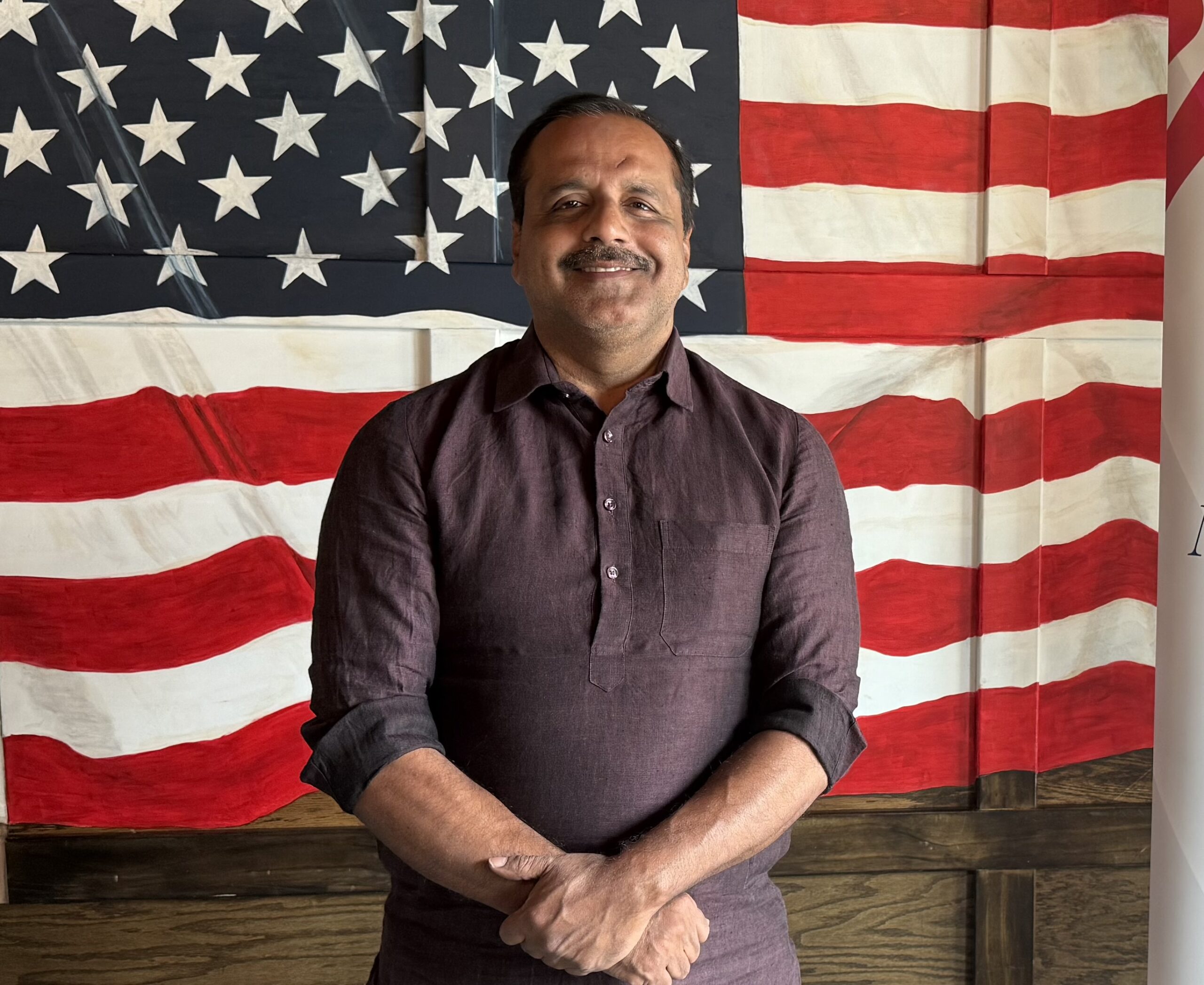
Karnataka Health and Family Welfare Minister U.T. Khader recently concluded a visit to the United States, where he participated in a series of engagements focused on public health, nutrition, education, and India–U.S. collaboration. During the visit, he received the Global Civic Leadership Award at the 15th Annual American Multi-Ethnic Commission’s Congressional Global Champions Gala in Illinois and was honored at a community reception hosted by Sikhs of America and Muslims of America in Columbia, Maryland.
In this exclusive interview with South Asian Herald, Minister Khader reflects on the growing role of the Indian diaspora, Karnataka’s healthcare innovations, food safety and nutrition initiatives, the global promotion of millets, and his vision for inclusive leadership and stronger India–U.S. partnerships.
You were recently honored at a reception hosted by Sikhs of America and Muslims of America. Could you share your thoughts on the event and what it meant to you?
I commend both organizations for organizing such a wonderful program, where people from communities of all faiths came together. It truly felt like a family gathering. I believe this spirit of unity is one of the greatest strengths of this country.
What are your reflections on the Indian diaspora in the United States and its growing role in strengthening India–U.S. relations?
The Indian diaspora is doing exceptionally well. I believe there should be greater engagement between members of the diaspora and the people of India. They should exchange ideas and collaborate on every important subject, including health, education, and technology. The diaspora should continue to keep us informed about developments here and help identify the best ways we can work together to further strengthen India–U.S. relations.
During your visit to Purdue University’s College of Agriculture, you initiated the GSA–Purdue University National Children’s Nutrition Collaborative with Anganwadi Centers. Could you tell us more about this initiative and its long-term objectives?
Food safety and health are extremely important. Our health depends greatly on our eating habits, and it is especially important for children to develop healthy food habits from an early age. I am interested in implementing some of the best food safety rules and regulations. That is why I visited Purdue University—to understand how their systems work and explore how we can adopt similar practices. My goal is to return to Karnataka and develop a new policy that strengthens food safety and nutrition.
You delivered the keynote address at the eighth GSA India–USA Millets Partnership Roundtable at the Consulate General of India in Chicago. As Karnataka is one of India’s leading millet-producing states, what role do you envision for Karnataka in advancing the global millet movement?
As I mentioned earlier, food is extremely important. People have different food habits in different regions, but today the world has become a global village. India has a rich tradition of producing millets, which are highly nutritious and beneficial for health. We are already promoting them not only across the United States but throughout the world. We should always share what is good for people’s health. What we are doing today is not just for ourselves—it is for future generations.
You are the first Indian minister to receive the Global Civic Leadership Award at the 15th Annual American Multi-Ethnic Commission’s Congressional Global Champions Gala. What, in your view, are the essential qualities of an effective civic leader, both in India and globally?
Receiving a global award also brings with it a great sense of responsibility. Sometimes, people in positions of authority may not always demonstrate strong leadership. Ultimately, what the world needs are leaders who can bring together every section of society. I always encourage young people to think about humanity, practice patience, be visionary, and embrace an inclusive outlook that respects different cultures and religions, enabling peaceful coexistence. Young people should strive to be bridges, not walls. I thank Dr. Vijay Prabhakar for the honor.
One of your key healthcare initiatives in Karnataka has been improving emergency medical services through innovative solutions, including cycle ambulances, train ambulances, and the use of drone technology for air ambulance support. Could you explain this initiative, its objectives, and the current stage of its implementation?
These services are extremely important for our healthcare system. We can build excellent hospitals, but if we cannot bring patients there in time, what is the use? Many parents have come to us in tears, saying that if their son or daughter had reached the hospital just 10 minutes earlier, their life could have been saved. That is why we are exploring every possible solution—from bike ambulances and air ambulances to sea ambulances and other innovative approaches—to ensure timely emergency care for the people of Karnataka.
You recently visited the Center for Social Change in Elkridge, Maryland. What were your key takeaways from that visit, and do you see opportunities for collaboration between Karnataka and organizations like the Center?
It is one of the finest autism centers I have visited. Its work is extremely important because we must always uphold the dignity of every human life. I was deeply impressed by the efforts of the founders, Jesse Singh and Sajid Tarar, and I commend them for the remarkable work they have done. It is a model that we would like to replicate, and we will certainly explore opportunities to collaborate and bring similar benefits to Karnataka.
You are widely regarded as a grassroots leader who has championed inclusive governance and the principle of unity in diversity. What message would you like to share with the Indian diaspora in the United States and with Indians around the world?
I always say that a country should not be judged solely by its skyscrapers or the size of its economy, but by the strength of its diversity. The policies of our two countries may differ, but humanity, culture, tradition, and togetherness should always unite us. Indian Americans and people of Indian origin around the world should continue to come together. It is through that unity that we can help shape a better future and strengthen our societies.
(This interview has been edited for length, brevity and clarity)
Related posts:
 Karnataka Health Minister Highlights Unity at Maryland Community Reception
 Trump Administration Releases 2025–2030 Dietary Guidelines, Calls for Shift to Whole, Nutrient-Dense Foods
 Akshaya Patra Marks 25 Years, 5 Billion Meals Milestone at Rashtrapati Bhavan; President Murmu Lauds Role in Nation Building
 India Eyes Tougher Sugar Rules as Parliamentary Panel Pushes Overhaul of Baby Food Regulation