 Join WhatsApp Channel

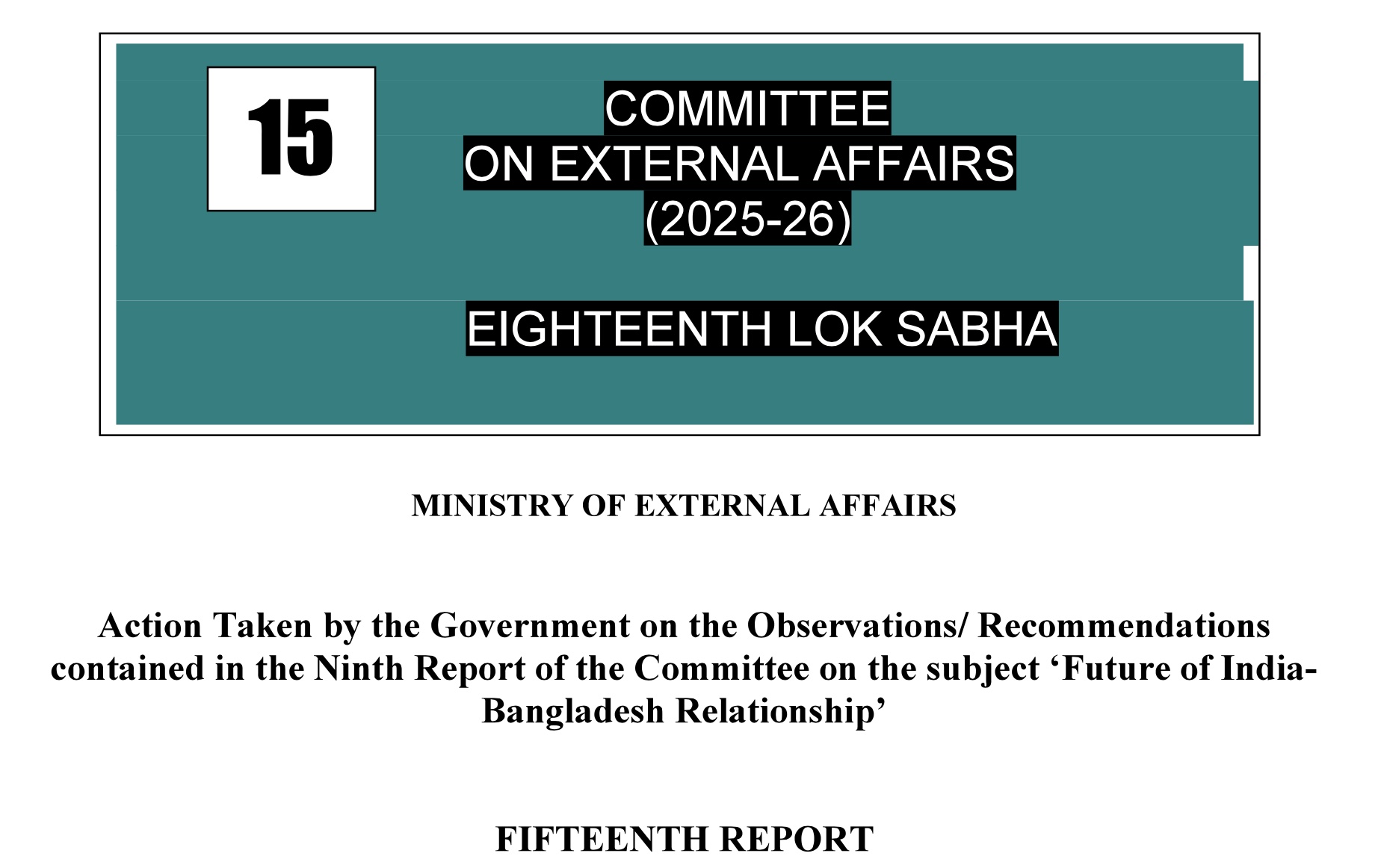
India is fast running out of time to renew the landmark 1996 Ganga Water Treaty with Bangladesh, with less than a year left before the agreement expires and no formal negotiations yet underway, a parliamentary committee has warned.
The delay threatens to inject fresh uncertainty into one of the most sensitive pillars of India-Bangladesh relations. Water sharing is far more than a technical issue between the two neighbors. It directly affects agriculture, livelihoods and drinking water for millions, while carrying enormous political weight in both Bangladesh and the Indian states of West Bengal and Bihar. Failure to conclude a successor agreement before the treaty expires could undermine bilateral trust at a time when Dhaka has a new government and both countries are seeking to strengthen strategic ties.
Against that backdrop, the Lok Sabha Committee on External Affairs has sharply questioned the government’s preparedness, saying time is rapidly running out to finalize India’s negotiating position.
In its Fifteenth Action Taken Report, tabled in Parliament on Thursday, the committee said the Ministry of External Affairs had failed to provide substantive updates on either the Ganga Treaty renewal or the long-pending Teesta water-sharing agreement, relying instead on descriptions of existing institutional mechanisms.
The committee had earlier recommended that New Delhi begin negotiations with Bangladesh “at the earliest” to avoid a vacuum after the treaty expires in 2026. It also urged the government to prepare its negotiating strategy using updated hydrological data, climate projections and consultations with West Bengal and Bihar.
The ministry’s response revealed only that an Inter-Ministerial Committee constituted in July 2023 was conducting an internal review of the treaty and that bilateral discussions were “expected to commence under the new Government in Bangladesh.”
For the committee, that was not enough.
It noted that “time is running short” and urged the government to complete its internal review without delay so that India’s negotiating position is ready before talks begin. The report points out that despite three years of preparatory work, the ministry has not indicated when negotiations will start, whether the review has been completed or what framework India intends to place before Bangladesh.
The committee was equally critical of the absence of progress on the Teesta agreement, one of the longest-running disputes in bilateral relations.
Instead of reporting any movement, the ministry reiterated its longstanding position that it was seeking a “fair and equitable” agreement in consultation with riparian states that would protect the interests of all stakeholders.
The committee noted the absence of any fresh developments, calling once again for a mutually acceptable settlement.
It also found little evidence that broader institutional engagement was translating into meaningful outcomes. While the ministry highlighted meetings of the India-Bangladesh Joint Rivers Commission and existing arrangements covering rivers such as the Feni and Kushiyara, the committee said the response largely described institutional structures without explaining what had been achieved.
The report comes at a critical moment in India-Bangladesh relations. Bangladesh’s new government under Prime Minister Tarique Rahman presents an opportunity to reset bilateral engagement, but river-water sharing remains among the most politically sensitive issues between the two countries.
Unlike trade or connectivity projects, water disputes resonate deeply with domestic politics on both sides of the border. Any prolonged uncertainty over the Ganga Treaty or continued deadlock on Teesta could complicate the broader diplomatic relationship.
Of the committee’s 33 recommendations made in its original report, the government accepted 25. However, the recommendations relating to river-water cooperation and the Ganga Treaty renewal remain among the eight for which the panel says complete replies are still awaited. The Ministry of External Affairs has been asked to furnish a fuller response within three months.
The committee’s assessment leaves little doubt about its central concern: with the treaty’s expiry approaching, India can no longer rely on procedural reviews and institutional meetings. The window for meaningful negotiations is closing, and the costs of delay could extend well beyond water sharing to the future trajectory of India-Bangladesh relations.
Related posts:
 Opinion: Pakistan’s Fake Narrative Against India to Hide its Own Mismanagement of Water Resources
 Why Bangladesh’s Pivot Toward Türkiye Could Redefine South Asia’s Geopolitical Landscape
The Indus Waters Treaty Part II: Obstruction, Exploitation and the Long-Overdue Reckoning
Response 1: Indus Waters Treaty
Why Bangladesh’s Pivot Toward Türkiye Could Redefine South Asia’s Geopolitical Landscape
The Indus Waters Treaty Part II: Obstruction, Exploitation and the Long-Overdue Reckoning
Response 1: Indus Waters Treaty
