Join WhatsApp Channel

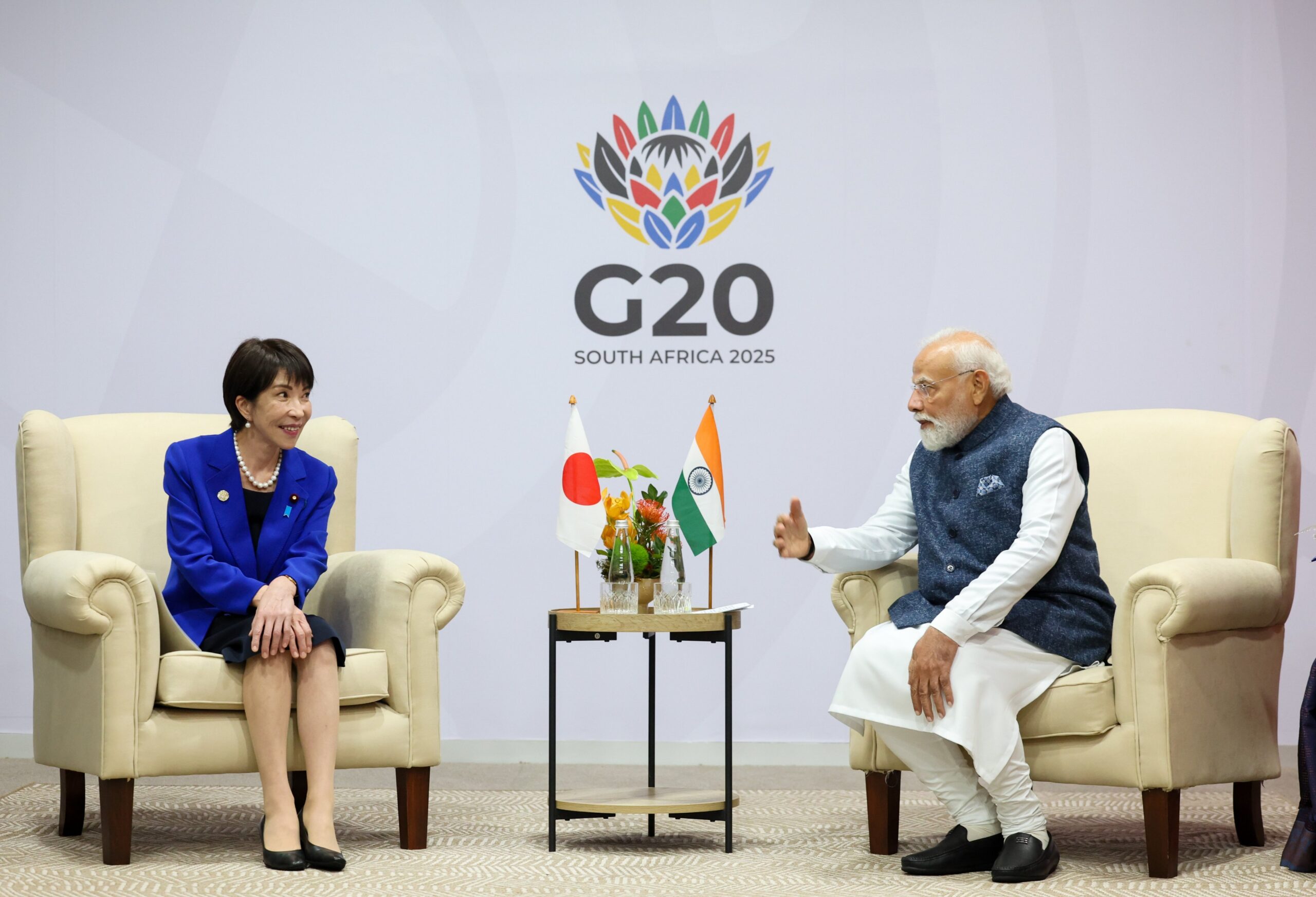
It would have been a summit of special significance had the Prime Minister of Japan Sanae Takaichi met her Indian counterpart Narendra Modi in Guwahati. That would have played up the emerging role of Assam in India’s Northeast, given a context to New Delhi’s Look East Policy as well as flagged Tokyo’s interest in having the Northeast as a gateway to South-East Asia and beyond. But scheduling issues with the visiting leader did not permit this to materialize. That by itself does not take away the significance of Takaichi’s three-day trip.
Even in the context of the India’s Northeast, Japan has given some US$ 2.7 billion over the years by way of development assistance focused on infrastructure such as construction of bridges with a view to improving road connectivity in the region. For Assam alone, Tokyo is said to be involved in a US$ 500 million health system and a water supply project. What has been consistently pointed out is that Japan is interested in developing the North-East; and India trusts the involvement of Tokyo in a strategically sensitive part of the country.
The visit of Prime Minister Takaichi has different aspects over and beyond the deepening and strengthening of bilateral relations and in all the agreements that are going to come about at the 16th India-Japan Annual Summit. This is the Japanese Prime Minister’s first visit, but the two leaders have met earlier; and it is not an exaggeration to say that New Delhi and Tokyo have deepened strategic ties to include joint training exercises as well as cooperation and co-production of defense technologies. The width and depth of Japan’s economic interaction with India have also been expanding rapidly and last year Tokyo said that it would double its investment to US$ 68 billion.
Deepening ties with India in a win-win framework is one part of Takaichi’s three-day visit to India. Her visit takes place at a time when the region has been undergoing profound changes and when there is expectation of Tokyo and New Delhi together playing a more meaningful role in meeting the objectives of the Indo Pacific, principally in keeping the area open and for free trade. More immediately, Takaichi’s India visit comes at a time when the United States-Iran peace talks have been tottering with conflicting versions of a second round in Qatar.
To both India and Japan that are completely energy dependent nations, the implications of the closure of the Strait of Hormuz has been deeply felt; and new questions on the future functioning of the international waterways that speaks of tolls and service charges only adds more anxiety to the supply chains. If there is one lesson that the international community has gleaned from the Middle East conflict it is that it does not have to take a super or a major power to create a global mess. A middle or small ranking nation too can create havoc by shutting down a Strait or critical waterway and dare tankers by a show of inexpensive drones and underwater mines. New Delhi and Tokyo have come to realize that shutting the Hormuz could seem like a Saturday afternoon picnic if the Straits of Malacca, Lombok, Sunda and Bab-el-Mandeb see a similar fate in the event of any potential showdown.
The unwritten reason for the getting together of democracies and security nervous nations in the Indo pacific was the menacing role of China which did not waste a nano second in seizing opportunities in the Indian and Pacific Oceans to extend its sphere of influence, often coming in the disguise of port calls. That it later went beyond innocent games of volleyball came to be seen leading to anxieties. If the four nation Quadrilateral initiative comprising of the United States, India, Japan and Australia was looking at ways to come to terms with a rising China, questions are also being raised as to how effective the QUAD is going to play any meaningful role in the absence of a firm leadership from Washington. In fact, the first Trump administration recognized the confluence of interests of the Indian and Pacific Oceans and came up with the Indo Pacific Command; but the second dispensation, for reasons best known to itself, has gone back to the Pacific Command nomenclature. Perhaps Beijing has heaved a sigh a relief for it never liked the area of Asia Pacific named anything else.
Prime Minister Takaichi visits India at a time when the role of the United States in the Indo Pacific is itself in doubt, in terms of commitment and credibility. And some of this has to do with Taiwan where at the end of President Donald Trump’s summit with President Xi Jinping, the expected reiteration of Washington’s traditional stance on Taiwan did not come about. To the contrary, President Trump raised anxiety levels by suggesting the United States will withhold arms sales to Taipei as a way of leveraging with China, effectively giving Beijing a veto in an area that is governed by the Taiwan Relations Act. Given all this it remains to be seen how India and Japan, or for that matter Australia are going to breathe life into the QUAD now waiting for a date from Washington for the next Leaders Summit, the last of which was presided over by President Joe Biden in September 2024.
Prime Minister Takaichi’s visit underscores Japan’s importance of India with the two countries all set to celebrate the 75th anniversary of diplomatic relations. In the midst of all that excitement, the two nations cannot forget that the challenges of Asia goes beyond the Indo Pacific for issues of terrorism and proliferation of weapons of mass destruction go beyond bilateral and regional concerns to involve the global community.
Disclaimer: The opinions and views expressed in this article/column are those of the author(s) and do not necessarily reflect the views or positions of South Asian Herald.