Join WhatsApp Channel

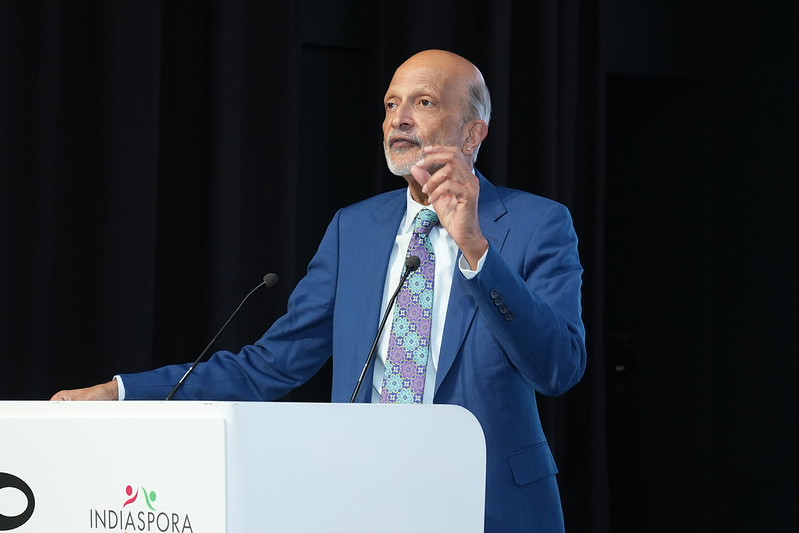

MR Rangaswami is an influential entrepreneur, investor, corporate eco-strategy expert, community builder, and philanthropist. In 1997, he co-founded Sand Hill Group, one of the earliest “angel” investment firms, and was featured on the front page of the Wall Street Journal.
Named to the Forbes “Midas” list of investors and recognized by CRN as one of the Top 25 Technology Executives, Rangaswami also hosts the Enterprise Retreat for the top 100 leaders in technology. In 2007, he founded the Corporate Eco Forum (CEF), an exclusive membership organization for Global 500 companies dedicated to integrating environmental stewardship into business strategies.
Few people have witnessed the evolution of the Indian diaspora as closely as Rangaswami. A Silicon Valley entrepreneur, investor, philanthropist, and founder of Indiaspora, Rangaswami has spent decades observing how Indian-origin communities have grown in influence across the world. From philanthropy to technology and artificial intelligence, he believes the story of the Indian diaspora is inseparable from the story of modern India itself.
In this exclusive interview, Rangaswami discusses growth in Indian diaspora, philanthropy, AI and people to people relations.
A Rising Diaspora, A Rising India
When Rangaswami founded Indiaspora fifteen years ago, the Indian American community numbered approximately three million people. Today, that figure stands closer to five million. Yet, as he points out, the story is about far more than population growth.
“The community’s economic, political, and cultural influence has expanded dramatically,” Rangaswami says. “Indian Americans are now visible across virtually every major field—from technology and medicine to finance, academia, entrepreneurship, and public service.”
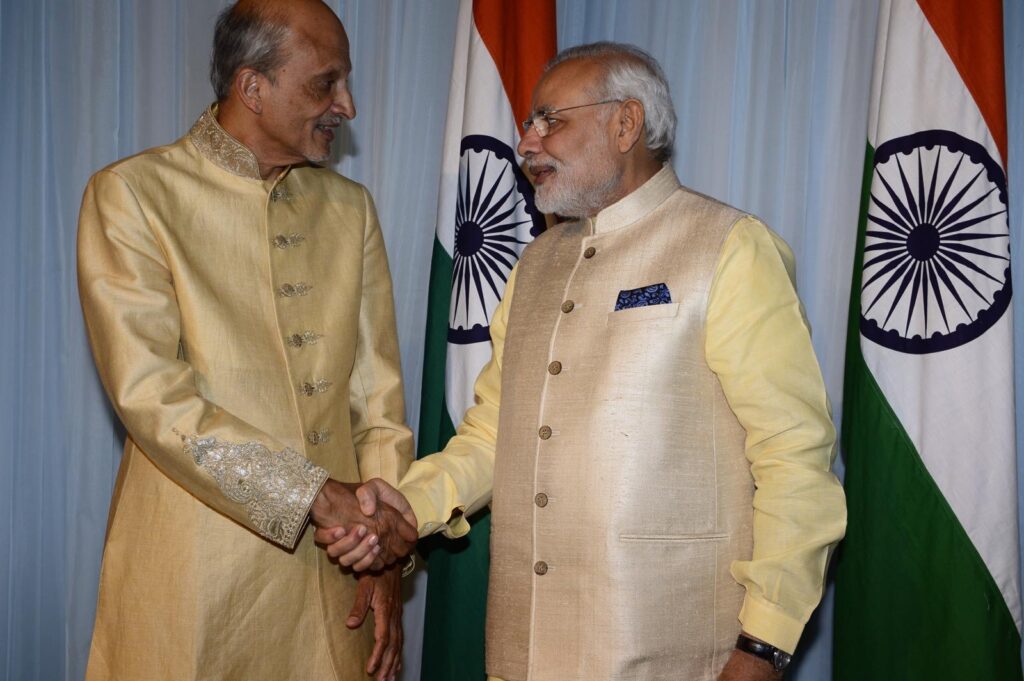
As Indiaspora expanded its reach beyond the United States into Canada, the United Kingdom, Singapore, the UAE, and Australia, Rangaswami observed a similar pattern emerging everywhere. Indian-origin communities were moving into leadership positions, building successful enterprises, and becoming increasingly influential within their adopted countries.
At the same time, India itself was changing. “The India the world once associated primarily with outsourcing and IT services has evolved into something much larger,” he notes. “Today, India is recognized globally for innovation, entrepreneurship, digital infrastructure, pharmaceuticals, renewable energy, and space technology.”
For Rangaswami, these developments are deeply connected. The success of the diaspora has elevated India’s global standing, while India’s growing prominence has strengthened the confidence and identity of diaspora communities worldwide.
“The diaspora and India are not moving on parallel tracks,” he says. “They are rising together.”
The Philanthropic Awakening of the Indian Diaspora
One of the most significant transformations Rangaswami has witnessed is the emergence of large-scale philanthropy among Indian Americans. “The earliest generation of immigrants was focused on building a life,” he explains. “They came as students, found jobs, raised families, bought homes, and worked hard to create stability. Philanthropy simply wasn’t a major priority because resources were limited.”
As prosperity increased over the decades, giving became possible – and eventually became an important part of how many Indian Americans define their legacy.
According to Rangaswami, this generosity flows in two directions. The first is toward India, where donations often support schools, healthcare initiatives, rural development projects, and social welfare programs. For many donors, these contributions represent a way of giving back to the communities that shaped them.
The second is toward institutions in the United States. “Education has been particularly important,” he says. “Indiaspora has documented more than three billion dollars in contributions to American universities over the past twenty-five years.”
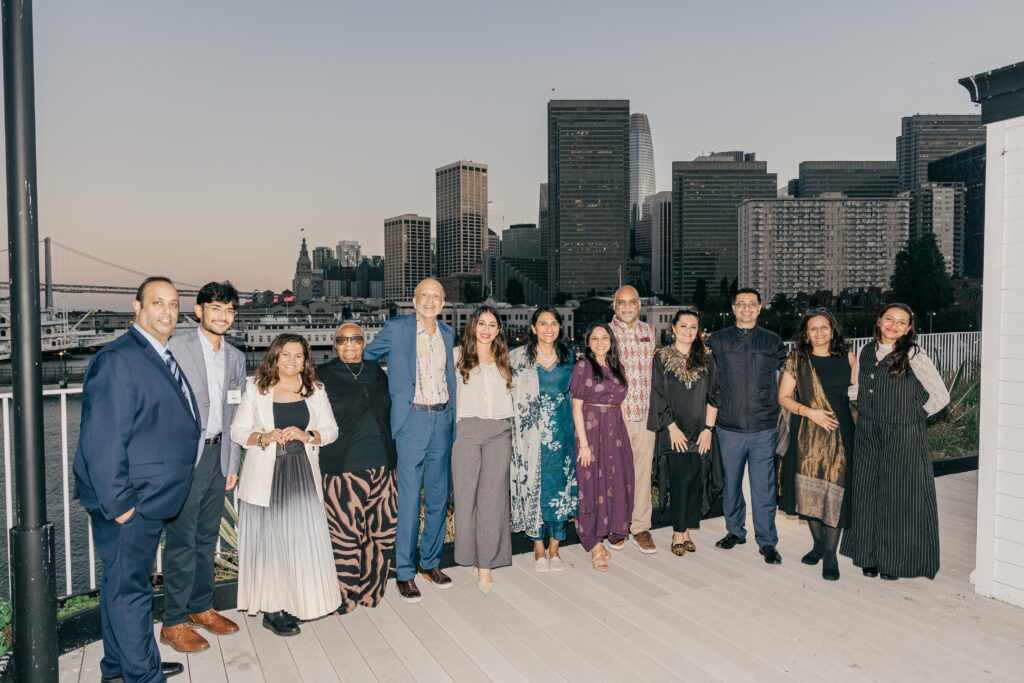
Giving has also expanded to hospitals, arts organizations, civic institutions, and social causes. Today, annual charitable giving by Indian Americans is estimated at between four and five billion dollars. Equally noteworthy, he adds, is the community’s commitment to volunteerism.
“Research consistently shows that Indian Americans volunteer at significantly higher rates than the national average. The contribution isn’t only financial—it’s also about time, expertise, and community engagement.”
At the Heart of the AI Revolution
Having spent more than four decades in Silicon Valley, Rangaswami has witnessed every major technological wave of the modern era – from personal computers and the internet to mobile technology and cloud computing. Artificial intelligence, he believes, may be the most consequential yet.
“Every technological revolution changes society,” he says. “But AI has the potential to reshape almost every industry simultaneously.” He points to the enormous presence of Indian-origin professionals throughout the technology ecosystem.
While public attention often focuses on high-profile leaders such as Sundar Pichai at Google, Sanjay Mehrotra at Micron, and venture capitalist Vinod Khosla, Rangaswami believes the broader story is even more impressive.
“Indian Americans are deeply represented among founders, engineers, researchers, and product leaders across the AI landscape,” he says. “Walk into OpenAI, Anthropic, or almost any major AI company and you’ll immediately see the scale of Indian participation.”
Indiaspora has sought to help the community understand and engage with this rapidly evolving field through AI-focused gatherings and educational initiatives. For Rangaswami, another important dimension is the growing exchange of knowledge between Silicon Valley and India.
“The technology ecosystem is now highly interconnected,” he explains. “Talent, ideas, and expertise move back and forth constantly. That knowledge transfer is helping accelerate India’s own ambitions in artificial intelligence.” The result, he believes, is that the diaspora is not simply observing the AI revolution – it is actively helping build it.
From the Margins to the Mainstream in American Politics
Political participation represents another area where the Indian American story has undergone a remarkable transformation. Rangaswami recalls a landmark moment in 2013, when Indiaspora hosted the first Indian community presidential inaugural ball in Washington, D.C.
“It was both a celebration and a statement,” he says. “The community wanted to demonstrate that it intended to participate fully in American civic life.” At that time, Indian Americans had achieved considerable success in business and the professions but remained largely absent from elected office.
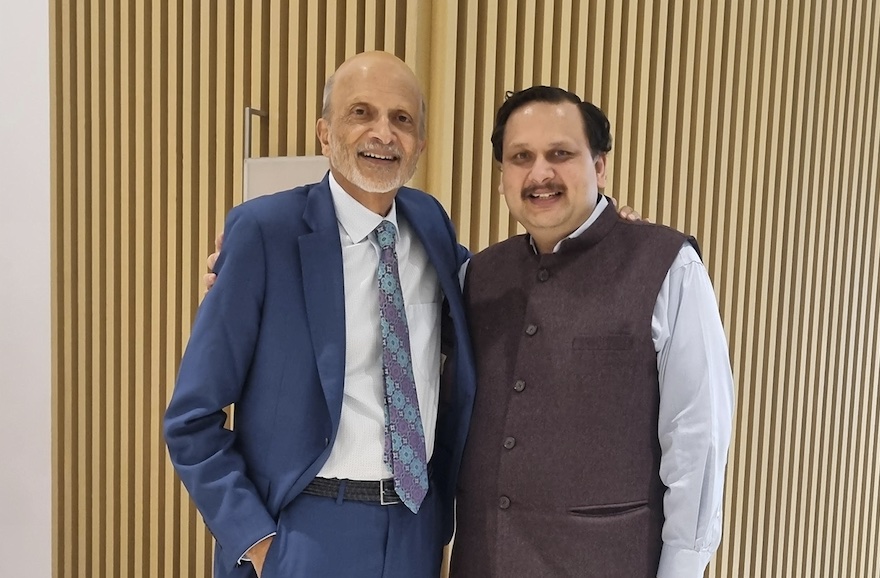
That changed rapidly. Within a few years, Indian Americans had achieved representation in Congress roughly equivalent to their share of the national population. Since then, political participation has expanded dramatically.
“In the most recent election cycle, more than three hundred Indian Americans ran for office at every level of government,” Rangaswami notes. Beyond elections, Indian Americans are increasingly serving in senior policy and administrative positions across federal agencies and presidential administrations.
“A new generation is entering public service,” he says. “Many see government as another avenue for contributing to the country that has provided opportunities for their families.” The progress has been rapid, but Rangaswami views it as a natural outcome of a community that increasingly feels both invested in and responsible for the future of the United States.
The Next Generation and the Future of Connection
Like many immigrant communities, Indian Americans face the challenge of maintaining connections across generations. “The first generation arrived carrying India with them,” Rangaswami reflects. “Their children grew up in America. They are fully American, and their relationship with India is naturally different.”
He does not see this evolution as a problem. Rather, he views it as the predictable course of immigrant integration. The challenge, however, is ensuring that younger generations develop a meaningful understanding of their heritage and of India’s growing importance in the world.
Rangaswami advocates for greater opportunities for students to engage directly with India through educational exchanges, leadership programs, internships, and professional experiences. “India today is one of the world’s most dynamic economies,” he says. “Understanding India is increasingly valuable, regardless of where you live.”
He believes these experiences can help create a lasting connection that goes beyond family history and cultural nostalgia. “A community that remains connected across generations and across borders becomes stronger,” he says. “And it ultimately becomes an asset to both countries it calls home.” For Rangaswami, that dual connection – to India and to adopted homelands around the world – may ultimately define the next chapter of the global Indian story.
Related posts:
 ‘Indiaspora Forum for Good’ to Unite Global Indian Leaders for Actionable Solutions, Collaboration, and Innovation
 Indiaspora Founder MR Rangaswami Emphasizes “Force for Good” Vision at Forum 2026 in Bengaluru
 Elevate 2025 Brings Tamil Entrepreneurs Together in Texas; Indiaspora Founder MR Rangaswami Calls for Changing Immigrant Narrative
 Indiaspora Forum 2026 Opens in Bengaluru with Focus on Philanthropy, Community Impact, and Cultural Celebration