 Join WhatsApp Channel

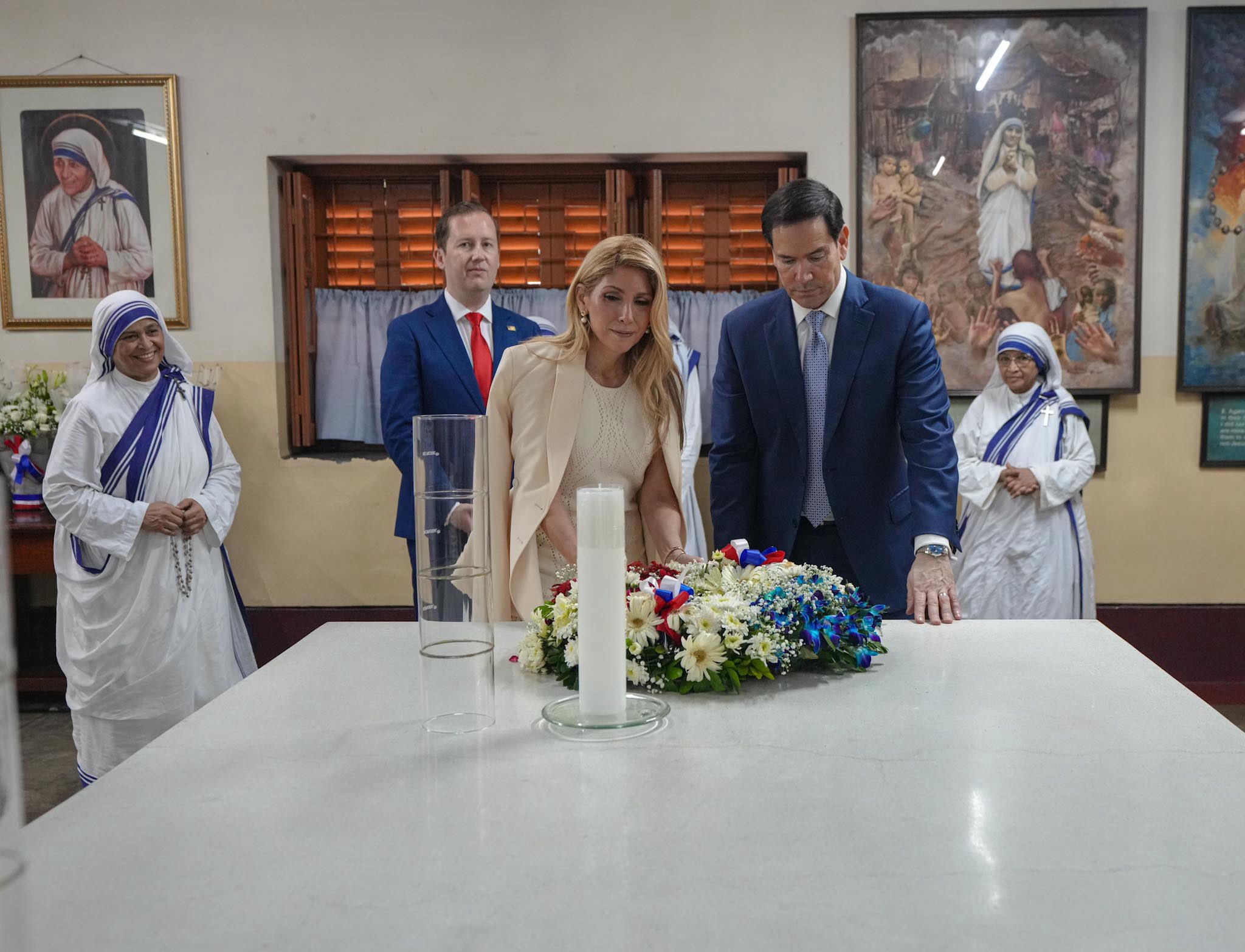
When US Secretary of State Marco Rubio stepped out of the usual routine of a choreographed diplomatic visit and decided to head first to the headquarters of the Missionaries of Charity in Kolkata, it caught analysts and intelligence agencies in a tizzy, trying to make sense of the visit priorities.
Indian officials said Rubio had flown directly to stop at the tomb of Mother Teresa before proceeding to New Delhi for talks with Prime Minister Narendra Modi. The sisters of the order themselves were surprised at hosting such a high-profile visitor.
Rubio sought blessings at the tomb of Kolkata’s ‘Saint of the gutters’, revered worldwide, in a gesture of deep personal faith. However, in diplomacy, symbolism is never really personal.
Within the contemporary Republican ecosystem, particularly in the movement built around President Donald Trump, religious identity has become an increasingly important political language.
Mother Teresa remains not merely a religious figure but a globally recognized Catholic icon. For conservative Christian audiences in the United States, the image of Rubio paying respects at her tomb reinforces a political identity built around faith and moral symbolism.
However, to dismiss the trip as political theatre aimed at the MAGA, or ‘Make America Great Again’, audience would be to miss the woods for the trees.
The US Secretary of State arrived in India at a moment when Washington and New Delhi are attempting to repair friction that has emerged over the past few months. Trade disputes, including tensions over Trump-era tariffs, compounded by Indian concerns on America’s engagement with rivals such as Pakistan and China, have complicated the relationship.
As part of the peace-making effort, the United States wants to deepen security coordination in the Indo-Pacific, particularly ahead of the upcoming Quad meeting involving Japan and Australia. Kolkata remains India’s gateway to the East and thence to the wider Pacific, despite its ports getting silted towards commercial irrelevance.
A visit to Kolkata has deeper symbolic significance as a possible supportive gesture to India’s Act East policy and its control over the strategic Bay of Bengal, where Chinese, Indian, and American interests have been at play.
Washington is also seeking energy and energy security partnerships as global markets continue to experience extreme volatility, as the Persian Gulf continues to simmer despite promises of peace from both sides. India sits astride two major sea-lanes – from the western seaboard leading to the Suez and the Straits of Hormuz on the one hand, and another from the Bay of Bengal to the Straits of Malacca.
Commercially, the United States has made known its desire to expand oil and liquefied natural gas exports to India, potentially reducing India’s dependence on Russian supplies while giving Washington a larger muscle in South Asia’s energy architecture. If the troubled seas of West Asia are to be avoided, then the Arctic route, which leads to India’s eastern seaboard, makes more sense for such shipping.
There may also have been another sensitive issue beneath the surface. Some of Rubio’s conservative allies in Washington have repeatedly expressed concerns about India’s tightening of regulations under the Foreign Contribution Regulation Act, or FCRA, arguing that restrictions affect the flow of foreign funding to church-linked organizations.
Whether this issue will figure in talks with Indian leaders is not known, but the symbolism of Rubio flying into Kolkata ahead of New Delhi will not be lost to anyone. (UNI)
Related posts:
 Rubio’s Four-Day India Tour Carries Strategic Significance
 Marco Rubio’s Visit to India Aims to Address Trade Frictions and Boost Quad Cooperation
 Indian American Republicans Welcome President-elect Trump’s Pick of Marco Rubio as Secretary of State
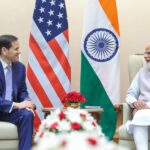 PM Modi, US Secy of State Rubio Hold Strategic Talks as India-US Partnership Gains Momentum
