Join WhatsApp Channel

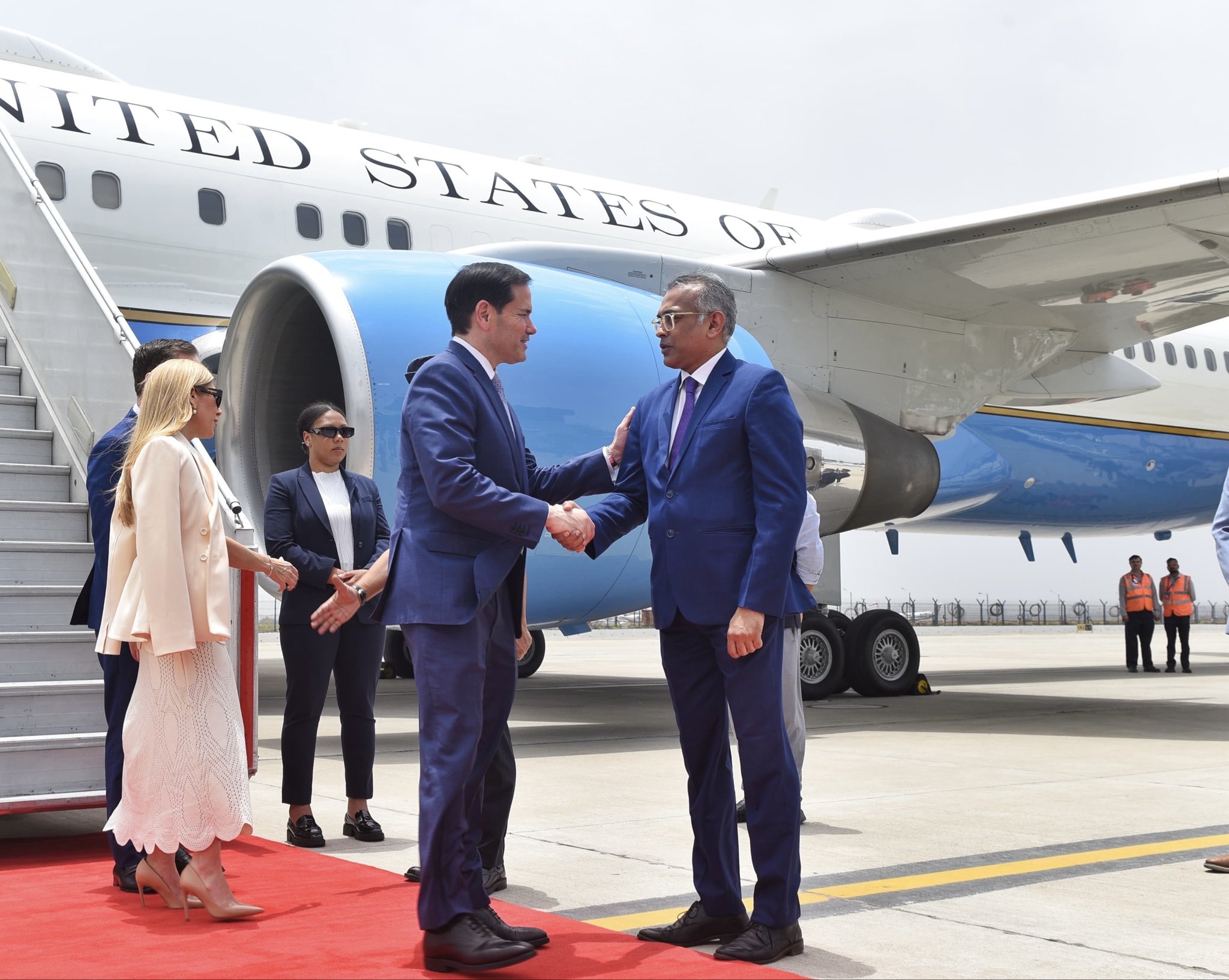
The arrival of Marco Rubio in India this week was far more than a routine diplomatic stopover. It came at a moment when the global order is under severe stress: the Middle East remains volatile after the Iran conflict, oil markets are unstable, the Russia-Ukraine war refuses to end, and Washington’s ties with New Delhi have become increasingly complicated over energy purchases, trade disputes and India’s refusal to fully align with American geopolitical priorities.
Rubio’s four-day India tour — covering Kolkata, Agra, Jaipur and New Delhi — was therefore not merely ceremonial diplomacy. It was a strategic repair mission wrapped in symbolism, tourism and backchannel signaling.
The decision to begin his India trip in Kolkata surprised many observers. Traditionally, high-profile American diplomatic visits start in Delhi. Rubio instead chose a softer opening — visiting the Missionaries of Charity and cultural landmarks before moving into hard geopolitical discussions.
That choice was not accidental.
Kolkata represented an attempt to humanize an otherwise tense strategic mission. Rubio arrived not as a stern enforcer of Washington’s demands but as a statesman trying to reconnect with India emotionally and politically. The symbolism mattered because Indo-US ties, despite growing defense and technology cooperation, have lately suffered from distrust.
President Donald Trump has publicly pressured India over continued imports of discounted Russian crude and alleged energy linkages with Iran. Washington wants India to diversify away from Russian oil dependence and increase purchases from American suppliers. Rubio openly pushed that line during his Delhi meetings, pitching the United States as a stable energy partner.
But India’s position remains rooted in strategic autonomy. Prime Minister Narendra Modi has consistently resisted Western pressure on Russian energy ties, arguing that India’s energy security cannot become hostage to geopolitical rivalries. For New Delhi, cheap oil is an economic necessity, not an ideological choice.
That contradiction formed the invisible backdrop of Rubio’s meetings with Modi and External Affairs Minister S. Jaishankar.
Official statements described the talks as “productive” and focused on defense, trade, technology and Indo-Pacific security. But diplomatic language often conceals more than it reveals. The real substance likely lay in three urgent issues: energy flows, the Quad’s future, and the escalating instability in West Asia.
The upcoming Quad summit in Delhi gave Rubio’s visit additional urgency. The Quad — comprising India, the US, Japan and Australia — has increasingly evolved into a loose balancing coalition against China’s growing power in the Indo-Pacific.
Washington wants the Quad to become more operationally cohesive, especially in maritime surveillance, AI, semiconductor supply chains and naval coordination. India, however, continues to view the grouping cautiously. Delhi does not want the Quad transformed into an Asian NATO that could drag India into direct confrontation with Beijing.
Rubio’s mission therefore involved reassuring India that the US still views it as the “cornerstone” of Indo-Pacific strategy while also quietly seeking deeper strategic commitments.
Yet there was another, more immediate crisis overshadowing everything: Iran.
The fragile ceasefire in the Middle East has held longer than many expected. Reports emerging from the region suggest that the pause in fighting allowed the Islamic Revolutionary Guard Corps to regroup, reorganize logistics and rebuild damaged command structures. Iranian rhetoric has hardened dramatically, with threats that renewed war would bring devastating retaliation against American interests and allies.
This is where Rubio’s India visit becomes geopolitically fascinating.
Trump’s administration appears trapped between two contradictory realities. On one hand, it adopted aggressive posturing toward Iran and intensified pressure on countries engaging with Tehran. On the other hand, Washington increasingly recognizes that prolonged instability in West Asia could destroy global energy markets, hurt the American economy and alienate key partners like India.
India sits at the center of that equation.
New Delhi has deep ties with both Washington and Tehran. India depends heavily on Gulf energy routes and has long balanced relations between Iran, Israel, the Arab states and the US. Unlike many Western allies, India retains communication channels across competing blocs.
Rubio’s presence in Delhi therefore may have carried an unstated strategic purpose: to encourage India to play a stabilizing role in the Gulf crisis, or at minimum ensure that India does not drift further away from the American orbit during the turmoil.
In effect, Rubio may have arrived less as an ultimatum-delivering diplomat and more as a messenger seeking damage control.
That interpretation also explains the unusually broad nature of his itinerary. Agra and Jaipur were not essential diplomatic stops. They were political theatre — projecting warmth, continuity and civilizational respect at a time when bilateral tensions could easily have dominated headlines.
Rubio himself reportedly struggled with Delhi’s brutal summer heat, an irony widely noted across Indian political circles given that he comes from Florida. Behind the humor, however, lay a larger metaphor: even seasoned American politicians are discovering that navigating India’s political climate is harder than expected.
India today is not the India of the 1990s or even the early 2000s. It no longer automatically bends under Western diplomatic pressure. Modi’s government calculates relationships transactionally and strategically. If Washington wants India’s cooperation on China, energy security or critical technology, it must also tolerate India’s independent decisions on Russia and Iran.
That reality was evident in the absence of any dramatic breakthrough announcements after Rubio’s meetings.
There was no major defense treaty, no sweeping trade deal and no public commitment from India to reduce Russian oil purchases. Instead, both sides highlighted continuity: deeper cooperation, stronger strategic partnership and shared Indo-Pacific interests.
Sometimes in diplomacy, the absence of confrontation itself is the achievement.
The visit helped cool speculation that Indo-US relations were entering a serious downturn. Rubio invited Modi to Washington, signaling that Trump still wants to preserve the personal chemistry that once defined Modi-Trump ties.
But beneath the smiles, structural tensions remain unresolved.
India still refuses to become a formal American ally. The US still wants India more deeply embedded in its anti-China architecture. India still buys Russian oil. Washington still dislikes it. Delhi still values relations with Iran for strategic and connectivity reasons, particularly involving Central Asia and the Chabahar corridor.
Rubio could not solve those contradictions in one visit.
What he could do — and likely did — was prevent divergence from turning into open friction.
Another important dimension of the visit was economic anxiety. The global economy is entering a dangerous period of energy inflation, supply chain uncertainty and slowing growth. Washington increasingly sees India not merely as a security partner but as a critical economic counterweight to China.
That is why Rubio repeatedly emphasized technology, energy diversification and business mobility. The US wants India integrated into American-led semiconductor, AI and advanced manufacturing ecosystems. India, meanwhile, wants investment, technology transfer and market access without sacrificing sovereignty.
The resulting relationship is complex: deeply cooperative yet fundamentally cautious.
The broader message emerging from Rubio’s trip is that Washington may now be recalibrating its India strategy under Trump’s second-term pressures. Earlier American policy often assumed that strategic convergence against China would automatically override disagreements elsewhere. That assumption has proven flawed.
India will cooperate with the US where interests align, but it will not subordinate its foreign policy to Washington’s agenda.
Rubio’s visit acknowledged that reality implicitly.
By combining hard strategic discussions with softer cultural outreach, by avoiding public confrontation over Russia and Iran, and by foregrounding the Quad instead of sanctions rhetoric, Washington appeared to signal flexibility rather than coercion.
Whether that flexibility lasts is another question.
If the Iran ceasefire collapses and oil prices surge again, pressure on India could quickly intensify. If Trump resumes maximalist sanctions threats, Delhi may harden its stance further. And if China escalates tensions in the Indo-Pacific, the Quad could transform from a consultative grouping into something far more militarized.
For now, Rubio’s India visit achieved something modest but important: it stabilized a relationship drifting toward strategic discomfort.
There were no dramatic breakthroughs. No grand announcements. No transformational agreements.
But diplomacy is often about preventing crises before they explode.
In that sense, Rubio’s sweaty journey through Kolkata, Jaipur, Agra and Delhi may ultimately be remembered less for what was publicly declared and more for what was quietly managed behind closed doors — an attempt by Washington to keep India close while the world around them edges toward greater disorder.
Disclaimer: The opinions and views expressed in this article/column are those of the author(s) and do not necessarily reflect the views or positions of South Asian Herald.
Related posts:
 Marco Rubio’s Visit to India Aims to Address Trade Frictions and Boost Quad Cooperation
 Putin’s Delhi Gambit: How a High-Stakes Visit Could Redraw India’s Geopolitical Map
 Indian American Republicans Welcome President-elect Trump’s Pick of Marco Rubio as Secretary of State
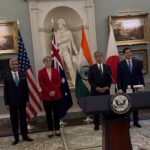 Secretary Marco Rubio Welcomes Quad Foreign Ministers in DC for High-Level Diplomatic Talks