 Join WhatsApp Channel

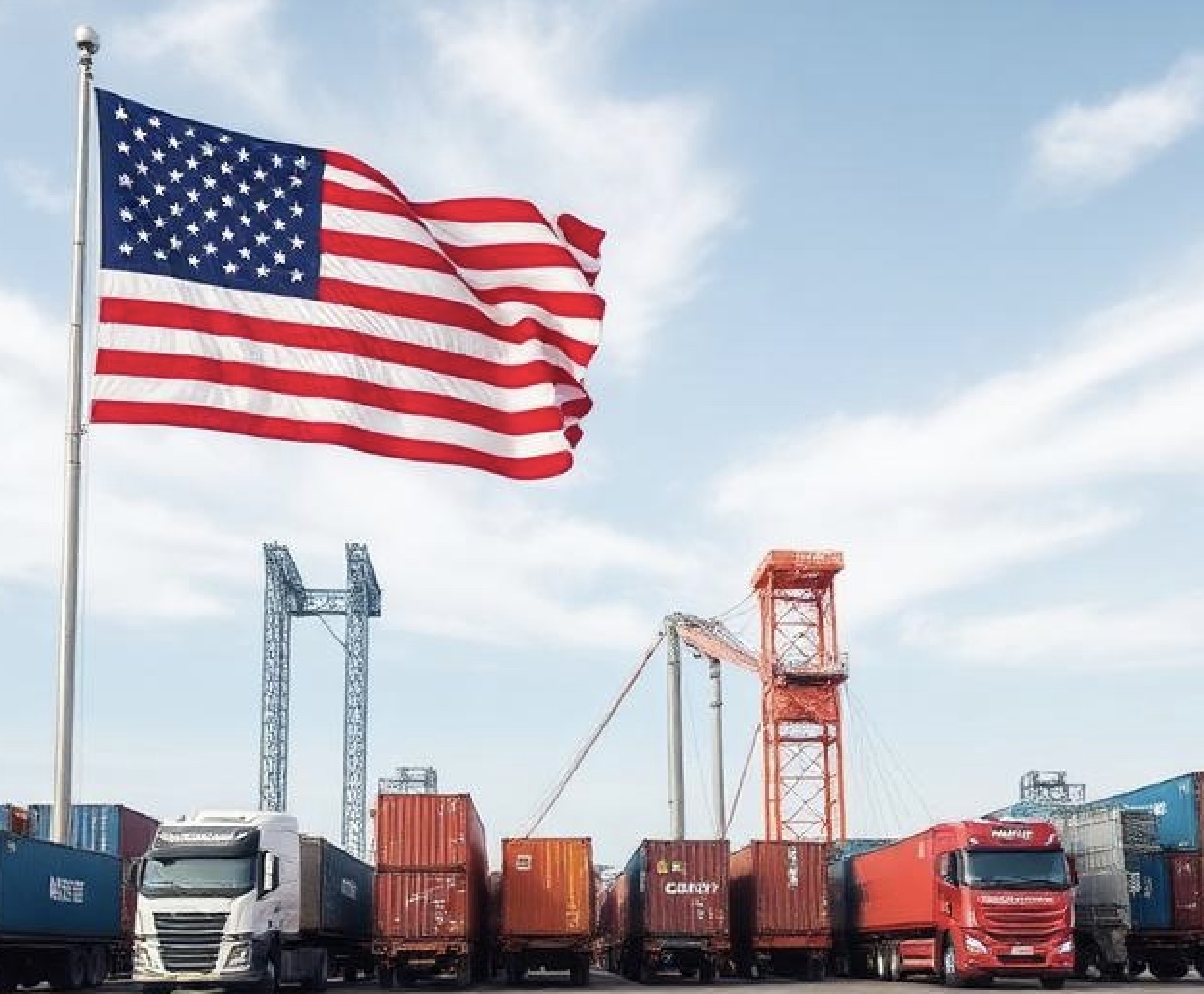
The United States’ tariff strategy suffered another major judicial blow on May 7 after the U.S. Court of International Trade struck down President Donald Trump’s 10 per cent global import tariffs, a ruling that could reshape trade calculations across South Asia at a time when the region is increasingly tied to American supply chains and export markets.
In a 2–1 decision, the Manhattan-based court ruled that the Trump administration had unlawfully invoked Section 122 of the Trade Act of 1974 to impose broad tariffs aimed at reducing America’s trade deficit. The judges held that the provision was designed for exceptional balance-of-payments crises, not for routine trade imbalances or economic nationalism.
The ruling is the second major legal defeat for Trump’s tariff agenda this year and signals that U.S. courts are becoming increasingly skeptical of expansive presidential trade powers exercised without congressional approval.
For South Asian economies — from India and Bangladesh to Sri Lanka and Pakistan — the judgment carries implications far beyond Washington’s legal battles. It raises fresh questions about the reliability of U.S. trade policy, the future of bilateral trade negotiations, and the stability of export access to the world’s largest consumer market.
A Temporary Tariff Regime Collapses
The 10 per cent tariffs had been imposed in February 2026 after the U.S. Supreme Court struck down Trump’s earlier “Liberation Day” reciprocal tariffs introduced under emergency powers legislation.
Facing that setback, the administration pivoted within hours to Section 122, arguing that America’s roughly $1.2 trillion goods trade deficit justified temporary import restrictions.
But the trade court rejected that argument.
Judges Mark Barnett and Claire Kelly ruled that ordinary trade deficits do not amount to the kind of “large and serious” balance-of-payments crisis envisioned by Congress when the law was enacted during the economic turbulence of the 1970s.
The majority opinion warned that accepting the administration’s interpretation would effectively hand the president unlimited tariff powers, bypassing Congress’s constitutional authority over trade and taxation.
Judge Timothy Stanceu dissented, arguing that courts should exercise caution before overriding presidential judgment in economic matters.
The ruling currently benefits only the plaintiffs in the case — the state of Washington, spice importer Burlap & Barrel, and toy company Basic Fun! — while tariffs technically remain in place for most other importers pending appeal. The measures were already scheduled to expire in July.
Still, trade analysts say the judgment significantly weakens Washington’s ability to use Section 122 again as a broad tariff weapon.
Why South Asia Is Watching Closely
South Asia has emerged as one of the biggest indirect beneficiaries of the global supply-chain shifts triggered by U.S.-China trade tensions over the past decade.
India has positioned itself as an alternative manufacturing and technology hub. Bangladesh’s garment industry depends heavily on Western consumer demand. Sri Lanka, Pakistan and Nepal rely on textile, apparel and agricultural exports to advanced markets, including the United States.
The uncertainty surrounding U.S. tariff policy therefore creates anxiety across export-driven sectors in the region.
For manufacturers in Bangladesh and Sri Lanka, abrupt tariff swings can disrupt sourcing contracts, alter shipping flows and complicate pricing decisions months in advance. Indian exporters, especially in pharmaceuticals, engineering goods, chemicals and electronics, are increasingly exposed to shifts in American trade policy as bilateral commerce expands.
What concerns policymakers across South Asia is not merely the tariffs themselves, but the unpredictability surrounding them.
Over the past few months, the Trump administration has repeatedly introduced sweeping tariff measures through emergency executive powers, only to see them challenged or struck down by courts. That pattern has complicated long-term investment planning for companies seeking to relocate production away from China into countries such as India, Vietnam and Bangladesh.
Several Asian governments are also beginning to question whether trade arrangements negotiated with Washington can remain stable across political and legal cycles.
Malaysia has already stepped back from trade negotiations with the United States following repeated legal reversals of Trump-era tariff measures. Similar caution is emerging elsewhere in Asia.
India Faces a Strategic Dilemma
For India, the court ruling comes at a sensitive moment.
New Delhi and Washington have been engaged in discussions over a possible bilateral trade agreement, but Indian trade experts increasingly argue that the legal instability of U.S. tariff policy makes any far-reaching deal risky.
Ajay Srivastava of the Global Trade Research Initiative (GTRI) said India should avoid concluding a trade agreement until the United States develops a more stable and legally durable trade framework.
“The continuing uncertainty around U.S. tariff policy, with major Trump-era tariffs repeatedly struck down by courts, makes any long-term trade commitments by India difficult to justify,” Srivastava said.
Indian policymakers are particularly wary that Washington is pressing for wider market access and tariff reductions from India while offering few guaranteed concessions in return.
At present, the United States appears reluctant to substantially reduce its own standard Most-Favored-Nation tariff structure even as it seeks broader access to India’s agriculture, digital and manufacturing sectors.
For New Delhi, that raises the prospect of entering a one-sided agreement in which India locks in permanent tariff concessions while U.S. tariff policies remain vulnerable to abrupt executive or judicial changes.
The Limits of America’s Tariff Nationalism
The ruling also exposes a deeper structural problem in Trump’s trade doctrine.
Section 122 was enacted during the Bretton Woods era, when governments feared currency instability and gold outflows. But since the collapse of fixed exchange rates in 1973, the United States has operated under a floating dollar system where trade deficits are offset by global capital inflows.
Despite running persistent deficits, the U.S. continues to attract massive foreign investment because the dollar remains the world’s dominant reserve currency.
That economic reality made the administration’s legal argument difficult to sustain.
Trade lawyers and economists argued throughout the case that Section 122 was never intended to serve as a permanent protectionist tool for addressing long-term trade deficits. The court ultimately agreed.
The administration is now expected to appeal to the U.S. Court of Appeals for the Federal Circuit, while simultaneously preparing alternative trade actions under Section 301 investigations and Section 232 national-security provisions.
Those mechanisms are more legally durable but narrower in scope and slower to implement.
South Asian exporters, however, may still face sector-specific pressure. Steel, pharmaceuticals, semiconductors, automobiles, textiles and critical minerals are increasingly viewed in Washington through the lens of economic security and geopolitical competition.
Return to WTO-Centered Trade?
With both the reciprocal tariffs and the Section 122 tariffs now struck down, the United States is moving, at least temporarily, back toward the traditional WTO-centered tariff framework that governed global trade before Trump’s return to office.
For South Asia, that may offer short-term relief.
Countries across the region generally prefer predictable MFN tariff structures under multilateral rules rather than abrupt unilateral tariff actions driven by domestic politics in Washington.
But the broader uncertainty remains unresolved.
As America’s courts, Congress and presidency continue battling over the limits of executive trade power, South Asian economies — deeply dependent on global trade stability yet increasingly drawn into great-power economic rivalry — may find themselves navigating a world where access to the U.S. market is shaped as much by constitutional litigation as by commerce itself.
Related posts:
 President Trump Says India Trade Deal Intact After Supreme Court’s Decision Striking Down Global Tariffs
 India’s Escape Clause Comes Into Focus After U.S. Tariff Ruling
 Global Traders See Flicker of Hope as Trump’s Tariffs Head to Supreme Court
 Supreme Court Showdown to Decide Fate of President Trump’s Global Tariffs
