Join WhatsApp Channel


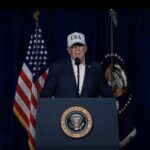
With Congressional votes on the horizon challenging the administration’s military operations in Iran, US Secretary of State Marco Rubio showed no hesitation and called the War Powers Act flatly unconstitutional, and said “the president always has that power.”
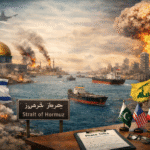
Rubio used a wide-ranging press briefing to take direct aim at the War Powers Act, declare Hezbollah an instrument of Iranian foreign policy, and issue a stark warning about the consequences of a nuclear-armed Iran, while defending the administration’s handling of the ongoing Strait of Hormuz crisis.
“The War Powers Act is unconstitutional, 100 percent,” he declared. “This is not the position of me. It’s not the position of the President of the United States now. This is the position that every single president that has occupied this position since the day that law passed.”
Rubio acknowledged that the administration nevertheless complies with the law’s notification requirements, but drew a clear line between compliance and legitimacy. “We don’t acknowledge the law as constitutional,” he said. “Nonetheless, we comply with elements of it for purposes of maintaining good relations with Congress.”
He added that he has personally briefed lawmakers on Capitol Hill four times this year, including before the full Senate, House members, the Intelligence Committee, and the Gang of Eight. “We want them to be involved and we want them to be informed,” he said, even as he stood firm that congressional resolutions challenging the operations were, in his view, legally meaningless.
On Lebanon, Rubio was equally direct, framing the country’s instability not as a bilateral conflict with Israel, but as a symptom of Iranian interference through Hezbollah.
“The problem with Israel and Lebanon is not Israel or Lebanon- it’s Hezbollah,” he said, describing the group as operating from within Lebanese territory, terrorizing Israelis while simultaneously inflicting damage on the Lebanese people themselves.
“Hezbollah is a wing, an extension of Iranian desire to destabilize the region,” he said, adding that behind every major destabilizing force in the Middle East- Hamas, Hezbollah, the Houthis-“behind every one of these groups is Tehran.”
Rubio said the U.S. goal is to help build the Lebanese Armed Forces’ capacity to directly challenge and dismantle Hezbollah. “There shouldn’t be a Hezbollah and a government. There should be a government. Everyone should fold underneath it. And if we do that, there will be peace between Israel and Lebanon.” He praised Italy’s longstanding role in training Lebanese security forces and said Washington would welcome its continued involvement.
When asked about Iran’s foreign minister is visit to Beijing, Rubio said he was not alarmed by the meeting, but made clear what message he hopes China delivers. “I hope the Chinese tell him what he needs to be told,” he said, adding that Tehran must be told plainly: “What you are doing in the straits is causing you to be globally isolated. You’re the bad guy in this.”
Rubio argued that China, as an export-driven economy, has its own compelling reasons to pressure Iran. “You can’t buy from them if you can’t ship it there, and you can’t buy from them if your economy is being destroyed by what Iran is doing,” he said. “It is in China’s interest that Iran stop closing the straits.”
On reports that Beijing had instructed Chinese firms to ignore U.S. sanctions, Rubio referred questions to the Treasury Department but left no ambiguity about the consequences. “Sanctions don’t mean anything unless you’re going to do something about them,” he warned, adding that any financial institution enabling Iran’s sanctions evasion would face secondary sanctions and lose access to the U.S. financial system.
Rubio saved some of his most vivid language for the question of Iran’s nuclear ambitions, framing it as an issue with direct consequences for everyday Americans.
“If Iran had a nuclear weapon and they decided to close the straits and make our gas prices like $9 a gallon, we wouldn’t be able to do anything about it,” he said. “A nuclear-armed Iran could do whatever the hell they want with the straits and there’s nothing anyone would be able to do about it.”
He argued that what Iran is currently doing with the Strait of Hormuz is precisely the preview of what a nuclear-armed Iran would do to the entire world. “They would hold the world hostage with that nuclear weapon,” he said. “That’s what they would do. They would do exactly to the world with a nuclear weapon what they’re doing now with the straits.”
Rubio acknowledged that Iran has a high tolerance for economic pain, but insisted that threshold is not unlimited. “They’re not going to change their position out of the kindness of their heart,” he said. “There has to be a pressure point on them.” He added that Tehran faces a clear choice between a diplomatic path toward “reconstruction, prosperity, and stability,” or what he called “growing isolation, economic collapse, and ultimately total defeat.”
He said, “They should check themselves before they wreck themselves in the direction that they’re going.”