Join WhatsApp Channel

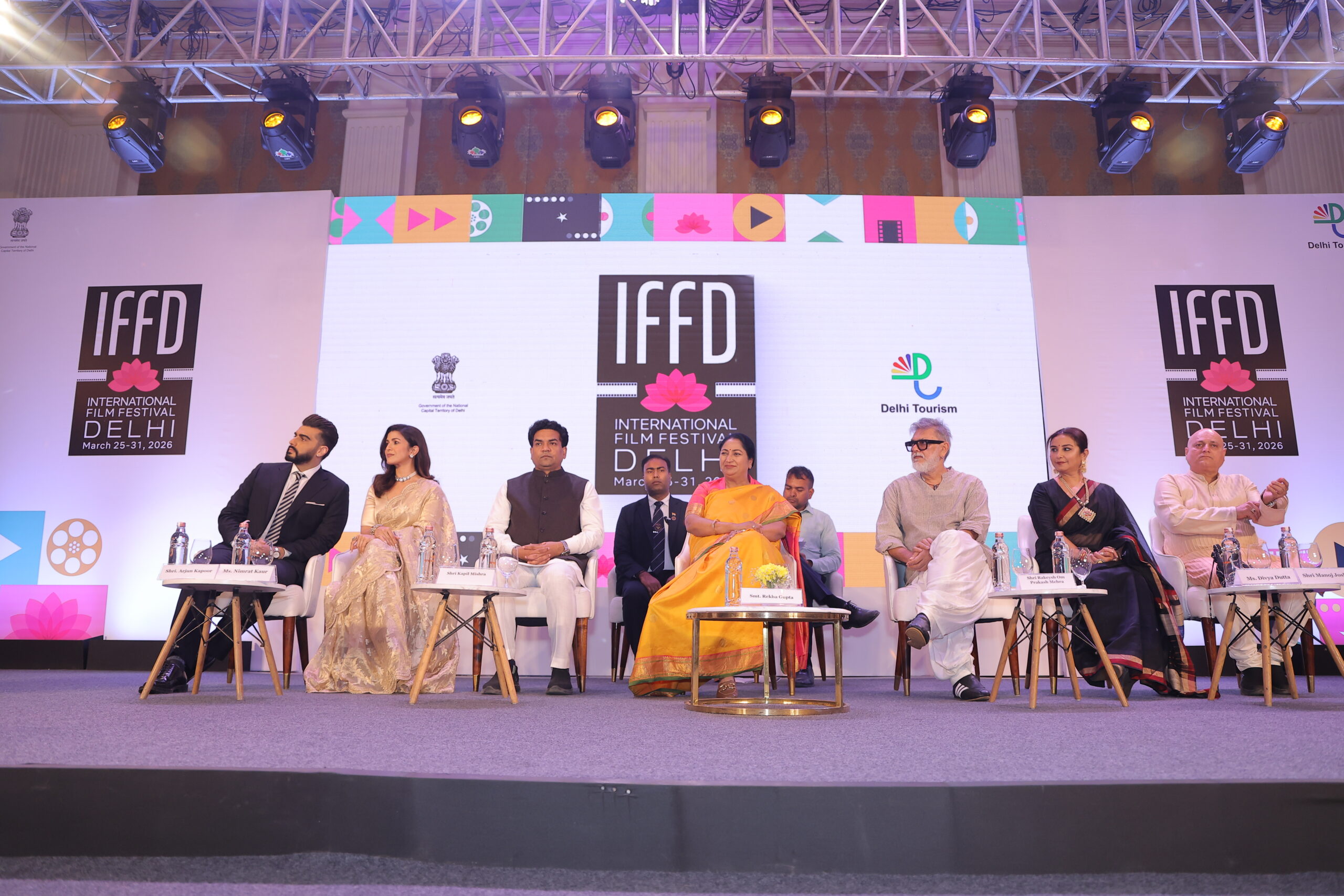
For decades, India’s film festival circuit has been defined by a familiar triangle. Goa hosts the country’s flagship state-backed spectacle — red carpets, global premieres, and tiered accreditation badges that separate the industry elite from everyone else.
Jaipur offers the cinephile’s refuge, intimate and curated, built around the quiet joy of discovery.
Chennai brings ideological sharpness, a loyal audience that debates politics through the lens of cinema. And New Delhi — the nation’s capital, a city of 20 million people and a cultural crossroads of extraordinary depth — has watched from the sidelines.
That changes this week.
The International Film Festival Delhi 2026, running March 25 through 31, is not simply a new entry on India’s cultural calendar. It is a deliberate act of reinvention — a festival that has looked at every convention in the film festival playbook and quietly decided to try something different. Backed by the Delhi Tourism and Transportation Development Corporation and anchored at the imposing Bharat Mandapam, IFFD is less a conventional festival and more a citywide cinematic experiment, one whose most radical idea is deceptively simple: make it free.
The Democratic Wager
In a world where film festivals are typically defined by exclusion — the badge you do or do not have, the screening you can or cannot access — IFFD has placed its founding bet on inclusion. Entry to screenings is open to the public, requiring only prior registration and subject to venue capacity. No tiered passes. No press-only shows that leave ordinary audiences standing outside. No velvet rope separating the industry insider from the curious first-timer.
This is a choice with consequences. It means students and school groups can wander into a documentary that might otherwise reach only a niche audience at an urban multiplex. It means families who have never set foot in a curated film festival space can attend world cinema without buying a ticket or decoding an accreditation system. It means the audience for serious, diverse cinema in Delhi is not pre-selected — it is invited.
A Festival That Spreads Across the City
But IFFD’s version of access goes further than pricing. The festival does not concentrate itself in a single prestigious venue and ask the city to come to it. Instead, it goes to the city. Six key venues host screenings — alongside multiplex chains like PVR-INOX, cultural centers, and open-air locations. Mobile screening units and outdoor projections extend the festival’s reach into neighborhoods that have never been part of any cultural event of this scale.
The effect is to dissolve the boundary between festival and city. Cinema does not happen in a dedicated zone this week; it happens across Delhi, woven into the urban fabric, showing up where people already are. The choice of Bharat Mandapam as the anchor venue is symbolic — built as a flagship global convention center, it represents the capital’s ambitions as a world-class events destination. But it is the decentralized sprawl beyond that venue which gives IFFD its distinctive character.
The Programming: Wide, Diverse, Deliberately Populist
From over 2,000 submissions, the festival has selected approximately 125 to 140 films — features, documentaries, shorts, and independent works spanning languages and geographies. The range is deliberately broad. Mainstream Hindi titles sit alongside regional-language films in Tamil, Telugu, Marathi, and Bengali. A curated international slate opens with the Oscar-nominated Sirat as the gala screening. Restored classics like Pyaasa share the schedule with contemporary commercial hits like Dhurandhar 2.
This is not Goa’s tightly curated competitive selection, nor Jaipur’s focus on discovery at the margins. IFFD is not trying to assert a singular taste; it is trying to build a habit. The philosophy seems to be: first, bring people in. Give them a reason to show up — a film they recognize, a star they admire, a documentary on a subject they care about. Then, perhaps, introduce them to something they would never have chosen on their own.
Star Power and Industry Depth
The opening night, hosted by Arjun Kapoor and Nimrat Kaur at Bharat Mandapam, draws names like Vicky Kaushal, Hema Malini, Rana Daggubati, and filmmaker Madhur Bhandarkar. The glamour is deliberate — it signals to the city that this is not a niche event for specialists. It is a moment the whole capital is invited to share.
But beneath the spectacle, IFFD is also building an industry layer of genuine substance. Masterclasses with Manoj Bajpayee and Shekhar Kapur give aspiring filmmakers direct access to some of Indian cinema’s most distinctive voices. The CineXchange Film Market and Cineverse Expo create a space for creators, financiers, and platforms to connect — positioning Delhi not just as an audience city but as a production and business hub. The festival, in this sense, sits at an interesting intersection: part public carnival, part industry marketplace, still figuring out exactly where its long-term center of gravity lies.
The Larger Ambition: Cinema as City Strategy
What truly sets IFFD apart from every other Indian film festival is the explicit goal behind it. This is, at its core, a city-branding exercise. The Delhi government has been transparent: the aim is to position the capital as a global hub for cinema, attract film tourism, and encourage international and domestic productions to choose Delhi as a shooting destination. The festival mirrors what cities from Toronto to Busan have long understood — that cinema is not merely entertainment but a lever for cultural influence and economic growth.
Where Goa is where India hosts the world, and Jaipur is where cinephiles discover it, Delhi is attempting something altogether different: to make the world’s cinema belong to its own citizens. The open-access model, the multi-venue sprawl, the blend of arthouse and mainstream — all point to a festival designed not for industry insiders, but for the city itself.
As a first edition, IFFD will be measured not by the prestige of its premieres or the rigour of its competition, but by something harder to quantify: whether Delhi showed up, whether it fell in love with what it saw, and whether it came back for more. On that measure, the experiment has only just begun.
Disclaimer: The opinions and views expressed in this article/column are those of the author(s) and do not necessarily reflect the views or positions of South Asian Herald.
Related posts:
 2026 Indian Film Festival of Los Angeles (IFFLA) Announces Lineup for 24th Edition; Mammootty’s and Mohanlal’s Patriot to Open Festival
 Award-Winning LGBTQ Hindi Film “Kuch Sapney Apne” to Screen at DC South Asian Film Festival 2025
 US based Indian Film-maker Sumathy Ram Earns Acclaim at the 2025 Angel Film Awards in Monaco
 13th Annual DC South Asian Film Festival kicks off in Virginia