Join WhatsApp Channel

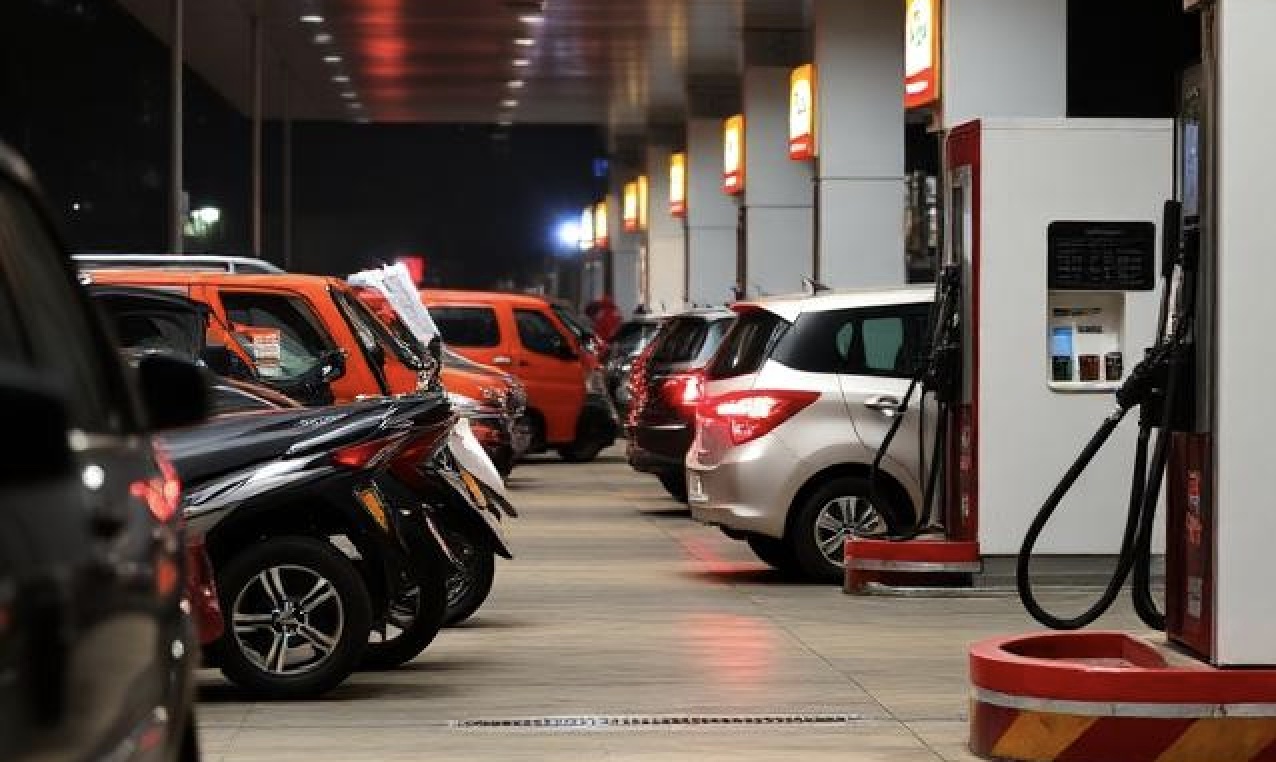
The Union government’s decision to cut excise duties on petrol and diesel by ₹10 per liter — even as it reimposes export levies on refined fuels — represents a calculated attempt to insulate domestic consumers from a global oil shock. But in doing so, it is effectively transferring the burden onto the public exchequer, with fiscal costs that are beginning to look both sizeable and structurally entrenched.
The trigger is unmistakable. Global crude prices have surged from roughly $70 per barrel to as high as $122 in a matter of weeks — a near 75% escalation driven by the intensifying West Asia conflict. In most major economies, such a spike has translated into sharply higher retail fuel prices. India, however, has chosen a different route: freezing pump prices and absorbing the shock through tax policy.
The numbers reveal the scale of that choice.
The ₹10-per-litre excise cut — equivalent to about $0.12 per liter at current exchange rates — is estimated to cost the Centre around ₹7,000 crore ($840 million) every fortnight. The reimposed export duties on diesel (₹21.5/liter, or about $0.26) and aviation turbine fuel (₹29.5/liter, or roughly $0.35) are expected to generate about ₹1,500 crore ($180 million) over the same period. The net impact is a revenue loss of ₹5,500 crore — approximately $660 million — every two weeks.
Annualized, that translates into a fiscal hit of roughly ₹1.3–1.4 lakh crore, or about $16–17 billion — a figure that begins to materially alter the contours of the Union government’s fiscal roadmap for FY27.
This is not merely a revenue adjustment. It is, in effect, a subsidy — albeit one routed through foregone taxes rather than direct budgetary transfers.
A subsidy by stealth
The government has made it clear that the excise reduction will not be passed on to consumers as a price cut. Instead, it is being used to offset mounting under-recoveries of oil marketing companies (OMCs), which continue to sell fuel below cost.
At current crude levels — hovering around $100–120 per barrel — under-recoveries are estimated at about ₹26 per liter ($0.31) on petrol and as high as ₹81.90 per liter (nearly $1) on diesel. In aggregate, OMCs are absorbing daily losses of roughly ₹2,400 crore, or close to $290 million.
The excise cut offsets only about $0.12 per liter of these losses. In other words, the bulk of the burden remains — split between OMC balance sheets and, increasingly, the sovereign.
This is where the policy begins to look less like a temporary intervention and more like a reversion to quasi-administered pricing — where market signals are muted and fiscal buffers do the heavy lifting.
Fiscal arithmetic under strain
Independent estimates reinforce the scale of the fiscal stress. A note by IDFC FIRST Bank suggests that the net revenue foregone — even after accounting for export levies — could be around ₹1 trillion (roughly $12 billion), or about 0.3% of GDP over a full year.
SBI Research places the net revenue loss in a similar range, at about ₹1.1 lakh crore ($13–14 billion) for FY27.
These are not trivial numbers in a budget already grappling with competing demands. Higher crude prices tend to cascade through the fiscal system — pushing up fertilizer subsidies, widening LPG under-recoveries, and potentially reducing dividend flows from oil public sector undertakings.
Taken together, the fuel duty cut could act as a multiplier of fiscal stress, rather than a standalone cost.
Windfall taxes: a partial hedge
The reintroduction of windfall taxes on fuel exports is intended to recapture some of the lost revenue while ensuring domestic supply. By taxing exports at $0.26 per liter for diesel and $0.35 per liter for ATF, the government is attempting to curb arbitrage and redirect supplies to the domestic market.
But the hedge is imperfect.
Even under optimistic assumptions, these levies are expected to recover less than half the revenue lost from excise cuts. Moreover, their effectiveness depends on export volumes — which may decline as higher taxes erode margins — and on policy stability, given past instances of exemptions for certain exporters.
In short, windfall taxes are a tactical patch, not a structural solution.
An uneven federal equation
The fiscal implications become more complex when viewed through the lens of federalism.
While the Centre absorbs a revenue loss of roughly $16–17 billion annually, states — which levy ad valorem VAT on fuel — are poised to benefit from higher crude prices. As retail prices remain elevated, the tax base expands, boosting collections without any change in rates.
SBI Research estimates that states could see an incremental revenue gain of about ₹25,000 crore — roughly $3 billion — in FY27 from VAT on petroleum products.
This creates a striking imbalance: the Centre is effectively subsidizing fuel consumption through lost revenue, while states experience revenue buoyancy from the same price shock. Unless states cut VAT — an unlikely move given fiscal pressures — the burden of consumer protection remains disproportionately centralized.
Inflation contained, adjustment deferred
From a macroeconomic standpoint, the policy reflects a classic smoothing strategy. By preventing a pass-through of global oil prices, the government is containing inflation in the short term — a critical consideration in a fragile global environment.
But this comes at the cost of deferring adjustment.
By suppressing price signals, the policy discourages demand rationalization and shifts the burden onto fiscal accounts. Over time, such strategies tend to accumulate hidden liabilities, which eventually require correction — either through higher prices, higher taxes, or increased borrowing.
The longer crude prices remain elevated — particularly above the $100 per barrel mark — the sharper this eventual adjustment is likely to be.
A costly insulation strategy
For now, the government’s approach is clear: absorb the shock, maintain price stability, and buy time.
But the cost of that time is mounting. At roughly $660 million every fortnight, the fiscal drain is continuous. At $16–17 billion annually, it is substantial. And in the context of broader subsidy pressures, it risks becoming systemic.
India has, in effect, chosen to convert a global oil shock into a domestic fiscal challenge.
The question is no longer whether that choice was necessary, but whether it is sustainable — and how long the exchequer can continue to underwrite the illusion of stable fuel prices in an increasingly volatile global energy market.