Join WhatsApp Channel

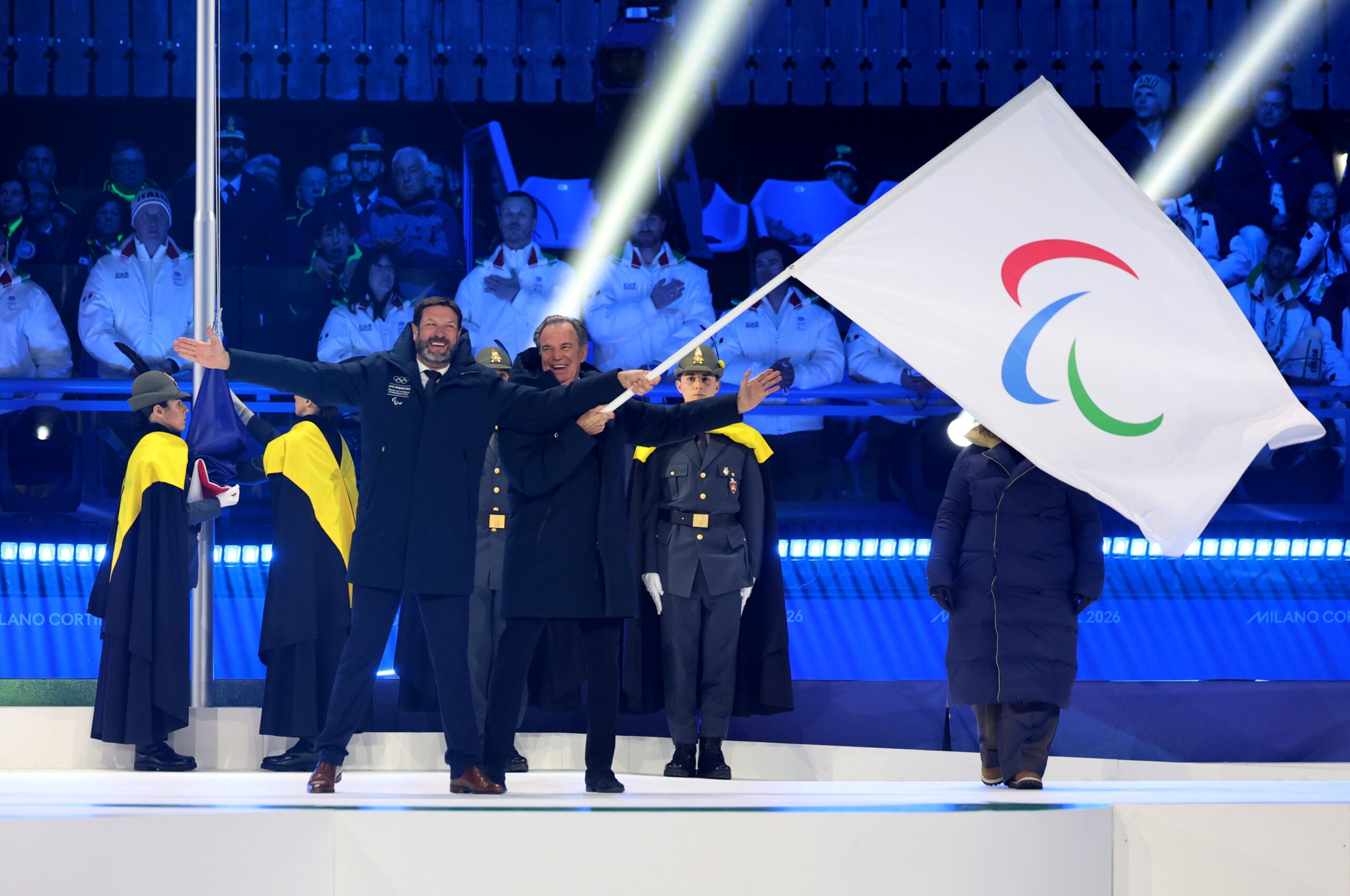
As the Milano Cortina 2026 Winter Paralympics came to a close, Cortina d’Ampezzo marked the completion of a 70-year historical arc connecting the town’s Olympic past and present.
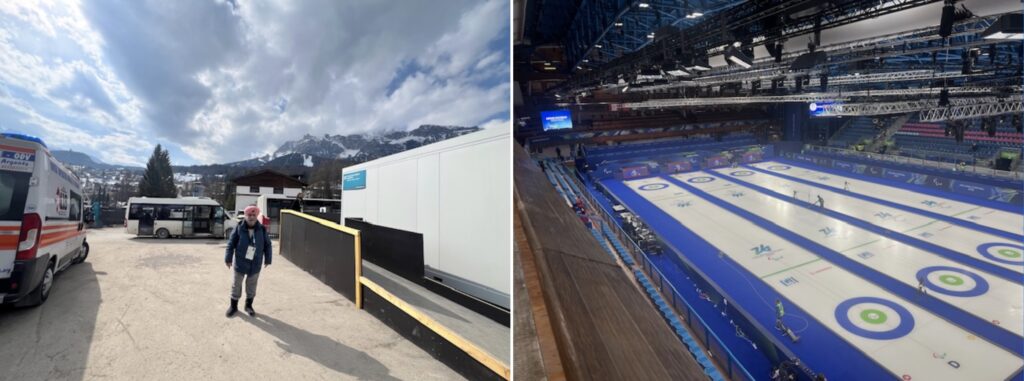
The closing ceremony took place at the Cortina Curling Olympic Stadium and offered an emotional farewell to hundreds of athletes, with the exception of para ice hockey players who had competed earlier. The ceremony not only concluded the Paralympic competitions but also symbolically bridged the legacy of the 1956 Winter Olympic Games, which were also held in Cortina.
A thread connects the black and white imagery of 1956 to the vivid colors of 2026. Seventy years separate the Olympic Closing Ceremony of 1956 from the final act of the Paralympics, the closing ceremony held on March 15 at the Cortina Curling Olympic Stadium. The event highlighted the continuity of memory in Cortina d’Ampezzo and celebrated generations who have mastered the ice while transforming challenges into achievements.
The link between the two eras extends beyond the venues themselves to the stories preserved within families who experienced the earlier Games. Some residents witnessed both the 1956 and 2026 editions through personal and family memories.
One such story belongs to Jgor Scappin, who manages the rental service at the departure station of the Faloria cable car. He carries forward the legacy of his father, a Venetian photographer who arrived in Cortina in 1953 to document the Olympic transformation of the town.
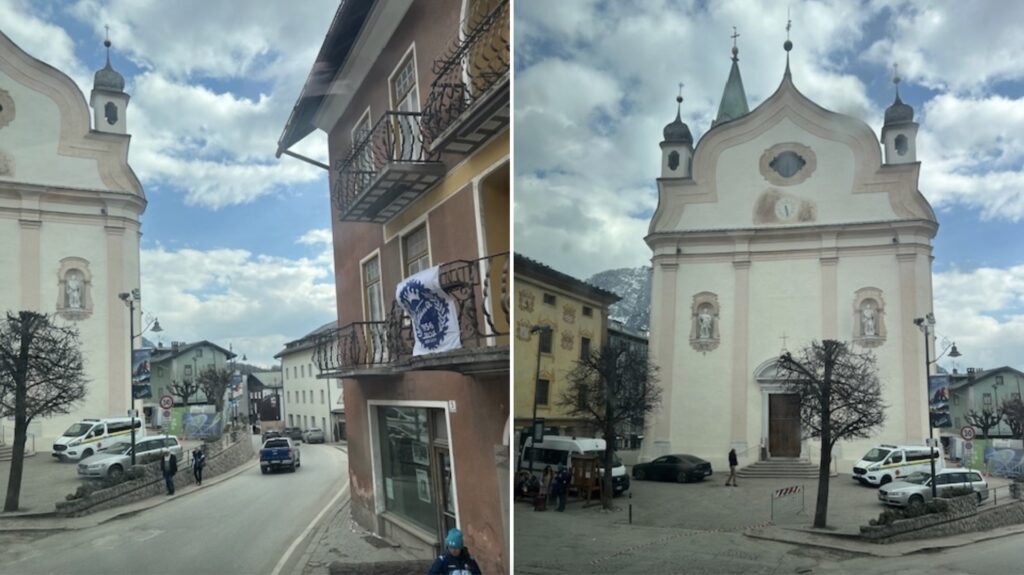
Throughout Cortina, small banners displayed on buildings and walls read “Cortina 1956 2026 Host City,” reflecting the pride associated with the town’s Olympic heritage.
“My father was one of the ‘scattini,’ as photographers who captured tourists and athletes were called at the time,” Jgor recalls. “I remember his photos of cross-country skiing in Campo and the ski jumps. He always told me that until just a few days before the start, everything was uncertain because there was no snow. Then those 20 centimeters of snow arrived and saved both the atmosphere and the competitions.”
That Olympic moment in 1956 shaped the future of many families in the region. “My father became so passionate about cross-country skiing that my sister even made it to the national team. Before then, Cortina was a small village; elegant tourists came, but few foreigners. After the Olympics, the international boom began.”
The Scappin family is not alone in preserving such memories. Among Cortina’s long-established shopkeepers, many belong to a generation that was still in infancy during the 1956 Games but grew up hearing stories about their success.
Looking ahead to the Milano Cortina 2026 Games, local residents express a sense of pride and accomplishment. “We learned from our parents what it means to host the world,” shopkeepers from the town center noted. “Seeing this participation today makes us proud; we have managed the event while enhancing the local economy.”
Among the memories frequently recalled during the closing days are the technical challenges faced seven decades ago. One example was the effort required to prepare the natural ice at Lake Misurina, where speed skating competitions were held during the 1956 Games. The process of leveling the frozen surface required considerable skill and labor. In today’s era of advanced Paralympic technology, such efforts are remembered as remarkable examples of human determination in the face of nature.
In 1956, the closing ceremony at the Olympic Ice Stadium featured figure skating performances and included the formal handover of the Olympic flag to the United States. The Games also made history as the first Winter Olympics to be broadcast on television, transforming Cortina into a major international media stage.
That same venue, now renovated and made fully accessible, has become the Cortina Curling Olympic Stadium. While the earlier era celebrated athletic technique, the modern Paralympic Games emphasize resilience and the ability to overcome physical limits. The concept of the closing ceremony, titled “Italian Souvenir,” transformed the stadium into a symbolic album of shared memories.
Cortina, both in the past and the present, remains a place where these stories conclude one chapter while opening another for future generations.
Notably, the Winter Olympics have traditionally relied on historic mountain towns such as Cortina as host locations, whereas the Summer Olympics are typically staged in large cosmopolitan cities.
Related posts:
 Milano Cortina 2026 Winter Paralympics Open in Verona with ‘Life in Motion’ Ceremony Amid Global Tensions
 Milano Cortina 2026 Paralympic Games Showcase Culture, Art, and Accessibility Initiatives
 Milano-Cortina 2026 Opens with Dual Cauldrons, Historic Venues, and a Global Call for Respect
 Milano Cortina Paralympics Open with Ukraine on Top and Strong Start for Canada