The bond between a father and a son is very different from that between a mother and a son. A mother is nurturing, emotional, and protective, while a father often prepares his child to face life’s challenges with courage and resilience. Yet there comes a stage when a son no longer wants his father to guide him merely—he wants him to be his friend.
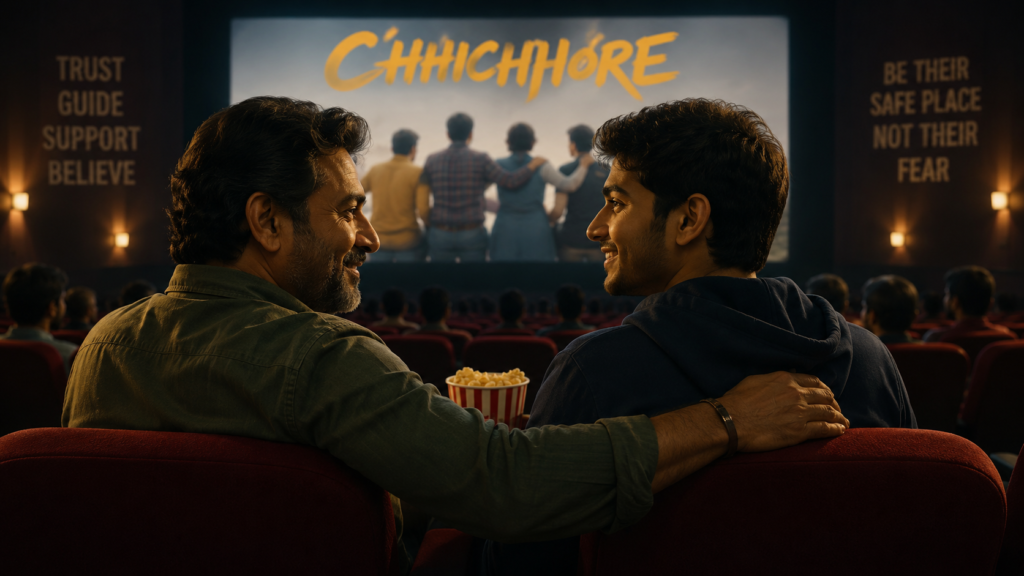
One evening, my son asked me to accompany him to watch Chhichhore. Going to a movie with your grown-up son is a special experience. It is a silent indication that your relationship has evolved beyond authority and discipline.
The movie carries a powerful message for parents who unknowingly place performance pressure on their children. In the story, a young boy, burdened by expectations and disappointed by failure in a competitive examination, attempts suicide. Though he survives, the film’s emotional impact is deeply disturbing.
As I watched, a question kept troubling me: “Am I also one of those parents who put unnecessary pressure on their child?”
Advertisement
The answer came almost immediately—no. My son and I have always shared a relationship built on trust and openness. As he grew older, I consciously gave him space to think, analyze situations, make decisions, and learn from his experiences. Advice was offered, but never imposed.
Children certainly need guidance and protection—protection from harmful influences, unhealthy habits, and poor choices. Parents must remain watchful, but not controlling. Children should always feel that their family stands firmly behind them, regardless of success or failure. They must know they have a safe place to return to whenever life becomes difficult.
Unfortunately, many children grow up surrounded by fear. Fear of teachers, fear of report cards, fear of disappointing parents, and often, fear of their fathers. In trying to meet expectations, they begin to measure their worth by others’ approval.
When fear becomes the foundation of parenting, communication suffers. Children stop sharing. They hide mistakes, conceal report cards, tell lies, and slowly begin living two separate lives—one visible to parents and another hidden from them.
I am not suggesting that children should be left completely free. They need discipline, values, and direction. But these must come through conversation, understanding, and trust—not fear.
Throughout my parenting journey, I often reflected on my own childhood. I remembered the mistakes I made, the dreams I had, and the guidance I wish I had received. Perhaps I did not have the childhood I deserved, but I wanted my children to have the opportunities, encouragement, and support that I had missed.
After the movie ended, my son bought popcorn and cold drinks, and we headed home. I handed him the car keys and sat beside him while he drove.
As we moved through the city traffic, I asked him softly, “Do you ever feel any performance pressure from me or your mother?”
He laughed.
“Dad, it was just a movie. Relax. I know how to find windows when doors are closed. I simply wanted to watch a good movie with you.”
His answer reassured me.
Parenting is not about controlling children; it is about building confidence and trust. The day your son or daughter begins treating you like a friend, do not feel your authority has diminished. Feel proud that your relationship has matured.
As we drove on, I gently reminded him to watch the cars coming from both sides. He smiled. I knew exactly what he was thinking:
“Fathers never change. And never make your father sit beside you when you’re driving.”
Disclaimer: The opinions and views expressed in this article/column are those of the author(s) and do not necessarily reflect the views or positions of South Asian Herald.