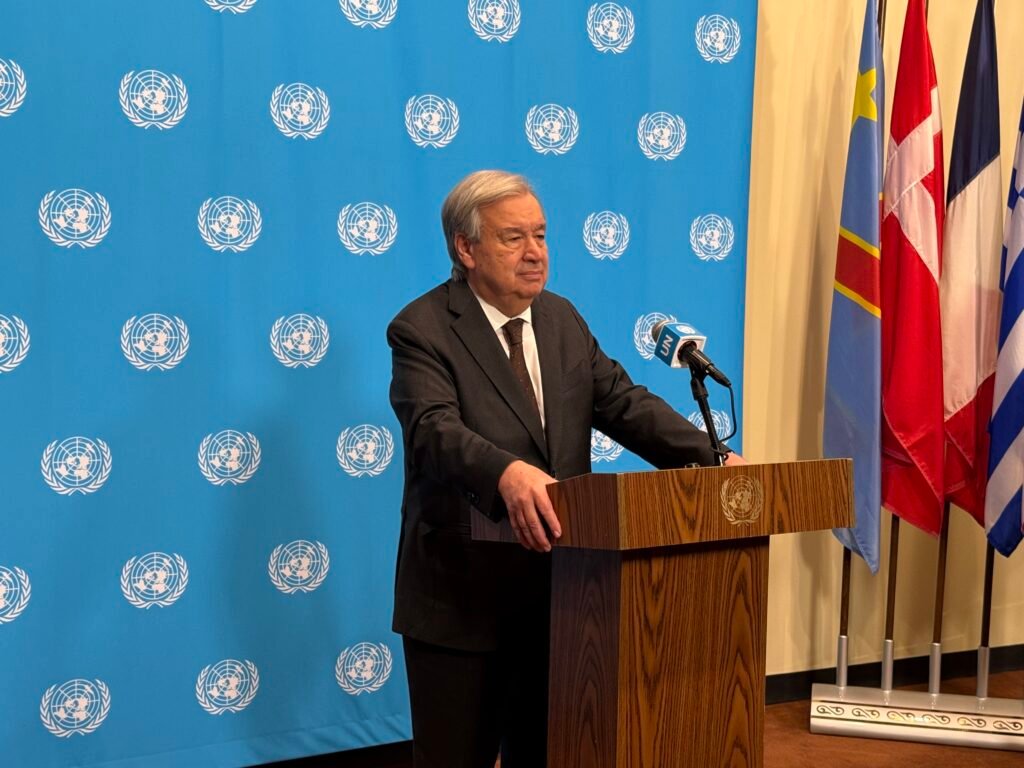
Secretary-General of the United Nations António Guterres warned that India’s monsoon is already running well “below average,” with forecasts indicating worsening conditions across a subcontinent where more than a billion people depend on seasonal rainfall.
“Hotter and drier conditions are forecast from Central America and the Caribbean to parts of South America, South Asia, the Southwest Pacific, Europe and Africa. The verdict is clear: the climate crisis is in overdrive. Extreme heat has long been called the silent killer,” the Secretary-General said during a United Nations press encounter on his recent travels, the Middle East, and climate change.
Guterres said the description of extreme heat as a “silent killer” may actually understate the scale of the crisis because heat-related deaths remain significantly undercounted worldwide. Many fatalities linked to extreme heat are never officially recorded as such, even when heat plays a “decisive role,” he noted.
“Conflict is not the only force placing people at risk,” he added. “Even as we grapple with war and instability, another crisis is accelerating, one that respects no borders and is devastating lives and livelihoods across the globe.”
Advertisement
Recalling his warning from two months ago about the arrival of El Niño, Guterres said the phenomenon has now intensified.
“Two months ago, I warned that El Niño was arriving on our doorstep,” he said. “Now it is inside the house, and turning up the heat.”
He said the world has already experienced a summer marked by record-breaking heat domes, devastating wildfires across Spain, France, and other regions, and thousands of deaths linked to extreme temperatures.
Global sea surface temperatures also reached record levels in June and July. However, Guterres said the latest scientific assessments suggest these events are only the beginning. New forecasts released by the World Meteorological Organization for the August through October period paint an even more alarming picture.
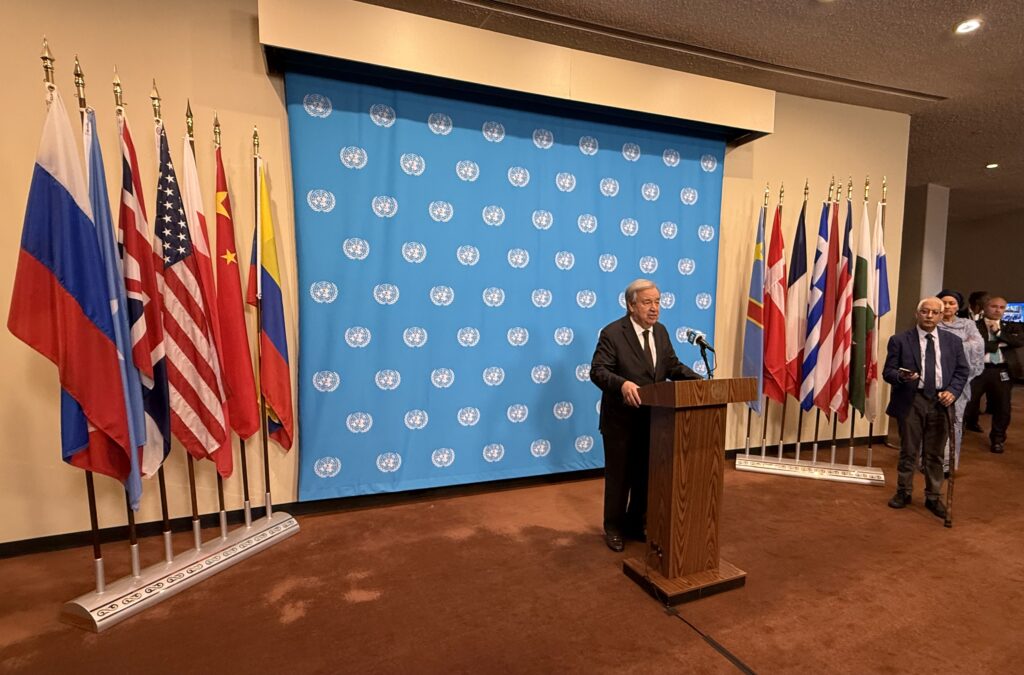
The Secretary-General said El Niño is strengthening, adding momentum to a planet already experiencing unprecedented warming. The Pacific Ocean waters driving the weather pattern have never been this warm so early in an El Niño cycle, and temperatures continue to rise.
“Today’s latest news indicates sea-surface temperatures in key monitoring regions average nearly 3 degrees Celsius above normal,” he said, adding that WMO projections show nearly every land area on Earth is expected to experience above-normal temperatures through October.
Taken together, he said, these conditions could shatter seasonal temperature records and intensify climate impacts around the world.
“We are in uncharted territory. And El Niño does not bring heat alone, it profoundly affects the world’s rainfall,” he added. “What we do know is deeply alarming: heat is claiming lives on a growing scale, day after day, in every region of the world. It is also putting an enormous share of the global workforce at risk, exposing billions of people to dangers and often life-threatening conditions.”
Guterres emphasized that behind the statistics are millions of people facing daily hardships. He cited families living in unsafe homes, workers forced to choose between their health and their livelihoods, children unable to attend school, hospitals and power grids under increasing strain, transportation infrastructure under stress, disrupted supply chains, rising food prices, and cities struggling to function.
He said extreme heat is widening inequalities, increasing hunger, weakening economies, and pushing sustainable development further out of reach.
“Two years ago this month, I launched a Call to Action on Extreme Heat. Since then, we have helped more governments improve forecasts and early warnings,” he added, underscoring that more cities have adopted Heat Action Plans and that more than 250 cities have joined the Beat the Heat initiative.
While acknowledging that these measures are saving lives, Guterres said the planet is warming faster than global efforts to respond. He outlined four priorities for action: protecting people before extreme heat becomes more deadly, making workplaces safer, designing and retrofitting infrastructure to withstand rising temperatures, and addressing the root cause of the crisis by reducing fossil fuel use.
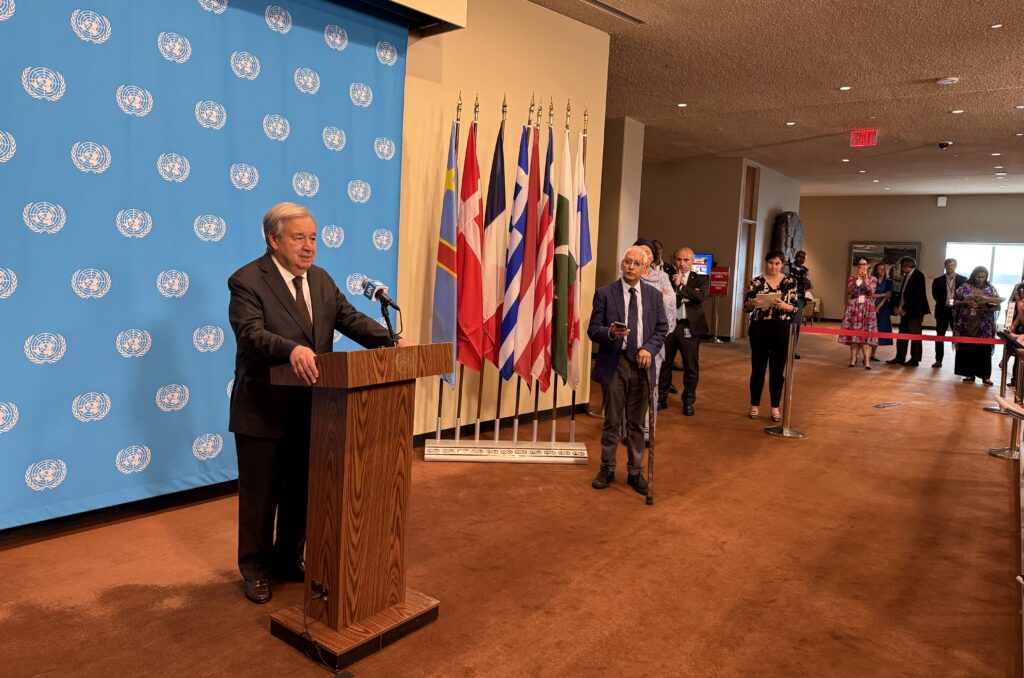
“We hear much about record heat, drought, and wildfires, but not enough about the real change that is driving these events, the accelerating climate crisis powered by fossil fuels,” he added. “It is time to stop treating each disaster as an isolated tragedy and recognize the systemic risk that is unfolding before our eyes.”
He also said the costs of fossil fuel dependence extend beyond climate disasters to include energy insecurity and geopolitical instability, citing developments in the Middle East as an example.
Speaking about his recent visits to Syria, Jordan, and Cyprus, Guterres said he witnessed signs of hope in Syria as the country begins to recover from years of conflict. He called on the international community to support that recovery through the full lifting of sanctions and sustained assistance.
During his visit to Cyprus, Guterres said the search for lasting solutions has become increasingly urgent in a rapidly changing and volatile region.
“Based on our discussions on the way forward, I decided that I would convene another 5+1 meeting, after adequate preparations on confidence building, methodology and substance, taking into account the convergences already achieved,” he added. “We will work in consultation with the two sides and the guarantors, to create the conditions for the meeting’s success.”
Reflecting on his regional engagements, Guterres said one message stood out clearly: “the region, and the world, cannot afford more war.”
“We are now six months into the military escalation in the Gulf,” he added, noting that what began as a regional conflict has increasingly become a source of global instability. He said trade through the Strait of Hormuz has declined sharply, energy markets have been disrupted, food and fertilizer prices have risen, and global supply chains are under mounting pressure.
As a result, families around the world are struggling with rising food costs, farmers face increasing difficulty affording essential inputs, and vulnerable countries are being pushed closer to crisis, he said.
According to Guterres, the World Food Programme has warned that as many as 45 million people could face acute food insecurity because of the conflict, while rising prices and slowing economic growth threaten to push millions more back into poverty.
He welcomed what he described as positive news in recent days: the announcement by the U.S. President of an agreement for Hamas to relinquish its weapons and for Israel to withdraw its forces from Gaza.
“Let me be clear: The fighting must stop on all fronts in the region,” the Secretary-General said.