
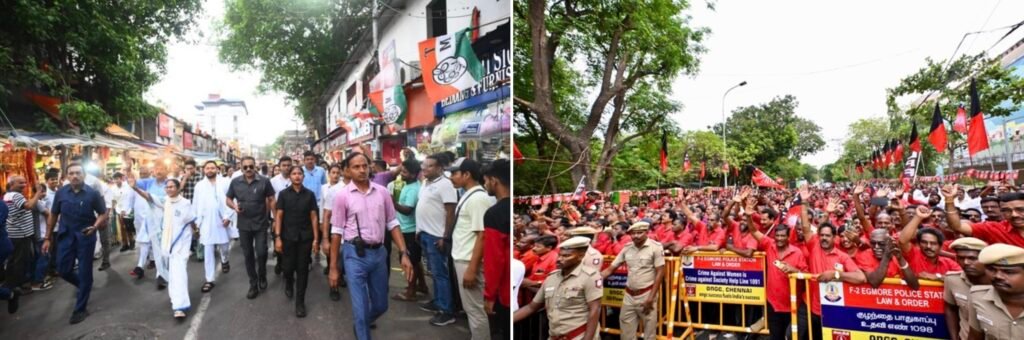
Five Indian states just concluded their elections. Many voters chose change. This change is particularly stark in Tamil Nadu and West Bengal -both states elected parties that have never governed these respective states.
While the winning parties may have focused their campaigns on social causes and improving public service delivery, a fresh mandate provides time and energy to take significant economic steps in areas like electricity, water, land, and labor. The clock is already ticking; securing the benefits of politically difficult reforms takes time. The longer a state waits, the more the next election weighs on the political calculus.
First: Do No Harm
The first objective of a new state government, if they want to build their economy, is “do no harm.” Avoid the urge to undo some of the pro-growth policies the previous government had enacted and review and maintain all reasonable incentives offered to investors. There are many examples from the recent past where new governments fomented economic chaos by revisiting key decisions made by their predecessors.
Advertisement
Recent examples of damaging policy reversals include the Yuvajana Sramika Rythu Congress’ (YSR Congress) victory in 2019 when the party changed course in building a capital and attempted to revoke recent power purchase agreements, among other steps. Or the All-India Anna Dravida Munnetra Kazhagam (AIADMK) following its 2016 victory in the Tamil Nadu election; the party refused to honor investment incentives offered by the Dravida Munnetra Kazhagam (DMK). Some changes may be warranted, but when they appear to be political vendettas or have non-economic motives, investors can easily become spooked. In the words of former Secretary of State Colin Powell, “Capital is a coward.”
Second: Create Fresh Economic Momentum
Clearly, electing new leaders brings high expectations for improving the basic building blocks of development. Improvements in water access, effluent treatment, electric power, health, and education must be prioritized.
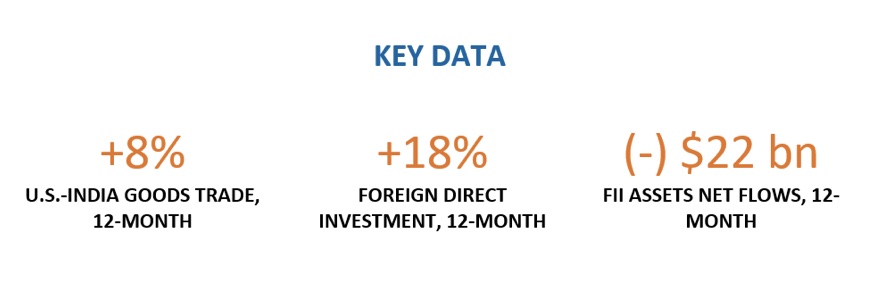
Tangible steps on these social issues should be paired with quick economic reforms that may take a few years to yield benefits. As covered in my last U.S.-India Insight, a state government should seek to balance the “potted plant” method of industrial growth—incentivizing a defined set of sectors—with steps that set the table for all forms of economic growth. This means taking difficult decisions on electric power pricing, water availability, labor regulations, and making land acquisition more fair and transparent.
Each state government has a five-year term in office, and while re-election rates are a bit over 50 percent since 2022, voters can be difficult to please. And both Tamil Nadu and West Bengal are run by untested parties and leaders.
Third: Let Investors Know
A third priority is to “get the word out” about the positive changes. India’s state-level investment summits and global investor road shows tend to be poorly organized. When planning road shows overseas to drum up investment, plan such visits with months of lead-time with specific dates, times, and venues. The more lead time, paired with a strong pro-business track record, will help ensure actual corporate investment decision-makers to engage. Similarly, state investment summits need to be strengthened. Dates for these summits often shift, the event itself can be a chaotic affair.
The first 100 days after an election will set the tone for how businesses look at the state. First impressions are difficult to change. West Bengal is in desperate need for an economic revival story. Tamil Nadu needs to maintain recent investment momentum, while also improving some of the state’s basic infrastructure which lags less-developed neighbors.
There are lower expectations from Kerala where the Indian National Congress-led United Democratic Front (UDF) won, since the coalition has repeatedly been in power in the past. But the coalition has a new chief minister, V. D. Satheesan, and the initial focus on economic reforms sound promising. Even in Assam and Puducherry, where the incumbents won, the fresh election mandate provides running room to take hard economic steps.
The ability to deliver promised social benefits relies on having a strong tax base. This requires investment and jobs. The biggest job-creating reforms require the most political courage and may take years for the benefits to materialize. Paired with global economic uncertainty, smart capital is looking for stable, growth-oriented destinations. For India’s new chief ministers, or those chief ministers who retained office, quick, bold steps are needed.
(The article was published by the Center for Strategic and International Studies (CSIS), on May 28, 2026. South Asian Herald republished it with permission from CSIS.)
Disclaimer: The opinions and views expressed in this article/column are those of the author(s) and do not necessarily reflect the views or positions of South Asian Herald.