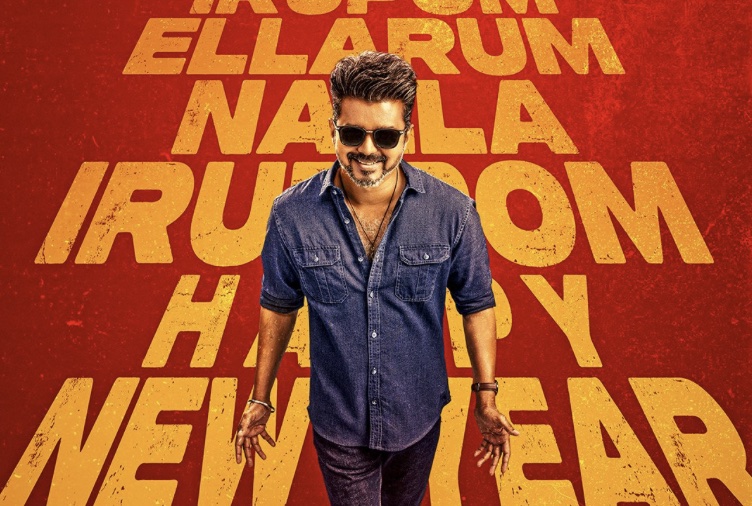
For the first time in nearly six decades, Tamil Nadu stands suspended between the collapse of an old political order and the uncertain birth of a new one.
The stunning rise of actor-turned-politician Vijay and his fledgling party, Tamilaga Vettri Kazhagam (TVK), has broken the iron grip of the two Dravidian giants — Dravida Munnetra Kazhagam (DMK) and All India Anna Dravida Munnetra Kazhagam (AIADMK) — but it has not yet produced a stable government.
The numbers tell the story of a political earthquake frozen midway.
TVK emerged as the single largest party with 108 seats in the 234-member Assembly, tantalizingly close to the magic figure of 118 but still short by ten legislators. The DMK suffered its worst humiliation in years, the AIADMK remained wounded but alive, and the Indian National Congress, Left parties and smaller caste-based outfits became unexpected kingmakers in a state that once mocked coalition compulsions.
Advertisement
Now, Tamil Nadu waits.
Will Vijay be invited by Governor Rajendra Vishwanath Arlekar to form the government as leader of the single largest party? Will the old Dravidian enemies — the DMK and AIADMK — forge an “unholy alliance” merely to stop a cinematic outsider from occupying Fort St. George? Or will the state drift toward President’s Rule and fresh elections before the northeast monsoon lashes the Coromandel coast in October?
Behind closed doors in Chennai, Puducherry and Mahabalipuram, the battle for Tamil Nadu has already entered its darkest phase: the era of resort politics, legislative poaching and ideological shape-shifting.
For decades, Tamil Nadu politics revolved around a Dravidian duopoly. One side was led by the Karunanidhi-Stalin family of the DMK. The other by the MGR-Jayalalithaa legacy within the AIADMK. Elections were bitter, theatrical and emotional, but predictable in structure.
Then came Vijay.
Unlike earlier actor-politicians such as Vijayakanth or Seeman, Vijay understood the exhaustion of the Tamil voter. Young voters saw the DMK as dynastic and entitled. The AIADMK appeared fractured after the death of J. Jayalalithaa. The BJP remained politically radioactive in much of Tamil Nadu despite aggressive expansion attempts. Hindi and Hindutva ideologies did not sit well alongside dravidian culture or a cultural identity of the Tamil , older than sanskrit of the aryans.
Vijay positioned himself as something unusual: anti-establishment without being aggressively ideological. He borrowed welfare populism from MGR, anti-corruption rhetoric from Anna Hazare-era politics, and youth mobilization tactics from digital campaigns perfected elsewhere.
The result was extraordinary.
TVK didn’t merely perform well for a debutante party. It almost captured power outright.
But “almost” is a dangerous word in parliamentary democracy.
Within hours of the fractured verdict, Congress moved quickly.
The party’s leadership publicly backed Vijay, framing the alliance as a defense of secularism and constitutional values. The support came with an unmistakable warning: TVK must keep the BJP and its allies out of power.
That condition revealed Delhi’s larger anxiety.
Congress fears Tamil Nadu could become the southern bridgehead for a BJP expansion strategy if Vijay drifts toward the saffron camp under pressure of survival arithmetic.
The Congress offer, combined with Left support and possible backing from smaller outfits such as the Viduthalai Chiruthaigal Katchi, may just push TVK across the halfway mark — but only barely.
A government surviving on 118 or 119 MLAs in a hyper-fluid Assembly would resemble a house built on wet sand.
Every by-election, illness, rebellion or abstention could threaten collapse.
And that fragility is precisely why whispers of a grand Dravidian reunion have intensified.
For generations, the DMK and AIADMK portrayed each other as existential enemies.
The DMK accused the AIADMK of corruption, personality cult politics and ideological betrayal. The AIADMK branded the DMK as dynastic, anti-Hindu and family-controlled. Their cadres fought street battles. Their leaders traded vicious insults.
Yet Tamil Nadu politics has always been more pragmatic than ideological.
At its core, both parties emerged from the same Dravidian movement. Both mastered welfare populism, Tamil identity politics and cinema-driven mass mobilization. Both are, in many ways, flipsides of the same political coin.
Now, with Vijay threatening to permanently disrupt the Dravidian ecosystem, survival instincts may be overriding historical hatred.
Political circles in Chennai are buzzing with speculation that a backchannel arrangement is being explored: AIADMK support to a DMK-led arrangement or vice versa, possibly with Edappadi K. Palaniswami as Chief Minister and Udhayanidhi Stalin as Deputy Chief Minister.
Publicly, such an arrangement sounds absurd.
Privately, many insiders admit it is no longer impossible.
The logic is brutally simple. The Dravidian parties may hate each other, but they fear extinction more.
If Vijay successfully forms a government and survives even two years, he could emerge as Tamil Nadu’s dominant political force for the next generation.
That prospect terrifies both camps.
The images emerging from Tamil Nadu resemble scenes from Karnataka, Maharashtra and Madhya Pradesh during their most turbulent coalition crises.
TVK legislators are reportedly being shifted to luxury resorts in Mahabalipuram to prevent poaching attempts. AIADMK MLAs have already landed in Puducherry resorts under the officially comic explanation that “the weather is better there.”
Nobody in Indian politics believes resort trips are about climate.
They are about arithmetic.
Every MLA is now a strategic asset.
The fear within TVK is that rivals may attempt to engineer defections before the first floor test. The fear within AIADMK is different: that the BJP could split the party by persuading two-thirds of legislators to break away legally under the anti-defection law.
That possibility is central to the current drama.
The BJP officially remains a marginal electoral force in Tamil Nadu. But it retains influence through the Governor’s office, central agencies and alliance engineering.
In several states over the last decade, the BJP mastered the art of converting fractured mandates into workable governments.
Goa in 2017. Karnataka in 2019. Madhya Pradesh in 2020. Maharashtra in multiple phases. Manipur. Arunachal Pradesh.
The methods varied — alliances, defections, resignations, pressure campaigns — but the objective remained the same: power through post-poll maneuver.
Tamil Nadu may now be entering a similar laboratory.
One scenario being discussed in political circles involves engineering a split within AIADMK. If two-thirds of the party’s MLAs break away, they could legally avoid disqualification under the Tenth Schedule anti-defection provisions. That splinter group could then support Vijay externally, allowing the BJP indirect leverage over a TVK government.
Such an arrangement would solve multiple BJP problems simultaneously.
It would isolate the DMK-Congress combine, weaken AIADMK permanently and create an opening into Tamil Nadu through influence over a vulnerable first-time chief minister.
But there is a risk.
If Vijay is seen as aligning with the BJP, he could rapidly lose the minority, Dalit and secular vote blocs that propelled TVK’s rise.
Congress understands this. So does the DMK.
That is why the ideological battle around “secularism” has suddenly become central to coalition talks.
Governor Arlekar now occupies the constitutional eye of the storm.
Convention generally favors inviting the single largest party to form the government and prove its majority on the Assembly floor. The CPI and other parties have already publicly argued this position.
Yet governors in India have often exercised controversial discretion during hung assemblies.
Should the Governor insist on letters of support before swearing Vijay in? Should he wait for a stable alliance to emerge? Should he invite a post-poll coalition if it demonstrates a clearer majority than TVK?
Every option carries political consequences.
If Vijay is denied the first opportunity despite leading all parties, TVK supporters could erupt in statewide protests, accusing the Centre of manipulating democracy.
If Vijay is sworn in and then loses a floor test, Tamil Nadu could descend into weeks of instability.
And if no combination appears durable, the constitutional route of President’s Rule begins looming in the background.
Industrialist Sridhar Vembu has already publicly argued for fresh elections under President’s Rule, claiming no stable coalition appears possible.
The idea, once dismissed as extreme, is gaining quiet traction.
Under such a scenario, the Assembly could remain suspended while the state is placed under central rule until fresh elections are held later this year, possibly before the northeast monsoon season.
Ironically, many analysts believe fresh elections would benefit Vijay the most.
Tamil Nadu voters have historically punished parties perceived as indulging in opportunistic power games. If the DMK and AIADMK are seen conspiring together merely to block TVK, public anger could hand Vijay the sweeping mandate he narrowly missed this time.
The emotional narrative would be irresistible: the young challenger denied power by an entrenched old order.
That storyline could transform TVK from a breakthrough force into a political tsunami.
Tamil Nadu today resembles a state standing on a bridge between two political centuries.
Behind it lies the fading era of Karunanidhi, Jayalalithaa and stable Dravidian bipolarity. Ahead lies an unpredictable future of coalitions, personality politics and national party intervention.
The uncertainty itself is historic.
For the first time since the late 1960s, nobody truly knows who will govern Tamil Nadu next week.
Will Vijay become the youngest disruptor to capture Fort St. George and rewrite Tamil Nadu politics?
Will the Dravidian rivals unite to preserve their ecosystem?
Will the BJP use legislative arithmetic to force open a southern gateway?
Or will the state return to the polls within months in search of a clearer verdict?
As MLAs disappear into resorts and emissaries’ shuttle through Chennai’s humid nights, Tamil Nadu’s political future is being negotiated not in public rallies, but in hotel suites, private residences and whispered phone calls.
And somewhere in the middle of this extraordinary uncertainty stands Vijay — cinema superstar, accidental revolutionary, and perhaps the first man in decades capable of ending the Dravidian age.
Disclaimer: The opinions and views expressed in this article/column are those of the author(s) and do not necessarily reflect the views or positions of South Asian Herald.