It takes a certain political courage — or perhaps breathtaking optimism — for an Indian prime minister to stand before a nation of 1.4 billion people and suggest, with a straight face, that they might consider buying a little less gold.
Narendra Modi, a man not typically short of courage, gave it a go. As global markets shuddered and the rupee came under pressure earlier this year, Modi made a public appeal for austerity: Indians, he suggested, ought to temporarily restrain their gold habit to ease pressure on foreign exchange reserves. It was a reasonable economic argument, carefully worded, and delivered with the full authority of the world’s most popular elected leader.
India ignored him. Cheerfully, comprehensively, and with considerable ceremony.
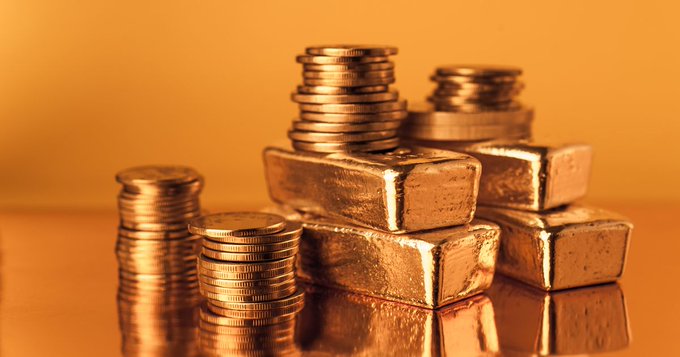
In the first quarter of 2026 alone, Indian households snapped up 151 tons of gold, according to the World Gold Council — investment demand actually overtaking jewelry purchases for the first time on record, as if the country had decided that Modi’s austerity appeal was itself a buying signal. The nation that imports nearly all of its crude oil and virtually none of its gold domestically somehow concluded that this was the moment to load up further on the yellow metal.
Advertisement
The prime minister, one might note, was not amused. But then, neither was Indira Gandhi — and she tried this trick decades ago.
The Oldest Trick in the Indian Political Playbook
Modi’s appeal was not, as his admirers might prefer, an act of original statesmanship. It was a rerun of a very old film. Indira Gandhi, governing a country perpetually teetering on the edge of a balance-of-payments crisis, made similar patriotic appeals to citizens during periods of economic distress. She asked them to contribute gold to the national cause. The response was underwhelming. Indians listened politely, nodded gravely, and then went straight to the nearest jeweler.
The 1991 crisis was even more instructive. India came within weeks of sovereign default. The government of the day was forced to physically airlift 67 tons of gold from the Reserve Bank’s vaults and pledge it as collateral to the Bank of England and the Union Bank of Switzerland in exchange for emergency loans. The country’s gold reserves were literally flown out of the country to keep the lights on.
Ordinary households? They held on to every gram.
No moral pressure, no appeals to patriotism, no economic argument — however compelling — has ever meaningfully shifted India’s relationship with gold. Every government eventually discovers the same immovable truth and files it away in the drawer marked “problems for the next fellow.”
The Numbers That Should Cause Alarm (But Don’t)
Let us be precise about the scale of India’s golden affliction, because the numbers deserve to be read slowly and without blinking.
India consumes between 700 and 900 tons of gold every year, making it one of the world’s two largest gold markets alongside China. Since Modi first came to power in 2014, India is estimated to have imported more than 8,000 tons of gold — at prices that have roughly tripled over the same period. Between 2000 and 2014, imports crossed 10,000 tons as liberalization, rising middle-class incomes and an ever-expanding wedding calendar drove consumption to staggering levels.
Almost none of this gold is produced domestically. India mines a negligible quantity. Every ton must be purchased with hard-won foreign exchange — the same dollars that could otherwise be deployed to secure long-term energy contracts, fund infrastructure imports, or reduce the country’s chronic dependence on imported crude oil.
India spends approximately $100 billion annually on crude oil imports. It spends another $40–$50 billion on gold. Together, these two commodities account for the single largest drain on India’s current account. The difference is that crude oil keeps factories running, hospitals lit and cars moving. Gold, overwhelmingly, goes into bank lockers, wedding chests, and temple vaults, where it sits — immobile, unproductive, and deeply beloved — for generations.
The country privately holds an estimated 25,000 to 34,000 tons of gold — a treasure worth over $3 trillion at current prices. No government on earth has successfully unlocked a meaningful portion of it.
Southern India: Where Gold Is Not a Choice, It’s a Theology
If the rest of India treats gold as a sound investment with religious overtones, southern India treats it as something considerably more serious. Tamil Nadu, Kerala, Karnataka, Andhra Pradesh and Telangana constitute India’s gold heartland — together accounting for a disproportionate share of national jewelry demand that their combined population share simply does not explain.
A middle-class wedding in Tamil Nadu or Kerala routinely involves between 100 and 500 grams of gold jewelry gifted to the bride alone. At current prices, that is ₹10 lakh to ₹50 lakh changing hands in ornamental form. Wealthier business families, unconstrained by such modest notions of sufficiency, sometimes gift over a kilogram.
Kerala’s gold obsession carries its own special intensity, forged in the crucibles of Gulf migration. When Malayali workers departed for Dubai and Riyadh in their hundreds of thousands from the 1970s onwards, they brought remittances home — and with those remittances came the gold-buying habits of the Gulf souks. Dubai, whose gold market exists partly because of Indian demand, and whose airport departure lounges have for decades functioned as an informal annex of the Indian jewelry trade, was happy to oblige.
Whenever New Delhi raises import duties in an attempt to choke demand — as it has done repeatedly — Dubai simply becomes more attractive, and the smugglers do a roaring trade. Industry estimates suggest between 80 and 150 tons of gold enter India illegally every year during high-tariff periods. Kochi, Kozhikode, Chennai and Mumbai airports have become theatres of an endless customs farce: bars concealed in pressure cookers, hollowed-out shoes, specially tailored undergarments. The 2020 Kerala diplomatic gold smuggling case — where gold was allegedly transported through UAE consulate baggage — managed to combine audacity with a certain poetic appropriateness, given the direction of the smuggling flows.
The South Korean Question India Cannot Answer
In 1998, South Korea faced an economic crisis of comparable severity. The government appealed to citizens to donate their gold to national reserves. South Koreans queued up. They handed over jewelry. Grandmothers brought wedding rings. The collection drive raised over $2 billion worth of gold from private hands. It became one of history’s more remarkable examples of collective economic solidarity.
The question of whether Indians could ever replicate that sacrifice is, in polite circles, answered diplomatically. In honest ones, the answer is no — and not simply because Indians are uniquely selfish or unpatriotic. The reasons are structural and historical.
Gold in India is not decoration. It is the only form of wealth that millions of families — particularly women with no independent income or legal property rights — have ever truly controlled. A gold bangle cannot be seized by a defaulting husband or an indifferent bank. It requires no documents, no intermediary, no functioning legal system. It is wealth that belongs to its owner absolutely, in a society where very little else does.
Asking an Indian woman to surrender her gold to the national cause is not an economic request. It is an ask to relinquish the only financial sovereignty she has ever possessed.
Modi knows this. Every Indian prime minister has known it. And every one of them has eventually filed the appeal under the same drawer marked “things that look rational from New Delhi and impossible from everywhere else.”
India does not merely love gold. It depends on it — the way a country with long memories of inflation, colonial plunder and institutional failure depends on the one asset the state cannot devalue, confiscate or explain away.
The golden millstone hangs around the nation’s neck. And India, given the choice, would have it no other way.
(Data sourced from World Gold Council reports, Indian trade statistics and industry estimates.)
Disclaimer: The opinions and views expressed in this article/column are those of the author(s) and do not necessarily reflect the views or positions of South Asian Herald.