Join WhatsApp Channel

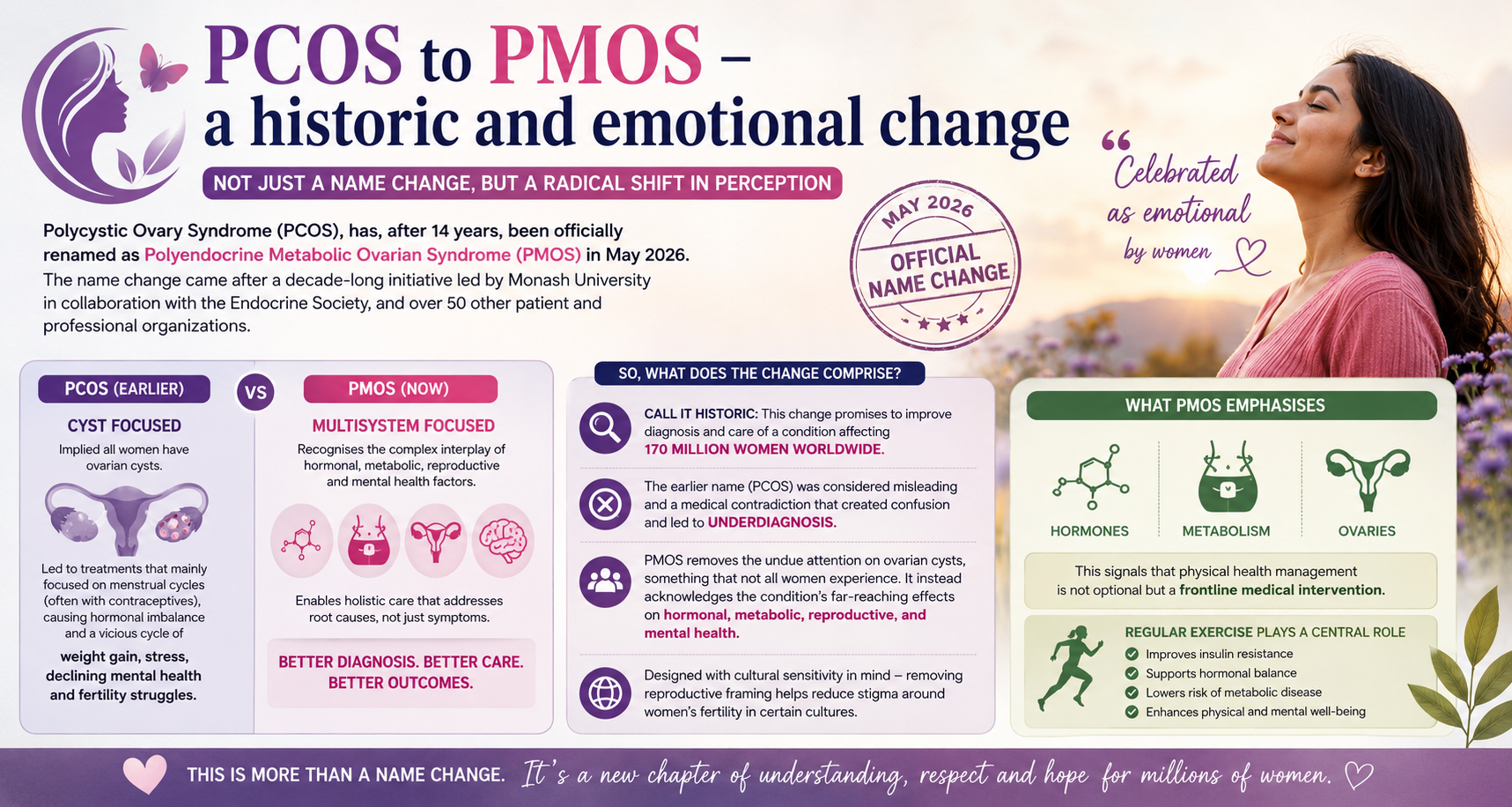
Polycystic Ovary Syndrome (PCOS), has, after 14 years, been officially renamed as Polyendocrine Metabolic Ovarian Syndrome (PMOS) in May 2026. The name change came after a decade-long initiative led by Monash University in collaboration with the Endocrine Society., and over 50 other patient and professional organizations.
“Celebrated as emotional” by women
For many years, women with PCOS (what it was known as earlier), were subject to an entire range of constraints that literally broke their physical and mental confidence. As the earlier name suggests, the condition’s diagnosis was “cyst” focused. This meant and implied that every woman diagnosed with the PCOS condition had cysts in their ovaries. This also meant that not only did the women need lifestyle shifts, but also medications that fixed their disrupted menstrual cycles. These medications, for most parts, were contraceptives that messed with the entire hormonal balance (both physically and mentally).
Medications that technically latched them to a vicious cycle of health implications, weight gain, declining mental health and the stress of preparing to conceive a child.
So, the celebration comes after 14 long years of chasing physical and mental well-being and not being able to achieve it completely.
So, what does the change comprise?
Call it historic, but this name change or rather the focus change, promises to improve diagnosis and care of condition affecting 170 million women worldwide.
The earlier name (PCOS) was not just considered as misleading but also identified as a medical contradiction that created confusion that led to underdiagnosis.
The renamed condition, Polyendocrine Metabolic Ovarian Syndrome (PMOS), was introduced to more accurately reflect its complex, multisystem nature. Unlike its predecessor, PCOS, PMOS removes the undue attention on ovarian cysts, something that not all women experience. It instead acknowledges the condition’s far-reaching effects on hormonal, metabolic, reproductive, and mental health.
The new name was also designed with cultural sensitivity in mind. In certain cultures, linking the condition to the ovaries or reproductive system can carry stigma, especially when it targets a woman’s fertility. So, the removal of any reproductive framing is a huge step by itself.
PMOS, encapsulates various dimensions that now define what the condition may be. Its emphasis is on hormones, metabolism and the ovaries signals that physical health management is not optional but a frontline medical intervention. Regular exercise plays a central role in addressing insulin resistance, lowering the risk of metabolic disease, and supporting hormonal balance.
Holistic healthcare
Leading health organizations, including the Androgen Excess and PCOS Society and international guideline panels, recommend physical activity as a non-negotiable for PMOS (as much as it is for everyone else). Clean eating, quality sleep, fresh air, measures to pause and stress-less, and emotional well-being, are other aspects that should also be addressed.
As studies suggest, you should get at least 150 minutes of moderate-intensity aerobic activity, or 75 minutes of vigorous-intensity activity per week for general health. For weight maintenance and to prevent weight regain, consult a physician and follow-up with a qualified personal trainer. Strength training comes highly-recommended and that too requires supervision and proper guidance of qualified trainers.
Why exercise is a medical necessity?
For women with PMOS, physical activity is not just a lifestyle requirement, it is a clinical priority.
- Nearly 70 percent of women with PMOS experience insulin resistance. Exercise helps skeletal muscles absorb glucose from the bloodstream more efficiently, reducing the body’s dependence on insulin and lowering overall metabolic risk.
- PMOS also raises the risk of Type 2 diabetes and metabolic syndrome at an earlier age than usual. Regular physical activity helps regulate cholesterol, triglycerides, and blood pressure and therefore good for cardiovascular protection.
- Exercise increases levels of Sex Hormone-Binding Globulin (SHBG), which limits the amount of free testosterone circulating in the body and helps to reduce symptoms such as acne and excess hair growth.
- PMOS is also known to elevate instances of anxiety and depression in women. Consistent physical activity reduces psychological distress and definitively improves quality of life.
PMOS affects multiple body systems. So, fitness works best as part of a broader lifestyle approach. Choose an activity that you love, pair it with strength training and a cardio element. Remember, it is always advisable to take help from a qualified fitness professional who can plan your workout intensity, progression and personalization.
PMOS is more about “how you feel” rather than “how you should feel.” This shift validates the physical and mental well-being of millions of women globally – making it historic and emotional.
Disclaimer: The opinions and views expressed in this article/column are those of the author(s) and do not necessarily reflect the views or positions of South Asian Herald.
Related posts:
 Silent Classrooms, Loud Cries: The Legal Vacuum in India’s Student Mental Health System
 The Silent Epidemic: Why South Asians Face a Higher Risk of Heart Disease
 A South Asian Perspective: It is Time to Prioritize Mental Health in the Workplace
 The Overlooked Nutrient: My Journey with Low-Dose Lithium for South Asian Health