Join WhatsApp Channel

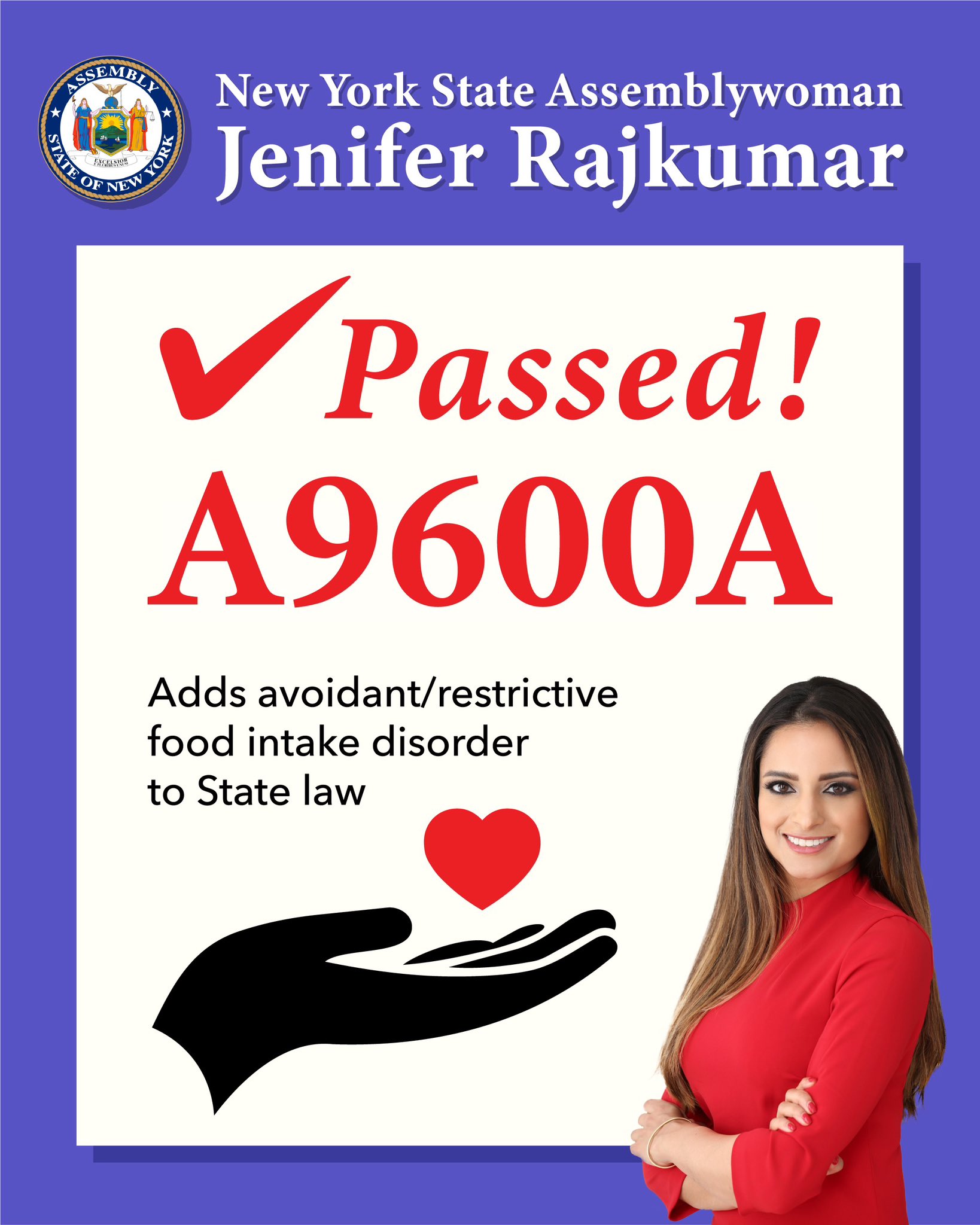
New York Assemblywoman Jenifer Rajkumar has announced the passage of legislation A9600A, a measure that formally recognizes Avoidant/Restrictive Food Intake Disorder (ARFID) as an eating disorder under New York State law.
According to a statement from Rajkumar’s office, ARFID was first classified as a distinct eating disorder in 2013. The condition is characterized by persistent restrictions in food intake stemming from anxiety about adverse consequences of eating, sensory sensitivities, or a lack of interest in food. Unlike anorexia nervosa or bulimia, ARFID is not associated with body image concerns or body dysmorphia.
The statement noted that ARFID is frequently linked to conditions such as autism spectrum disorder and attention-deficit/hyperactivity disorder (ADHD). Historically, the disorder has often been dismissed as “picky eating,” despite estimates suggesting it may affect up to 3 percent of the population. Advocates believe the actual prevalence could be higher because many cases remain undiagnosed.
Rajkumar’s legislation adds ARFID to the list of eating disorders officially recognized by New York State. As a result, a range of existing laws and programs related to eating disorders will now apply to individuals diagnosed with ARFID, including provisions involving insurance coverage, public education initiatives, and state-directed treatment centers.
According to the statement, Rajkumar introduced the bill after hearing from constituents whose families were struggling with the daily challenges associated with ARFID. The measure gained bipartisan support, prompting lawmakers and others working in Albany to share their own experiences and stories related to the disorder.
Assemblywoman Rajkumar said, “When families came to me describing how ARFID was upending their lives, I knew I had to take action. ARFID is a real, serious eating disorder recognized by modern medicine, and I am making sure our laws reflect that reality. By passing my bill, we are affirming that New Yorkers living with ARFID are seen, understood, and supported. This is about replacing misunderstanding with awareness and ensuring that science, compassion, and common-sense guide public policy.”
Related posts:
 The Food Factor In Autism
 Jenifer Rajkumar’s Cybersecurity Bill Signed Into Law, Blocking High-Risk Foreign Technology in New York
 New York Expands Job Access for Disabled Veterans as Governor Hochul Signs Assemblywoman Rajkumar’s Bill
 New York Passes Assemblywoman Jenifer Rajkumar’s Bill to Streamline Property Access for Repairs and Construction