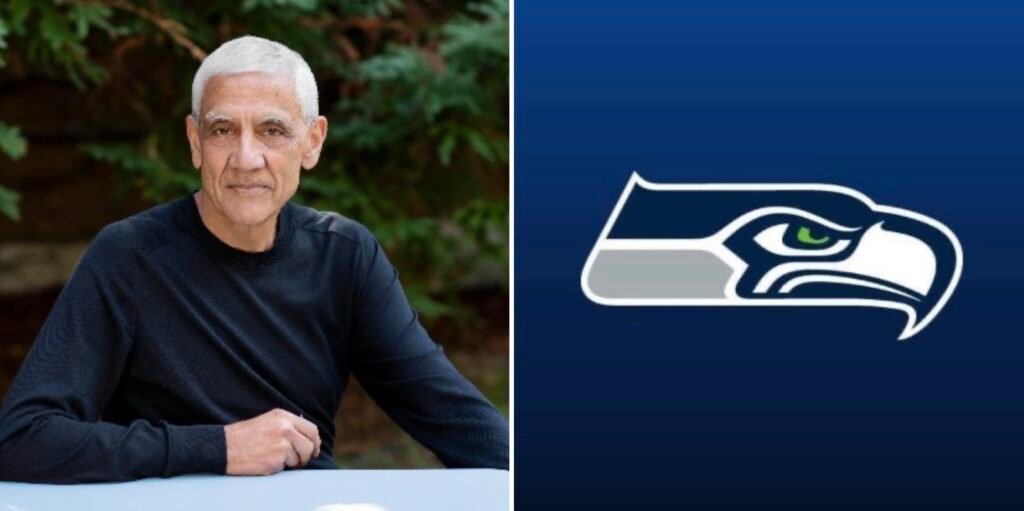
Indian American billionaire and venture capitalist Vinod Khosla and his family have agreed to acquire the NFL’s Seattle Seahawks in a deal valued at $9.6 billion. The agreement, reached with the estate of the late Microsoft co-founder Paul Allen, is expected to make Khosla the first person of Indian origin to own an NFL franchise, pending league approval. Allen purchased the Seahawks in 1997, and ownership of the team transferred to his estate following his death in 2018.
Khosla’s claim to fame comes from co-founding Sun Microsystems, which was bought off by Oracle in 2010, and from his Khosla Ventures which was among the first venture capital firms to invest in OpenAI in 2018, four years prior to their launch of ChatGPT.
“We are honored to be entrusted as the next stewards of the Seattle Seahawks,” said Khosla in a statement reported by NFL.com “We look forward to building on the winning legacy Paul Allen created and to earning the trust of the Seahawks organization and fans everywhere.”
“He’s a venture capitalist at heart,” said Indian journalist Tanish Tiwari about Khosla. “He recognizes the potential of growth and scalability in businesses early and that is when he decides to invest in them.”
Advertisement
In the 2025/26 the Seahawks won their second Superbowl title, 13 years after their first. They had an impressive 14-3 record to the Superbowl, where they beat the New England Patriots 29-13.
Khosla joins Jacksonville Jaguars owner Shahid Khan as the second individual of South Asian descent to own an NFL franchise, and the first of Indian. Khan acquired the Jaguars in 2012 becoming the first ethnic minority owner in the NFL.
While the diversity may still be limited, addition of minority owners such as Khosla and Khan can work to expand the NFL’S following to a more global scale, something which has been on the league’s agenda for the last couple of years.
“When you look at what the NFL are trying to do, they’re actually trying to add global interest and not just interest, they’re educating the global audiences as well,” Tiwari explained.
“Khosla, if he sees that, the potential of actually scaling and growing the sport of NFL in maybe Europe and not India to be honest but in Europe and other places, I do feel that this is a right and a very shrewd move from Khosla’s point of view,” he added.
India could still be an untapped market for the NFL which Khosla can still help tap into. But there are obvious logistical challenges that have been preventing the league from properly entering India.
“The biggest thing that works against the NFL is the timings,” said Tiwari about largely differing time zones between the USA and India. “All the matches are almost entirely in the time slot of I think 12.30 to 3.30 and 4 and 6 o’clock in the morning and late night basically. So it’s very very odd to generate any sort of sustainable Indian interest in the Indian market because people just won’t be awake to watch it. As simple as that.”
“What they can do to generate interest is maybe open academies, maybe try grassroot level stuff,” he added. “I think the academies route is something that they can take. We have a good rugby scene going on here in India. Maybe they can leverage that, that market they can appeal to.”