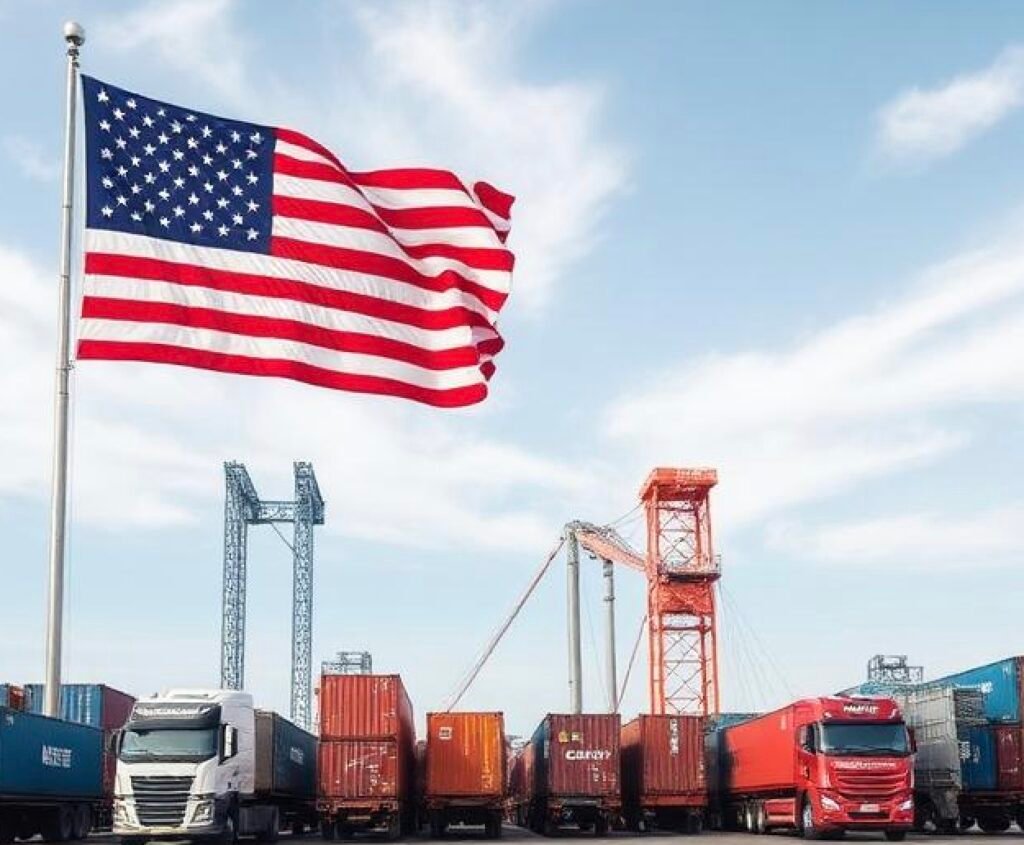
The U.S. government on Monday began the massive undertaking of processing $166 billion in tariff refunds following a landmark Supreme Court ruling that dismantled a year-long regime of reciprocal duties.
While the move signals a significant liquidity injection for global trade, a new analysis from the Global Trade Research Initiative (GTRI) warns that Indian exporters must aggressively negotiate to secure their portion of an estimated $12 billion linked to their goods.
The report, released Tuesday, outlines a complex financial landscape where the spoils of legal victory are held exclusively by U.S.-based importers. This leaves Indian suppliers to rely on commercial leverage rather than legal mandates to recoup the losses they sustained while the duties were in effect.
The refund window opened April 20 through a new digital system known as the Consolidated Administration and Processing of Entries, or CAPE, managed by U.S. Customs and Border Protection. These payouts follow a Feb. 20, Supreme Court decision that struck down tariffs originally imposed by the Trump administration under the International Emergency Economic Powers Act. The Court determined that the executive branch exceeded its legal authority by bypassing Congress to set the trade rates.
Advertisement
This trade regime saw a volatile escalation over the past year, beginning with a 10% levy in April 2025 before climbing to 25% in August and peaking at a punitive 50% later that same month. These high rates remained in place until the high court declared the entire framework legally void in February.
Approximately 53% of India’s exports to the United States were caught in the crossfire of this policy. According to the data, the $12 billion linked to Indian goods is divided largely between the textiles and engineering sectors, which each account for roughly $4 billion in potential refunds. The chemical industry accounts for another $2 billion, with the remainder spread across various other manufacturing sectors.
GTRI notes that while the decision offers a potential financial upside for India, the recovery of those funds remains uncertain. Because the U.S. Treasury issues refund checks only to the importer of record, Indian manufacturing firms have no direct legal standing to claim the money from the American government. This creates a friction point between Indian sellers, who often slashed their own profit margins to keep products competitive under the 50% duties, and U.S. buyers who are now poised to receive a windfall of duty payments plus interest.
Ajay Srivastava, founder of the research group, said that Indian exporters must proactively engage their U.S. partners to seek a share of these refunds, particularly where earlier contracts were priced on a duty-paid basis. He suggested that firms use shipment invoices and tariff data to demonstrate how they absorbed costs, potentially using credit notes or price revisions for future orders as a means of settlement.
Industry groups such as the Apparel Export Promotion Council and the Engineering Export Promotion Council of India are expected to provide guidance to help smaller firms navigate these renegotiations. With U.S. Customs expecting to process most approved claims within 60 to 90 days, trade experts warn that the window for Indian exporters to strike these deals is closing rapidly. Without formal rebate-sharing agreements, the multi-billion dollar windfall may remain entirely with U.S. wholesalers and retailers.