How is India taking the Gulf War, taking place next door, but reverberating globally? The question can be asked of any country, but India is special, being the most populous and the largest democracy. Also, it has over nine million nationals working or living in the Gulf region, and has civilizational links with Iran.
The answer would need to be sweeping. India is too diverse to be put into a straitjacket, politically, economically or diplomatically.
Deft economic and media management, and the likelihood of negative political fallout amid elections in five key states, have so far prevented the Narendra Modi Government from hiking fuel prices, which is bound to have a cascading effect on the economy. But the hikes could come after the polls. Queues of people with empty cooking gas cylinders are getting longer.
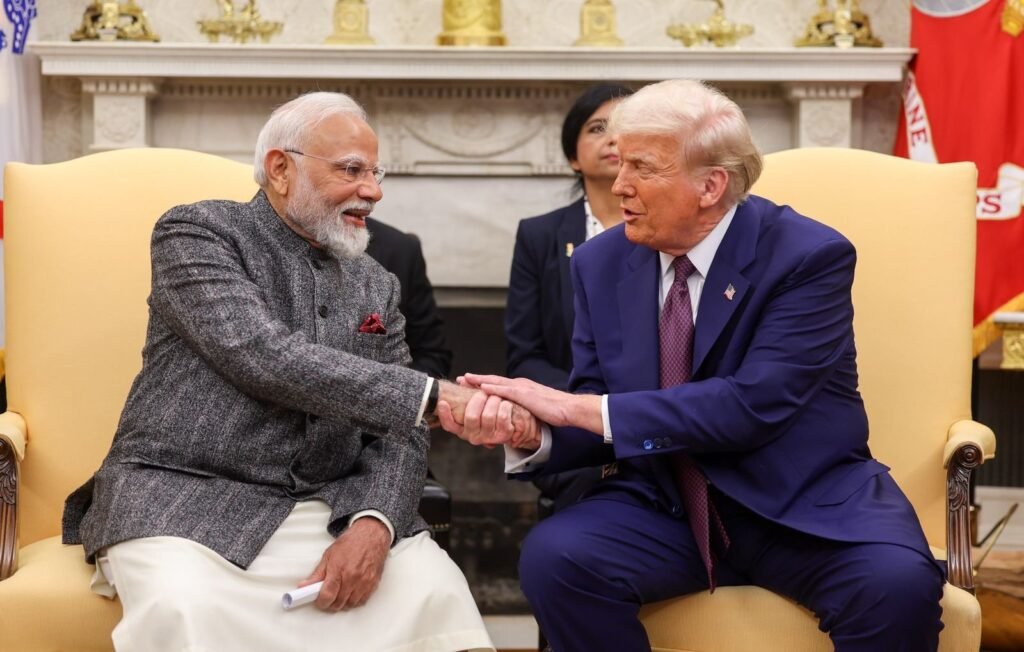
At the top of the heap of growing public perceptions is a double sense of betrayal. First, US President Donald Trump has continued to call Prime Minister Narendra Modi his “great friend” even as he has imposed heavy trade tariffs and even punished India for purchasing Russian oil at concessional rates.
Advertisement
A heavily pro-government legacy media remains subdued, if not silent. But on social media and numerous news/views websites, Modi is being lampooned for the first time since he took office nearly 12 years ago. Cartoons and jokes show Modi succumbing to Trump’s pressure and being ‘abandoned’ by a friend who was never tired of being hugged by Modi. The hug has become a joke.
That Modi visited Israel two days before the US/Israel attacks began on Iran, and that he has never attempted to explain why he was there, has been another point of anger, and not just with the Muslims, when Iran was targeted so soon after Modi’s Tel Aviv parleys. Parallels are drawn with Pakistan’s Imran Khan visiting Moscow on the day Putin launched the attack on Ukraine. But Modi, although he heads a coalition government, is far too comfortably placed compared to Khan, who was eventually voted out of power.
The other ‘betrayal’ of India is Trump switching his affections to Pakistan. PM Shahbaz Sharif is the new ‘great friend,” and the India-baiting military chief, Asim Munir, is now Trump’s “favorite field marshal.” The two led the applause of Trump for the latter ‘resolving’ the India-Pakistan armed conflict last summer and were quick to endorse Trump’s quest for a Nobel Prize for Peace. For diplomatic reasons, India has refused even to acknowledge American intervention. Unknowingly, perhaps, India has touched Trump’s raw sense of rejection. He ruminated on this, for the umpteenth time, in the midst of the Gulf crisis.
Trump’s securing the Munir-Sharif good offices to mediate with Iran may or may not have to do with last year’s ‘jilt.’ There are numerous reasons, like Pakistan being more willing and pliable, and Iran’s Muslim neighbor sharing a border, for Trump’s switch. Also, Pakistan, with deep interests and affinity with the Gulf Arabs, grabbed the opportunity with alacrity. That was unlike India.
India did not quite fit in, and many analysts erred when they overlooked a possible role for Pakistan, which does not have even diplomatic ties with Israel. They failed to see a mercurial Trump virtually bypassing Israel at whose behest it has got into the Middle East mess.
All these diplomatic niceties have not mattered to Modi’s critics. His supporters and trolls are quiet. The mainstream media ignores these sentiments.
Protesting in support of the Palestinians in Gaza has led to arrests. That was not the case when they had sought to rally behind Iraq’s Saddam Husain. Indian Muslims sported ‘Saddam’ T-shirts and black-and-white keffiyeh. Uneasy silence prevails now. But stray posts stress the Muslim sentiment, ignoring the Shia-Sunni divide. India and Pakistan each have between 20 and 50 million Shia Muslim populations.
The Indian sense of feeling ‘betrayed’ has heightened amidst reports of Trump visiting Pakistan in case, as per his claims, talks with Iran lead to a peace deal. Like it or not, Indians, with 54.3 million compatriots living in America, and used to projecting Pakistan as a terror-sponsor and a war-monger that unleashed three wars, hate the thought that Pakistan could emerge as a global ‘peace-monger.’
Much of this is known. Also known are the fears of the Indians who live in the Gulf and fear that a prolonged conflict could hit their prosperity-laced, tax-free, remittance-inducing lives. Thousands on holiday and shopping missions in Dubai were stranded, and one word that circulated on social media when they returned was ‘relieved.’
What about the Iranians who are in India for business and the Zoroastrians (Parsis) who fled Iran over the centuries to escape religious persecution? They are the world’s largest group outside Iran, but a dwindling community, living in India, “mixing like sugar mixes with milk” as their forebears had preached and practiced.
Leave alone tender any advice to the government, there is nothing to show how the Parsis view the Gulf war. Only a social media post makes light of what is happening. Responding to Trump’s ‘readiness’ to talk to the Iranians, Bollywood actor-director Boman Irani floated the idea of ‘inviting’ Trump to Mumbai to talk to the ‘Iranians.’
He lined up two other celebrities, actor Aruna Irani and actor-politician Smriti Irani, incidentally Hindu and an ‘Irani’ by virtue of marrying one. Trump could talk to them, Boman said, but he would have to visit the Dadar Parsi Colony, an exclusive residency for the community, and be ready to be served custard and ‘dhansak,’ the two popular Parsi dishes.
This goes to show that despite its many conflicts and contradictions, India remains an inclusive society.
Disclaimer: The opinions and views expressed in this article/column are those of the author(s) and do not necessarily reflect the views or positions of South Asian Herald.