Join WhatsApp Channel

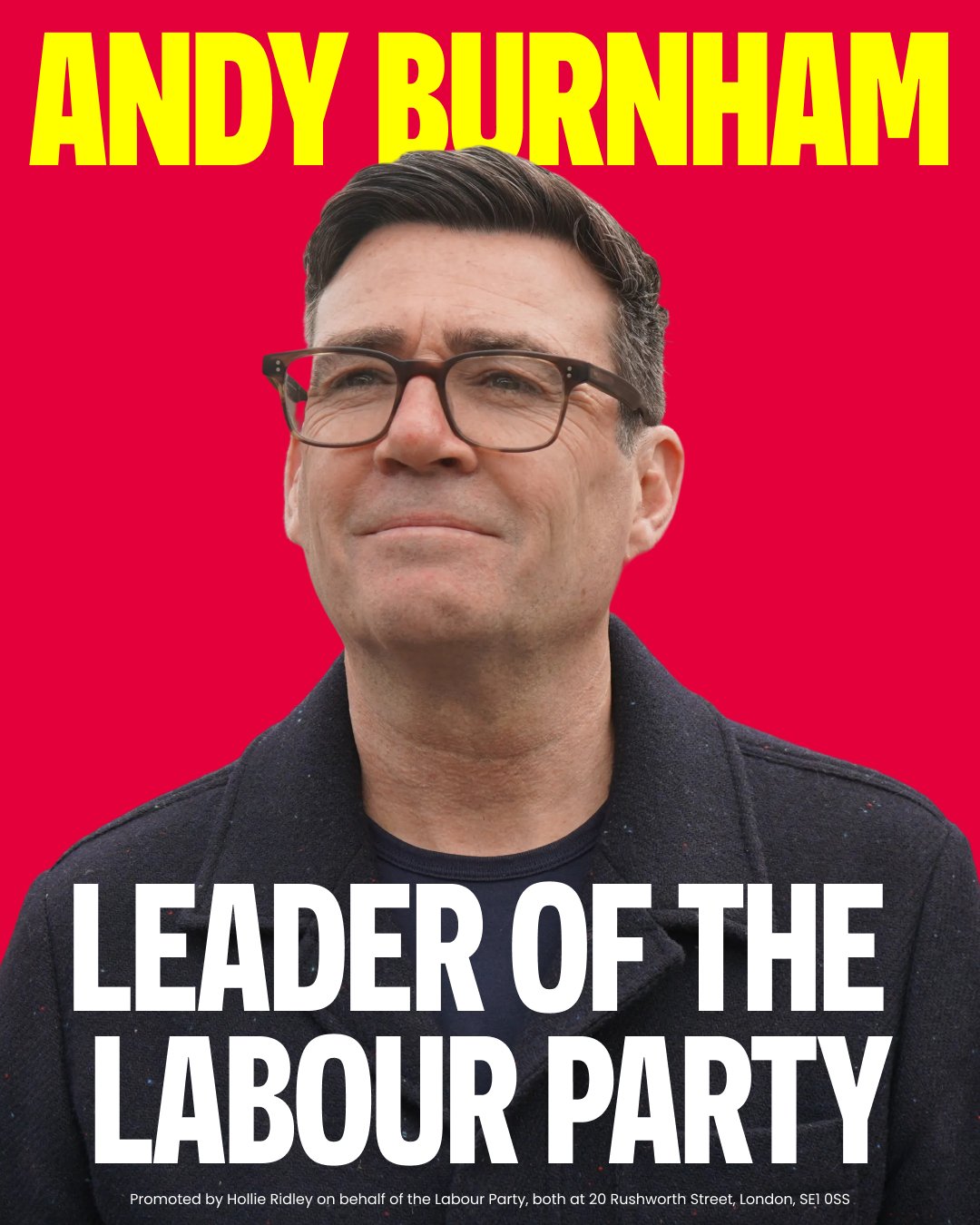
India watches with bated breath the change of leadership in Britain, as Keir Starmer — who cemented the historic Indo-UK Free Trade Agreement benefitting his country — hands over the baton to the Mayor of Manchester, set to become Britain’s seventh prime minister in 16 years.
British politics has once again shown why it remains one of the most volatile democracies in the developed world. Barely two years after leading Labour to one of its biggest election wins in modern history, Sir Keir Starmer resigned as Prime Minister, undone by collapsing poll numbers, a mutinous parliamentary party, and a scandal over his handpicked ambassador to Washington’s past ties to the late sex offender Jeffrey Epstein.
In his place steps Andy Burnham, the long-serving Mayor of Greater Manchester, who has completed one of the most improbable comebacks in recent British political history to become the country’s new Prime Minister — the seventh person to hold the office since the 2016 Brexit referendum upended British politics. Only Japan rivals this churn of leaders among major democracies, though for different reasons, mostly corruption scandals.
Burnham was declared Labour leader unopposed, securing the backing of 379 of the party’s 403 MPs — a coronation rather than a contest. He will be summoned by King Charles III to form a government within days. Because Labour retains a comfortable Commons majority, no general election is required, a Westminster quirk that has now delivered Britain seven prime ministers in a single decade — a rate of turnover unmatched by any other G7 nation.
Six Prime Ministers, One Decade of Turbulence
To grasp the scale of what Burnham inherits, it helps to trace the six who came before him.
David Cameron (2010–2016) led Britain’s first coalition government since World War II, imposing austerity to stabilize the deficit after the 2008 crash while hollowing out local services. Re-elected in 2015, he gambled his premiership on an EU referendum meant to settle Conservative divisions. Britain voted narrowly to leave in June 2016, and Cameron resigned within hours, bequeathing a crisis he would not manage.
Theresa May (2016–2019) inherited the task of delivering Brexit without a mandate for any version of it. Her withdrawal deal was rejected by the Commons three times; a snap 2017 election cost her party its majority. She resigned in tears in 2019, remembered for paralysis.
Boris Johnson (2019–2022) succeeded where May failed, winning an 80-seat majority on “Get Brexit Done” and formally exiting the EU in January 2020. Covid-19 then defined his term — a rapid vaccine rollout set against delayed lockdowns and a high death toll. “Partygate” — lockdown parties in Downing Street while the country obeyed his own rules — forced his exit in 2022.
Liz Truss (2022) lasted just 49 days, the shortest premiership in modern British history. Her unfunded tax-cutting mini-budget triggered a run on the pound and a Bank of England intervention to stop pension funds collapsing. Markets, not voters, ended her.
Rishi Sunak (2022–2024) restored fiscal credibility, steadying bond markets and taming double-digit inflation, but could not repair the Conservatives’ battered image after 14 years in power. He led the party to historic defeat in July 2024, ending 14 years of Tory rule and handing Starmer his landslide.
Keir Starmer (2024–2026) inherited an economy scarred by weak productivity, high borrowing costs, an overstretched NHS and stagnant wages — problems built up over 14 years and not solved quickly. His government was further destabilized by deputy PM Angela Rayner’s resignation over a tax error, and finally by the fallout from appointing Peter Mandelson as ambassador to Washington, whose Epstein ties became politically fatal once fresh details emerged. Scotland’s Labour leader Anas Sarwar became the most senior party figure to demand Starmer’s resignation. Barely two years after his historic win, he was gone — the fastest post-landslide collapse of any prime minister in living memory.
The Rise of the ‘King of the North’
Burnham’s route to power is as unconventional as the crisis that produced it. Born in Liverpool in 1970, he held senior Cabinet posts, including Health Secretary, under Blair and Brown. After losing two leadership bids, he left Westminster in 2017 for the newly created Greater Manchester mayoralty — seen then as exile. Instead, he built it into a real power base, championing devolution and public transport, and won admiration confronting Johnson’s government over regional Covid funding, earning the nickname “King of the North.”
He was sworn into Parliament hours after Starmer’s resignation, having won a by-election weeks earlier that ended nearly a decade away from Westminster. Momentum inside Labour shifted overnight, with ministers and unions rallying behind him as the figure best placed to blunt Nigel Farage’s Reform UK. Accepting the leadership, he credited Starmer with reviving Labour from its worst defeat to one of its best wins, pledging to lead “every part of the United Kingdom.” Not everyone accepts the handover’s legitimacy — Farage demanded a fresh general election, calling a single by-election no mandate to govern.
Style Versus Constraint
Where Starmer projected legal caution, Burnham offers warmth and regional authenticity. He champions “Manchesterism” — harnessing private investment for major projects while decentralizing power over housing, utilities and transport — and is reportedly planning to relocate part of the PM’s operation north. But he remains bound by the 2024 platform that ended Tory rule, including a pledge not to raise taxes on working people. He inherits the same fiscal straitjacket that broke his predecessor.
India and Britain: A Changed Relationship
Burnham takes office as the balance between Britain and India has fundamentally shifted. India has overtaken the UK to become the world’s fifth-largest economy, on course to be third-largest within a decade. Yet ties have arguably never been closer: the newly implemented India-UK FTA opens fresh avenues in commerce, technology and mobility, with London increasingly viewing New Delhi as indispensable in the Indo-Pacific. Burnham’s focus on manufacturing and regional infrastructure dovetails with that agreement, making deeper India engagement a likely priority.
Is Burnham Up to It?
No one yet knows, and history counsels caution. Each of Burnham’s six predecessors arrived with a defining strength — Cameron’s confidence, May’s diligence, Johnson’s charisma, Truss’s certainty, Sunak’s competence, Starmer’s precision — and each strength curdled into the weakness that ended their tenure. Burnham’s strength is authenticity, tested in Manchester but untested against a jittery bond market, weak growth and a rising Reform UK. He inherits not a honeymoon but a stopwatch. Whether the “King of the North” can turn regional popularity into a durable national mandate — and break the cycle that consumed six prime ministers before him — will decide not just his premiership, but whether the office itself can still deliver the stability it promises.
Disclaimer: The opinions and views expressed in this article/column are those of the author(s) and do not necessarily reflect the views or positions of South Asian Herald.