Join WhatsApp Channel

To an American observer, the sheer scale and complexity of Indian democracy are almost unfathomable. Navigating a political landscape of over a billion voters, dozens of primary languages, and intricate regional dynamics requires a unique brand of political stamina.
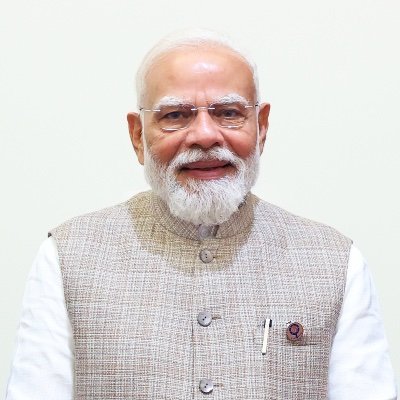
Yet, one figure has not only managed this system but fundamentally shaped it for a quarter of a century: Prime Minister Narendra Modi. As anticipated the Indian-American diaspora right here in the United States must be preparing for a major gathering on October 7, 2026, to celebrate his 25 years of continuous executive public service.
In the United States, where strict executive term limits and rapidly shifting political pendulums are the norm, a 25-year unbroken streak of high-level leadership is practically unheard of. Prime Minister Modi’s journey—spanning 13 years as the Chief Minister of his home state of Gujarat before his historic ascent to the national premiership in 2014—is a masterclass in political endurance. From a Western vantage point, his ability to sustain such a rigorous mandate in the world’s largest democracy reflects a profound, sustained alignment with the aspirations of the Indian electorate.
What frequently captures the American imagination is the boundless zest and energy he brings to governance and international diplomacy. Whether addressing a joint session of Congress in Washington, D.C., or engaging with tech executives in Silicon Valley, he projects a dynamic, unapologetically confident vision of a rising India.
His 25 years of “good governance” have been defined by a sweeping push for modernization. American tech and financial sectors often marvel at India’s digital public infrastructure, which has brought hundreds of millions of citizens into the formal economy with a speed and scale that outpaces many Western equivalents. This massive administrative undertaking, executed with a commitment to structural integrity, has fundamentally streamlined how the Indian state delivers welfare and interacts with its citizens.
Furthermore, the milestone being celebrated in is not merely a retrospective victory lap; it is heavily focused on the future, anchored by the campaign “Viksit Bharat@2047”. To an American audience, this translates to a bold, definitive roadmap: a commitment to transforming India into a fully developed nation by the 100th anniversary of its independence. It signals a decisive shift from a developing-nation narrative to one of an emerging global superpower, driven by an administration that views economic growth and national pride as deeply intertwined.
As the local Seattle community prepares to mark this October 7 milestone, it underscores the deeply interconnected futures of our two democracies. Prime Minister Modi’s 25-year tenure has fundamentally altered the geopolitical calculus, cementing India as an indispensable strategic and economic partner for the United States. His enduring legacy of service continues to redefine not just India’s domestic landscape, but its essential role on the global stage.
Disclaimer: The opinions and views expressed in this article/column are those of the author(s) and do not necessarily reflect the views or positions of South Asian Herald.