Join WhatsApp Channel

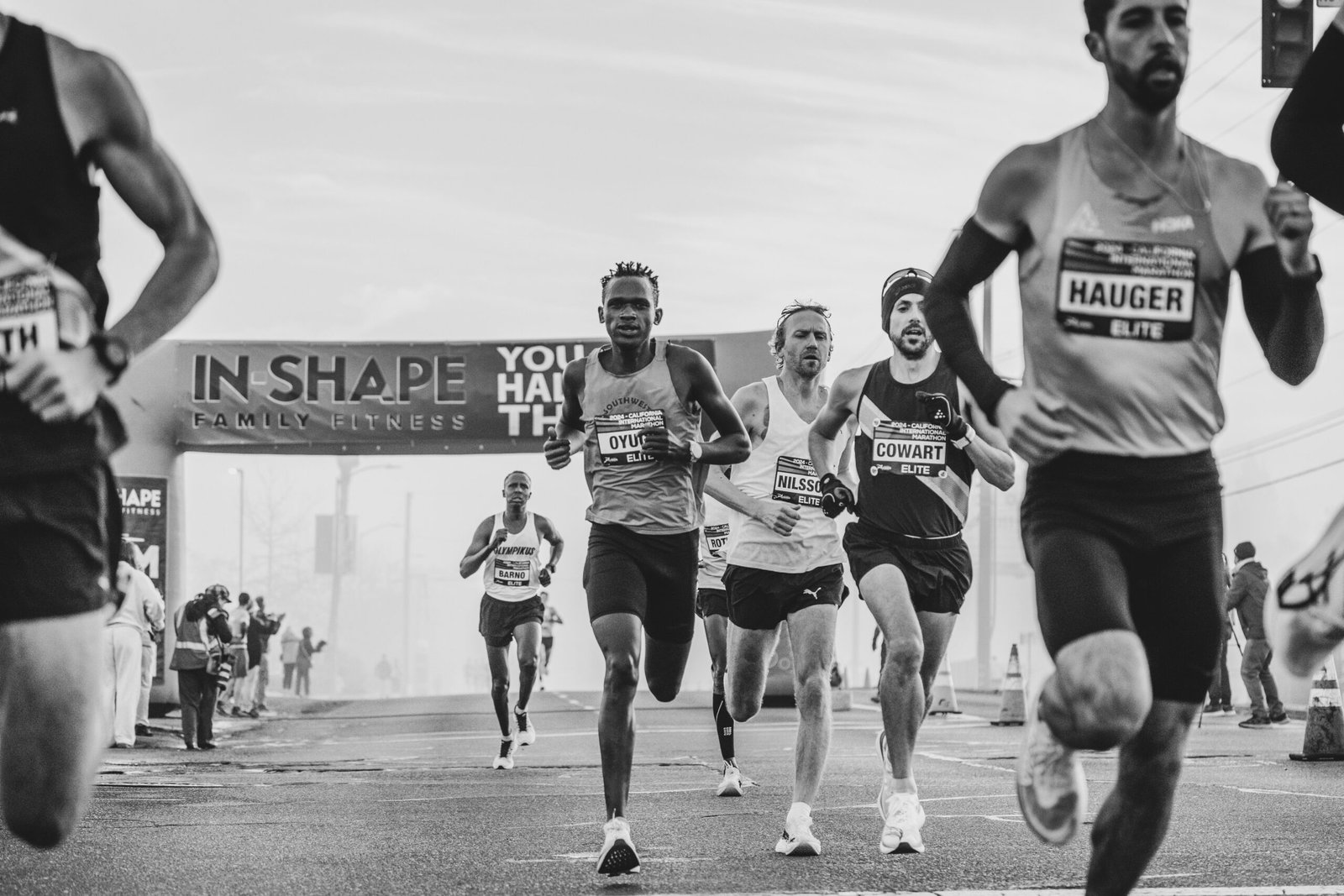
Whenever an Indian athlete wins a medal, the celebration begins almost immediately. There are photographs, interviews, social media posts and stories about the years of discipline that brought the athlete to the podium. We celebrate the final moment, but rarely pause to think about where that journey actually began.
For many athletes, it began long before the national jersey, the international arena or the Olympic village. It began on a school playground, at a local akhada, in a district competition or with a teacher who noticed that a child could run a little faster, throw a little farther or simply refuse to give up.
Perhaps that is where the larger lesson of sporting success lies for South Asia.
India, Pakistan, Bangladesh, Sri Lanka, Nepal, Bhutan and the Maldives have millions of children in schools. Somewhere among them are children who may have the ability to become exceptional athletes. But talent needs opportunities to reveal itself. And for most children, school is the one place where that opportunity can reach them.
The playground is part of the classroom
In much of South Asia, sport still has to compete with a very powerful idea: that academic time is serious time and everything else comes after it.
A PE period is easily given up for an extra class before examinations. A playground can become a site for a new building. A child who spends hours practicing a sport may be asked whether that time would be better spent studying.
Yet the relationship between physical activity and learning is not as simple as this divide suggests.
Regular physical activity has been associated with better concentration, cognitive functioning,
classroom behavior and mental well-being. Sport also teaches children things that are difficult to reproduce entirely within a classroom: how to work with others, how to deal with losing, how to make decisions under pressure and how to return after a setback.
These are not distractions from education. They are part of growing up.
This becomes even more significant at a time when children across the region are spending increasingly long hours sitting, studying and looking at screens, while also dealing with academic pressure and anxiety.
Perhaps the question is not whether sport takes children away from learning, but what kind of learning we are leaving out when we take sport away.
Before the medal, there is a system
An Olympic medal can make sporting success look like an individual story. We see the athlete, the final performance and the years of personal sacrifice. What we see less often is the chain of
opportunities that made the journey possible.
Someone had to provide the first playground. Someone had to organize the first competition. Someone had to recognize the child’s potential. Someone had to provide coaching when the child decided to take the sport seriously.
That chain is uneven across South Asia.
There are schools with excellent sporting facilities and highly trained coaches. There are also schools where children have little more than an open patch of ground, and where physical education exists mostly on paper. The gap is particularly significant for children whose families cannot afford private coaching or sports academies.
This is why school sport matters even when a child has no ambition to become an Olympian. It is often the most accessible entry point into organized sport.
And the first requirement does not always have to be a grand stadium. Sometimes it is simply a safe space, some basic equipment, a regular timetable and a teacher who takes the activity seriously.
And what about the girls?
For girls, reaching that playground can itself be complicated.
Questions of safety, transport, clothing, social expectations and the availability of female coaches can shape whether girls participate in sport and, more importantly, whether they continue playing as they grow older.
In some families, a daughter may be encouraged to study, but not necessarily to spend an evening playing football or training for athletics. Sport can still be seen as something optional, or even unsuitable, for girls.
This matters beyond the question of medals. A girl who plays sport gets a chance to occupy physical space, work with others, make decisions, experience competition and build confidence. These experiences have value whether or not she ever represents her country.
If we want more women in South Asian sport, we need to think about the girl who is currently deciding whether she is even allowed to play.
The small things matter
It is tempting to think of sporting development in terms of large investments: stadiums, academies, international coaches and high-performance centers. These are important at the elite level, but the foundation is much more ordinary.
A functioning playground matters. So does a PE teacher who has time to teach. So does an inter-school competition that allows a child from a small town to play against someone from another school. So does a system that notices talent without requiring a family to already know how the sporting world works.
This is where school and community sport can become particularly important across South Asia.
Regular competitions between schools and districts can give children something to work towards. They can also make sport visible to children who may never have considered it a possibility. Not every child will become an athlete. That is not the point.
What should we count as a sporting success?
Perhaps we have been looking at sporting success too narrowly.
We count medals because medals are visible. But there are other victories that do not appear on a scoreboard.
A child who becomes more confident. A teenager who finds a group of friends through sport. A girl who continues playing despite the pressure to give it up. A child who learns to lose without
feeling defeated. A student who discovers that she is good at something she had never imagined trying.
These are also outcomes of sport.
The Olympic podium is therefore worth celebrating, but perhaps it should also make us look in the opposite direction: away from the podium and towards the playground. The future of South Asian sport will not be built only in elite academies. It will also be built in school fields, neighborhood grounds and dusty corners where children are given the freedom to play.
The next Olympic champion may be somewhere among them.
But long before we ask whether that child can win a medal, perhaps we should simply make sure there is a place where the child can play.
Disclaimer: The opinions and views expressed in this article/column are those of the author(s) and do not necessarily reflect the views or positions of South Asian Herald.